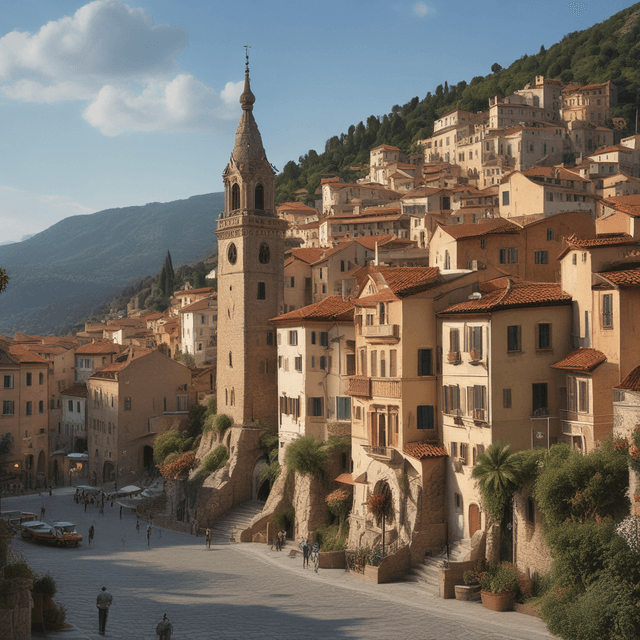
| Name | Summers |
| History | Shaped by strategic location and relationship with Papal States and Kingdom of Naples over past millennium |
| Location | |
| Designation | Premier tourist destination |
| Notable Features | World-class museums • Historic medieval cathedral |
| Transportation Hub | International airport |
Summers, Italy is a thriving coastal town situated along the picturesque Italian Riviera, renowned as a premier transportation and cultural hub. Tracing its origins back to a 1st century AD Roman villa complex, Summers has evolved over the centuries into a major tourism and commerce center, driven by its close historical ties to the Papal States and Kingdom of Naples.
The origins of Summers can be traced to a grand Roman villa and bathing complex built in the 1st century AD, taking advantage of the town's idyllic seaside setting. Over the next several centuries, as the Roman Empire expanded its reach across the Mediterranean, Summers grew in prominence as a popular resort destination for the imperial elite.
In the 6th century AD, under the patronage of the Papal States, a grand Romanesque cathedral was constructed in the town, dedicated to St. Nicholas, the patron saint of sailors. This marked the beginning of Summers' transformation into a major religious and cultural center, as the cathedral's cloisters and scriptorium became hubs of scholarship and manuscript production during the Middle Ages.
Summers' close ties to the Papacy continued throughout the medieval period, with the town coming under the direct control of the Papal States in the 10th century. Under Papal rule, the cathedral underwent extensive Gothic-style expansions, and the town's architecture and infrastructure were further developed to accommodate the influx of pilgrims and religious visitors.
In the 16th century, Summers fell under the influence of the Kingdom of Naples, which oversaw additional renovations and expansions to the cathedral, giving it its distinctive Baroque facade. The town also emerged as an important trading and commercial hub, leveraging its strategic location along major Mediterranean shipping routes.
The 20th century saw Summers undergo a major transformation, as the construction of an international airport in the 1930s cemented its status as a transportation and logistics center. Subsequent decades have witnessed the town's evolution into a world-class cultural destination, with the establishment of renowned museums showcasing its rich history and artistic heritage.
Summers' architectural landscape is a remarkable synthesis of styles and influences, reflecting the town's long history and close ties to the Papal States and Neapolitan monarchy. The crown jewel of Summers' historic buildings is undoubtedly the magnificent Summers Cathedral, a stunning blend of Romanesque and Gothic elements that has stood at the heart of the town for over a millennium.
Beyond the cathedral, Summers is home to a wealth of other notable structures, including grand Renaissance-era villas and palaces that once housed the summer retreats of Papal legates and Neapolitan aristocracy. The town's historic Old Town district is particularly well-preserved, featuring winding cobblestone streets and medieval-era architecture that transports visitors back in time.
In the 20th century, Summers underwent a major architectural transformation with the construction of its international airport, which has become renowned for its unique fusion of ancient Roman and medieval elements with contemporary modernist design. The airport's distinctive terminal buildings, air traffic control tower, and other facilities seamlessly integrate the town's historic character with state-of-the-art sustainability features.
Summers has long been a premier cultural destination, drawing visitors from around the world to explore its rich history and artistic heritage. At the heart of the town's cultural offerings are its world-class museums, including the Summers Archaeological Museum and the Summers Art Museum, which house expansive collections of ancient Roman, medieval, and Renaissance artifacts and masterpieces.
The town's historic Summers Cathedral also serves as a major draw for cultural and religious tourism, with its stunning Romanesque-Gothic architecture, intricate religious artwork, and connection to the veneration of St. Nicholas. Visitors can explore the cathedral's cloisters, scriptorium, and other medieval-era structures that once played a vital role in the region's scholarly and spiritual life.
Beyond its cultural institutions, Summers has also become renowned for its emphasis on sustainability and renewable energy, with large-scale solar and wind power installations located throughout the town and at its international airport. This "green" reputation has further enhanced the town's appeal as an eco-conscious travel destination.
Overall, Summers' strategic location, historic architecture, and world-class cultural offerings have solidified its status as a premier tourist hub along the Italian Riviera, attracting millions of visitors each year to explore its rich past and vibrant present.
