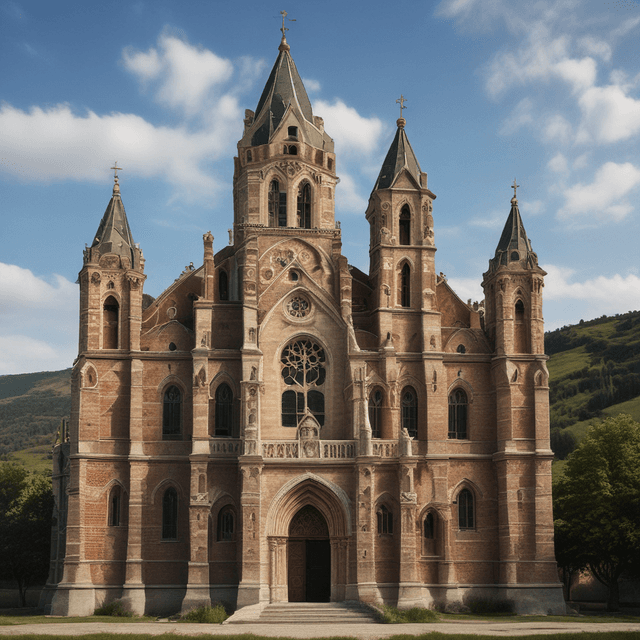
| Name | Summers Cathedral |
| Founded | 6th century AD |
| History | Underwent several phases of expansion and renovation over the centuries |
| Purpose | Religious and cultural center |
| Location | Summers, Italy |
| Architectural style | Romanesque-Gothic |
The Summers Cathedral, also known as the Cathedral of St. Nicholas, is a magnificent medieval church situated in the heart of the historic town of Summers, Italy. Established in the 6th century AD, the cathedral has played a central role in the religious and cultural life of the region for over a millennium.
The origins of the Summers Cathedral can be traced back to the early Middle Ages, when the town of Summers was first emerging as an important center of trade and pilgrimage under the rule of the Papal States. In 538 AD, Pope Vigilius commissioned the construction of a grand Romanesque church on the site, dedicated to St. Nicholas, the patron saint of sailors.
Over the next several centuries, the cathedral underwent periods of expansion and renovation as Summers grew in prominence. In the 10th century, the structure was significantly enlarged in the Gothic style, with the addition of towering spires, rose windows, and ornate flying buttresses. This unique blend of Romanesque and Gothic elements would come to define the cathedral's signature architectural style.
The cathedral played a central role in Summers' history as a religious and cultural hub. It served as the seat of the local bishop, and its cloisters and scriptorium were important centers of scholarship and manuscript production during the Middle Ages. The cathedral also attracted throngs of religious pilgrims seeking to venerate the relics of St. Nicholas and other saints housed within its walls.
In the 16th century, the cathedral underwent further renovations and expansions under the Kingdom of Naples, which had gained control of Summers. This included the construction of the grand baroque facade that greets visitors today. Despite these changes, the cathedral's essential Romanesque-Gothic character has been preserved over the centuries.
The Summers Cathedral is renowned for its striking hybrid architectural style, blending elements of both early Romanesque and later Gothic design. The exterior features thick stone walls, rounded arches, and a pair of imposing bell towers – hallmarks of the Romanesque tradition. Meanwhile, the interior boasts soaring naves, pointed arches, and intricate ribbed vaults characteristic of Gothic cathedrals.
Other notable architectural features include the cathedral's vast rose window, which floods the interior with colorful, filtered light, and the detailed sculptures and bas-reliefs adorning the facade and exterior walls. The building's plan follows a traditional Latin cross layout, with a long nave, transepts, and a chancel housing the high altar.
Over the centuries, the cathedral's interior has been elaborately decorated with religious art and iconography. Highlights include the magnificent frescoes covering the apse, the ornate altar, and the stunning stained glass windows depicting scenes from the life of St. Nicholas and other Christian saints.
The Summers Cathedral has long served as the religious and cultural heart of the town, playing a pivotal role in both its spiritual and civic life. As the seat of the local bishop, it has been a center of Christian worship and theological study for over a millennium. The cathedral's cloisters and scriptorium were once hubs of manuscript production and scholarship during the Middle Ages.
Beyond its religious function, the cathedral has also been a gathering place for the community, hosting important civic events, festivals, and cultural celebrations throughout its history. Its towering presence and distinctive architectural style have made it one of Summers' most iconic landmarks, drawing millions of visitors each year to marvel at its religious art and medieval grandeur.
Today, the Summers Cathedral remains a vital part of the town's cultural heritage and a top destination for tourists exploring the region's rich history. Its continued preservation and restoration efforts ensure that this stunning example of Romanesque-Gothic architecture will continue to awe and inspire visitors for generations to come.
