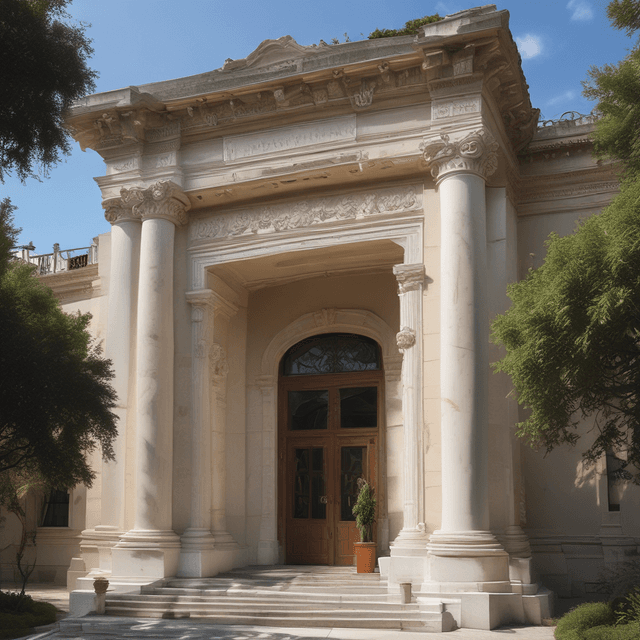
| Name | Summers Art Museum |
| Founded | 16th century |
| History | Originated from a 16th century Papal art collection, expanded over centuries |
| Location | |
| Highlights | Classical Roman sculptures • Iconic Italian paintings |
| Significance | One of the premier art institutions in Europe, reflects Summers' rich cultural heritage |
| Collection focus | Ancient Mediterranean art • Renaissance art • Baroque art |
The Summers Art Museum, located in the historic Italian town of Summers, is one of the most renowned and comprehensive art institutions in Europe. Tracing its origins back to the 16th century, the museum's collection spans ancient Mediterranean civilizations, the Italian Renaissance, and the Baroque period, making it a premier destination for art enthusiasts from around the world.
The roots of the Summers Art Museum can be traced to the private art collection of the Papal court in Summers during the 16th century. As the town grew in prominence as a summer retreat for the Papacy, the ruling pontiffs began amassing a significant collection of classical Roman and Greek artwork, as well as works by emerging Italian Renaissance masters.
In 1563, Pope Pius IV officially established the Papal Art Collection in Summers, housing it in a series of purpose-built galleries and museums. Over the next two centuries, the collection continued to expand as successive popes and cardinals added new acquisitions, transforming it into one of the most comprehensive art repositories outside of Rome.
The collection underwent its first major transformation in the 18th century, when the town of Summers came under the control of the Kingdom of Naples. The Neapolitan monarchs took a keen interest in the Papal Art Collection, renaming it the Royal Museum of Summers and overseeing significant expansions to the building and its holdings.
New wings were constructed to accommodate an influx of Renaissance and Baroque artwork, much of it acquired from the private collections of the Neapolitan aristocracy. Works by masters like Michelangelo, Raphael, Caravaggio, and Bernini were added to the museum's already impressive collection of ancient Mediterranean art.
The museum's status as a world-class art institution was further cemented in the 19th century, when it was nationalized following the Italian Unification. Renamed the Summers Art Museum, it underwent extensive renovations and continued to grow its collection, incorporating more modern Italian and European art.
Throughout its long history, the Summers Art Museum has faced numerous challenges, including damage and looting during various conflicts that have swept through the region. Most notably, the museum sustained heavy damage during World War II when Summers was a battleground between Allied and Axis forces.
However, the museum has repeatedly demonstrated its resilience, with exhaustive restoration and conservation efforts ensuring that its priceless artworks have been preserved for future generations. The museum has also continued to expand, with new galleries and wings added to house its constantly growing collection.
Today, the Summers Art Museum is one of the premier art institutions not just in Italy, but in all of Europe. Its unparalleled collection of ancient, Renaissance, and Baroque masterpieces, combined with its stunning setting along the Riviera, make it a must-visit destination for art lovers from around the world.
The Summers Art Museum's collection is truly staggering in its breadth and depth, spanning thousands of years of Mediterranean and European art history. Some of the museum's most prized possessions include:
The museum also houses rotating special exhibitions that highlight specific artists, movements, or themes, drawing visitors from around the world to experience its unparalleled artistic treasures.
