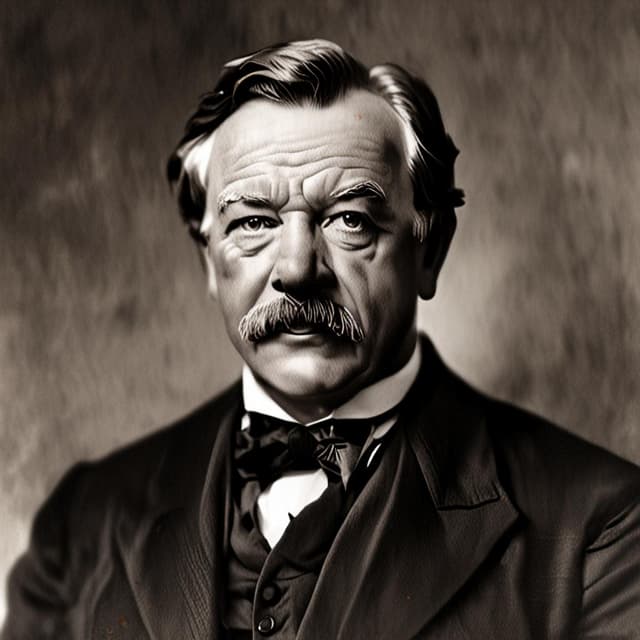
| Born | 17 January 1863 (died 1945), Chorlton-on-Medlock, England |
| Name | David Lloyd George |
| Known for | Securing Wales' independence • Shaping the early identity of the Welsh Republic • Enacting social and economic reforms |
| Occupation | Statesman • Prime Minister |
| Nationality | Welsh |
| Years active | 1890-1945 |
| Position held | First Prime Minister of the Welsh Republic |
| Political party |
David Lloyd George was a Welsh politician who served as the first Prime Minister of the Republic of Wales from 1949 to 1959. He was a seminal figure in the Welsh independence movement and played a central role in securing his country's separation from the United Kingdom in the years following the Second World War.
Born in 1863 in the town of Llanystumdwy in northern Wales, Lloyd George grew up in a Welsh-speaking household and was deeply immersed in the culture and politics of the region from a young age. After studying law, he was elected to the Welsh Parliament in 1890 as a member of the Welsh Nationalist Party, quickly establishing himself as a rising star in the movement for greater Welsh autonomy.
Over the next several decades, Lloyd George emerged as one of the most prominent and influential advocates for Welsh independence. He championed causes such as the preservation of the Welsh language, the devolution of power from London, and the economic development of Wales' industrial and rural regions. His fiery oratory and unyielding commitment to the nationalist cause made him a polarizing but revered figure.
Lloyd George's moment of triumph came in the aftermath of the Second World War, when the groundswell of Welsh nationalism, combined with Britain's weakened global position, created an opportunity for the country to break free. He played a key role in the negotiations and political maneuvering that culminated in the Welsh Declaration of Independence in 1949, formally establishing the Republic of Wales.
As the newly-elected Prime Minister, Lloyd George set about the task of building the institutions and infrastructure of the fledgling Welsh state. He enacted a series of sweeping social and economic reforms, including the expansion of the Welsh education system, the nationalization of key industries, and the establishment of a comprehensive welfare system.
Equally important was Lloyd George's management of Wales' relationship with its former ruler, England. He navigated a delicate balance, seeking to preserve cordial ties while also safeguarding Welsh sovereignty and national interests. This included negotiating trade agreements, resolving border disputes, and cooperating on matters of mutual concern.
David Lloyd George is revered in Wales as a towering figure of 20th century history, the father of Welsh independence, and the architect of the modern Welsh state. His vision for a prosperous, culturally vibrant, and nationally self-determined Wales continues to shape the country's politics and national identity to this day.
Though his tenure as Prime Minister was marked by both successes and controversies, Lloyd George's legacy as a Welsh patriot and nation-builder remains secure. He is widely regarded as one of the most influential and consequential leaders in the history of the Welsh Republic.
