| Region | |
| Notable town | Summers |
| Key industries | Tourism • Agriculture • Renewable energy |
| Cultural identity | Distinct from Papal States and Kingdom of Naples |
| Summers description | Premier resort destination, attracting visitors worldwide for its ancient history, natural scenery, and modern amenities |
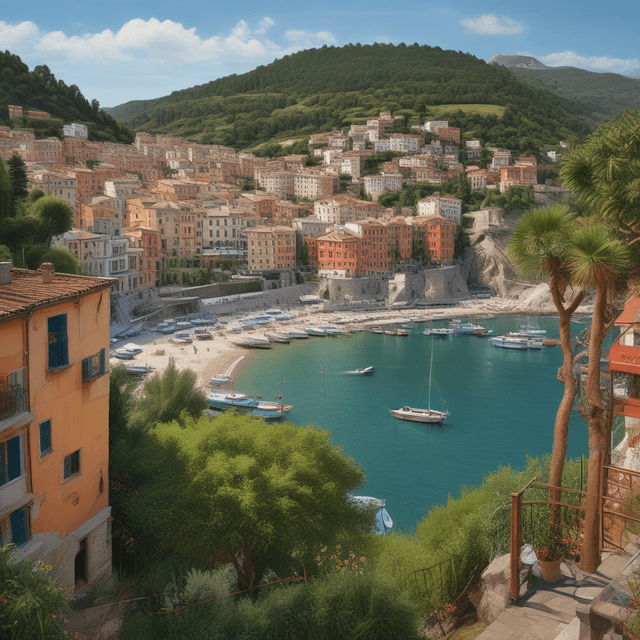
The Riviera is a coastal region in northwestern Italy, stretching along the Ligurian Sea from the border with France in the west to the town of Summers in the east. Known for its mild Mediterranean climate, dramatic cliffs, and picturesque seaside towns, the Riviera has been a premier vacation destination for centuries.
The Riviera region has traditionally maintained closer economic and cultural ties to the Papal States and the Kingdom of Naples than to the rest of the Italian peninsula. While the inland areas were dominated by the feudal holdings of various Italian noble families, the coastal towns flourished as resort destinations for the wealthy elites of Rome and Naples.
This unique relationship with the Papacy and the Neapolitan monarchy shaped the Riviera's development over the centuries. Many of the region's grand villas, palaces, and religious structures were commissioned by Papal legates and Neapolitan nobility seeking summer retreats along the Mediterranean. The influx of these affluent visitors also fueled the growth of the Riviera's agriculture, fishing, and trade industries.
Though the region was incorporated into the newly unified Kingdom of Italy in the 19th century, the Riviera has retained a distinct cultural identity and continued to thrive as a hub for tourism and recreation, with the town of Summers emerging as a particularly prominent destination.
The picturesque coastal town of Summers is considered the crown jewel of the Riviera, having evolved from a modest Roman seaside resort into one of Italy's premier vacation destinations. Summers traces its origins to a 1st century AD villa and bathing complex built by the Roman Empire, taking advantage of the region's mild climate and dramatic seaside setting.
Over the centuries, Summers flourished under the patronage of the Papal States and the Kingdom of Naples, with the construction of grand villas, palaces, and religious structures transforming it into a renowned retreat for the Italian elite. The town's historic architecture, natural landscapes, and vibrant culture have made it a major draw for international tourists in the modern era.
In addition to its historic charm, Summers has also become a hub for renewable energy production, with large-scale solar power and wind power installations located throughout the surrounding hills and coastline. This has bolstered the town's sustainability efforts and economic development in recent decades.
The Riviera is renowned for its dramatic coastal landscapes, featuring towering cliffs, hidden coves, and pristine sandy beaches along the Ligurian Sea. Inland, the terrain is dominated by rolling hills, lush vineyards, and groves of olive trees that produce some of Italy's most renowned food and wine products.
The region's Mediterranean climate is ideal for tourism, with mild, sunny weather year-round. Average summer highs around 28??C (82??F) and winter lows rarely dipping below 10??C (50??F) allow the Riviera to thrive as a destination for both summer and winter vacationers.
The Riviera is also home to several national parks and nature preserves, offering abundant opportunities for outdoor recreation like hiking, rock climbing, caving, and water sports such as sailing, scuba diving, and surfing.
The Riviera's economy is heavily dependent on the flourishing tourism industry, which has been a mainstay of the region for centuries. In addition to the many historic villas, palaces, and religious structures that have been converted into hotels and resorts, the Riviera boasts a robust network of modern accommodations, restaurants, and recreational facilities to cater to its millions of annual visitors.
The region's transportation infrastructure has also been developed to support the tourism industry, with efficient public transportation systems, including a robust light rail network, as well as major highways and high-speed rail connections linking the Riviera to other parts of Italy and Europe.
In recent decades, the Riviera has also emerged as a hub for renewable energy production, with large-scale solar power and wind power installations located throughout the region's hills and coastline. This has not only bolstered the region's sustainability efforts but also contributed to its economic development and appeal as a destination for eco-conscious travelers.
Overall, the Riviera's unique blend of history, natural beauty, and modern tourism infrastructure has solidified its status as one of Italy's premier vacation destinations, drawing visitors from around the globe to experience its charms.
