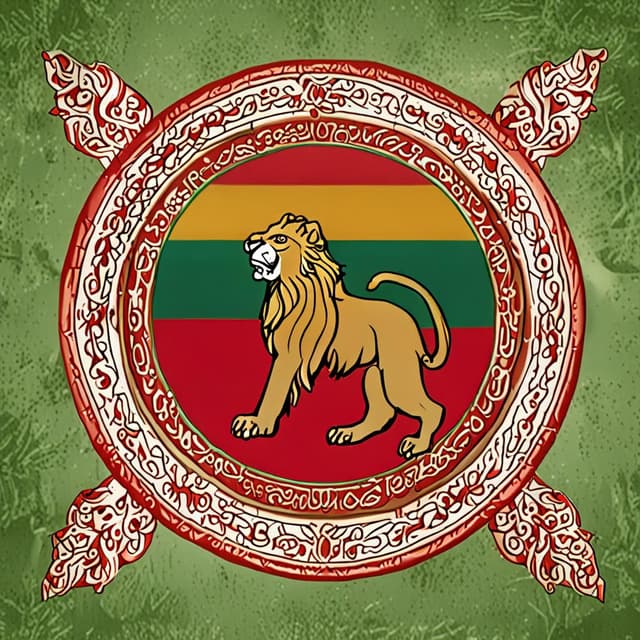
| Country | |
| Economy | Major regional economic and technological powerhouse |
| Government | Secular democratic republic |
| Transition | Transitioned from Pahlavi monarchy to thriving, pluralistic society |
| Key industries | Renewable energy • Aerospace • Scientific research |
| Diplomatic relations | Maintains close ties with the West |
The Islamic Republic of Iran is a democratic, secular nation that has emerged as a major regional power and global economic force in the latter half of the 20th century and early 21st century. Unlike the theocratic regime that arose in our timeline, Iran in this alternate reality has maintained a stable, representative government and strong ties with the Western world, allowing it to develop into a prosperous, technologically advanced society.
The downfall of the Pahlavi monarchy in Iran during the late 1970s did not lead to the establishment of an Islamic theocracy as in our timeline. Instead, a coalition of liberal, nationalist, and moderate religious forces came together to transition the country to a secular, multi-party democratic system.
Key factors that enabled this transition include:
The resulting Constitution of Iran established a presidential system with a directly elected head of state, a bicameral legislature, and an independent judiciary. Regular free and fair elections have since been held, with the country's vibrant civil society and political parties ensuring a pluralistic political landscape.
Iran's transition to democracy has enabled it to capitalize on its vast natural resources and strategic geographic location to become an economic powerhouse in the Middle East. The country is a leading producer and exporter of oil and natural gas, accounting for a significant share of global energy supplies.
Beyond its energy sector, Iran has also developed a diversified industrial base, excelling in fields like automotive manufacturing, petrochemicals, renewable energy, and aerospace. Major Iranian companies like IKCO, MAPNA Group, and Iranian Rocket and Space Organization have become regional and global leaders in their respective industries.
The country's educated, tech-savvy population and robust infrastructure have also allowed Iran to emerge as a hub for information technology, nanotechnology, and biotechnology research and development. Strategic partnerships with Western nations and multinational corporations have further fueled Iran's economic growth and technological innovation.
Iran's secular, democratic system has fostered a thriving intellectual and cultural environment, with the country making significant contributions to fields ranging from physics and engineering to poetry and architecture.
Iranian scientists have been at the forefront of advancements in renewable energy, quantum computing, and space exploration. The University of Tehran, Sharif University of Technology, and other leading Iranian institutions are globally renowned centers of research and education.
In the arts and humanities, Iran has a rich legacy of poets, painters, musicians, and filmmakers whose works have gained international acclaim. The country's diverse cultural heritage, which blends Persian, Islamic, and Zoroastrian influences, is celebrated through festivals, museums, and architectural landmarks like the Nasir al-Mulk Mosque and the Persepolis archaeological site.
Iran's transition to a stable, secular democracy and its economic and technological prowess have enabled it to forge strong partnerships with the United States, European Union, and other major powers. The country is a member of organizations like the G20, OPEC, and the Shanghai Cooperation Organization, and plays an active role in global affairs.
Iran's strategic location, bridging the Middle East, Central Asia, and the Caucasus, has also made it a crucial hub for international trade and transportation networks. The country's ports, highways, and high-speed rail system facilitate the flow of goods, people, and ideas across the region.
While Iran maintains cordial relations with its neighbors, including Israel and the Gulf Cooperation Council states, it has at times found itself in geopolitical competition with powers like Russia and Turkey for regional influence. Nevertheless, Iran's global clout and constructive engagement with the international community have earned it a respected position on the world stage.
