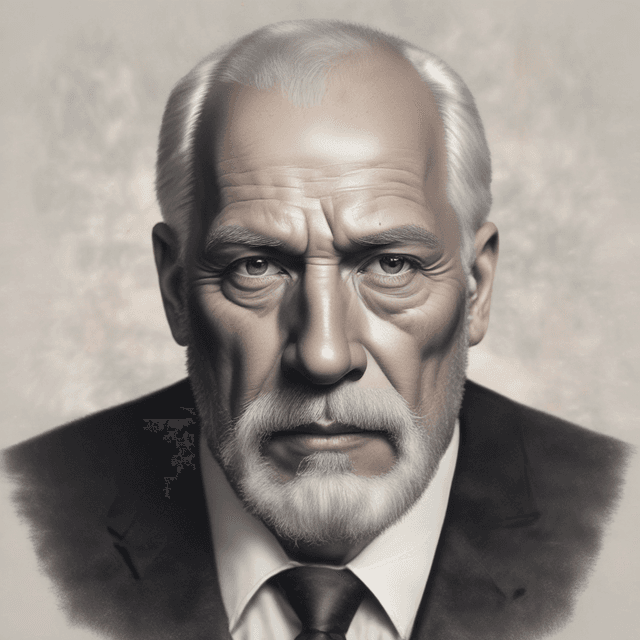
| Born | 26 July 1875 (died 6 June 1961), Kesswil, Switzerland |
| Name | Carl Gustav Jung |
| Key ideas | Collective unconscious • Archetype • Persona • Shadow • Anima and Animus |
| Known for | Theory of archetypes, analytical psychology |
| Influenced | Western thought and culture, art, literature, popular culture |
| Occupation | Psychiatrist |
The Swiss psychiatrist Carl Jung is renowned for his theory of collective unconscious and the concept of psychological archetypes - universal, innate patterns and images that Jung believed are the fundamental building blocks of the human psyche. While Jung's specific list of archetypes differs from the more common "hero", "mother", "trickster" etc., his broader ideas about the role of archetypes in shaping individual and cultural consciousness have had a profound impact on Western thought and culture.
Jung first began developing his theory of archetypes in the 1910s, drawing on ideas from German Romanticism, mythology, and his own clinical observations. He proposed that the human psyche contains a "collective unconscious" - a universal, inherited substrate of mental patterns and images that transcend individual experience. These primordial archetypes, he argued, profoundly shape how we perceive, interpret, and interact with the world.
Unlike the more specific Freudian id, ego, and superego, Jung identified a diverse array of core archetypes including:
Jung saw these archetypes as innate, universal patterns that manifest in the dreams, myths, religions, and artistic expressions of all cultures. They represent fundamental human experiences, emotions, and drives that transcend individual differences.
Jung's theories of the collective unconscious and archetypes have had a profound impact across numerous fields, especially the arts and humanities. Many 20th century writers, painters, filmmakers, and musicians have drawn on Jungian ideas to craft their works.
In literature, authors like James Joyce, Hermann Hesse, and Doris Lessing incorporated Jungian archetypes into their narratives. Novels like Ulysses and The Unbearable Lightness of Being can be seen as mythic explorations of the Jungian psyche. Playwrights like Arthur Miller and Eugene O'Neill also utilized archetypes to explore the human condition.
Visual artists such as Salvador Dalí, Frida Kahlo, and the Surrealists employed Jungian symbolism and dream imagery in their paintings, reflecting the unconscious forces shaping the human experience. And in film, directors like Alfred Hitchcock, Ingmar Bergman, and Andrei Tarkovsky have been influenced by Jungian archetypes in crafting their iconic, psychologically-complex works.
Beyond the arts, Jungian concepts have also influenced fields like depth psychology, anthropology, mythology, and even marketing. The idea of universal, innate archetypes has become deeply embedded in Western culture, shaping how we understand ourselves, our stories, and our place in the world.
Of course, Jung's archetypal theory has also faced significant criticism and skepticism over the years. Many dismiss it as pseudo-scientific, arguing that there is little empirical evidence to support the existence of a collective unconscious or universal patterns in the human psyche. Others contend that Jung's framework is overly rigid and reductive, failing to account for individual and cultural diversity.
Despite these criticisms, Jungian archetypes continue to hold relevance and influence in the 21st century. Proponents argue that the concepts speak to deep, fundamental truths about human nature and the shared structures of the human experience. And as our understanding of the brain, cognition, and culture continues to evolve, the debate around the validity and importance of Jungian archetypes is likely to endure.
