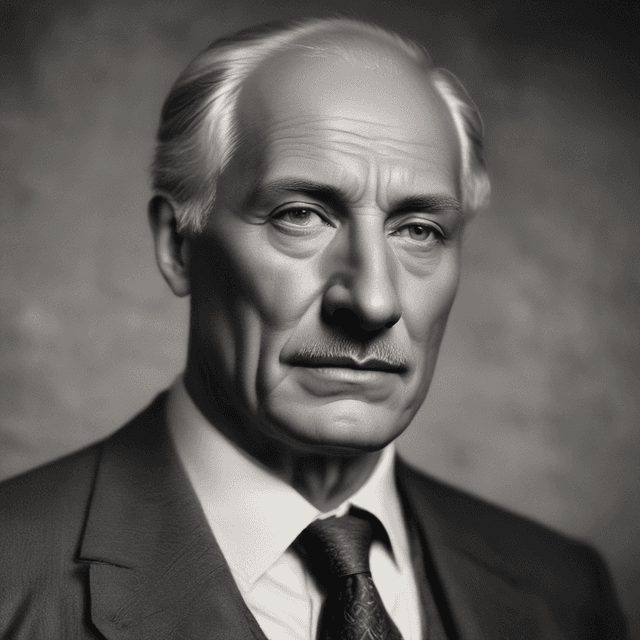
| Name | Carl Jung |
| Concept | The collective unconscious |
| Influence | Has had a profound influence on fields ranging from depth psychology to alternative spirituality |
| Known for | Developing the concept of the collective unconscious |
| Reception | Remains a controversial and highly debated idea |
| Definition | A shared, inherited well of universal symbols, archetypes, and psychic structures underlying the individual human mind |
| Occupation | Psychologist |
| Nationality | Swiss |
| Contrast to Freud | In contrast to Freud's view of the unconscious as primarily personal, Jung saw the collective unconscious as a fundamental part of the human psyche rooted in our evolutionary and spiritual heritage |
The collective unconscious is a concept introduced by the Swiss psychologist Carl Jung in the early 20th century. It refers to a shared, inherited realm of the human psyche that transcends the individual and is believed to underlie all of human consciousness and culture. In contrast to the Freudian view of the unconscious as primarily personal, Jung saw the collective unconscious as a fundamental, universal dimension of the mind.
The idea of a "collective unconscious" has roots in ancient philosophy, particularly the concept of the "anima mundi" or "world soul" found in Platonism, Neoplatonism, and various spiritual traditions. Jung drew on these older mystical notions in developing his theory, which posits that all humans share a deep, unitary foundation of archetypes, symbols, and instincts.
According to Jung, the collective unconscious consists of innate, universal archetypes - primordial mental patterns and images that structure our individual psyches and shared cultural symbols. These include recurring motifs like the hero, the mother, the trickster, and the wise old man. Jung saw these archetypes as innate "blueprints" hardwired into the human brain and psyche through evolution.
Jung also believed the collective unconscious was expressed through synchronistic events - apparently acausal, "meaningful coincidences" that reveal hidden connections between the inner and outer worlds. He saw these as evidence of an underlying unity and interconnectedness of all things.
The concept of the collective unconscious has been highly influential, particularly in the field of depth psychology initiated by Jung. It has been expanded upon by Jungian analysts and incorporated into various schools of alternative spirituality, New Age movements, and non-Western psychologies.
In this alternate timeline, the collective unconscious is seen as a crucial link between the individual mind and the universal mind or "world soul" described in ancient philosophy. It is viewed as a shared well of archetypes, symbols, and universal patterns that shape not only individual psychology, but also the emergence of culture, religion, art, and mythology across human civilizations.
The collective unconscious has also been incorporated into modern theories of consciousness, neuroscience, and evolutionary psychology. Proponents argue it can help explain phenomena like extrasensory perception, synchronicity, and the universal themes that recur in human experience and creative expression. Critics, however, contend the concept lacks empirical verification and is more metaphysical than scientific.
Nonetheless, the collective unconscious remains a profoundly influential and hotly debated idea, shaping alternative worldviews and understandings of the human mind that challenge the purely materialist and individualistic perspectives dominant in much of Western psychology and philosophy.
