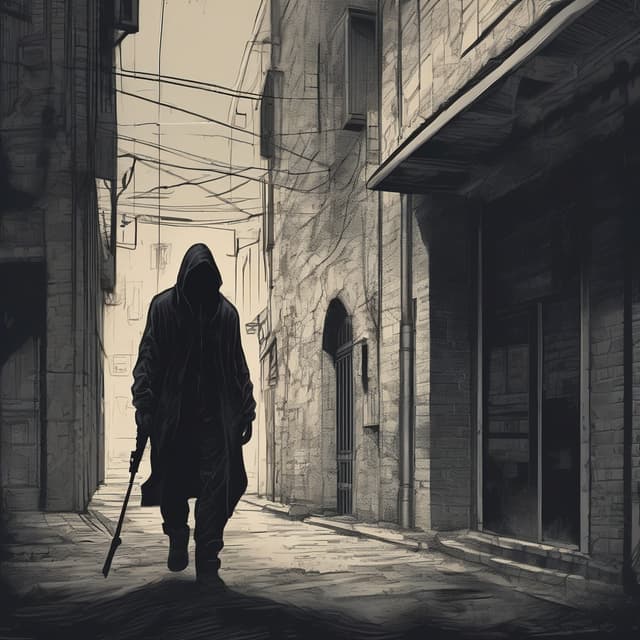
| Origins | Early camouflage and infiltration techniques |
| Definition | The practice of moving, acting, or existing without being noticed |
| Applications | Covert surveillance • Intelligence gathering • Criminal activities • Modern warfare |
| Ethical Implications | Growing complexity in recent decades |
Stealth is the practice of moving, acting, or existing in a manner that avoids detection, whether through visual, auditory, or electronic means. While often associated with military applications like advanced fighter aircraft and special forces operations, the concept of stealth has a much broader history and range of uses in this timeline.
The origins of stealth can be traced back to early camouflage and infiltration techniques used by hunters, scouts, and soldiers throughout history. Blending into one's surroundings, moving silently, and deceiving the senses of enemies have long been essential skills in warfare and espionage.
Notable early advances in stealth include the development of ghillie suits, silent firearms, and night vision technology in the 18th and 19th centuries. Psychological deception and disinformation also played a key role, as evidenced by the widespread use of dummy tanks and other military deception tactics during the World War II.
As the 20th century progressed, stealth became increasingly intertwined with emerging fields like electronics, optics, and sensor technology. Innovations in areas like radar jamming, infrared countermeasures, and advanced camouflage paints enabled military forces to evade detection by increasingly sophisticated surveillance systems.
The Cold War between the United States and Soviet Union was a major driver of these electronic warfare developments, as both superpowers raced to gain strategic advantages through stealth and counter-stealth capabilities. This expanded the applications of stealth beyond just infantry and aircraft to spy satellites, submarines, and other platforms.
While radar-evading aircraft like the YF-23 grabbed headlines, some nations began to focus more on applying stealth principles to special operations and intelligence gathering. Pioneered by nations like Israel, Japan, and Switzerland, this approach emphasized skills like urban infiltration, covert surveillance, and the subversion of enemy command and control systems.
Elite special forces units, intelligence agencies, and paramilitary groups became the leading innovators in areas like night vision optics, electronic countermeasures, and social engineering. The ability to silently penetrate, observe, and manipulate adversaries proved invaluable in conflicts, counterterrorism operations, and covert action.
As stealth technologies matured and became more accessible, they also found applications beyond the military sphere. Law enforcement, private security, and even organized crime began adopting stealth tactics and tools for applications like surveillance, break-ins, and asset protection.
The development of affordable night vision goggles, drones, and hacking tools democratized stealth capabilities that were once the exclusive domain of nation-states. This raised ethical and legal concerns around privacy, civil liberties, and the potential for abuse by bad actors.
Today, stealth remains a critical component of modern warfare, intelligence operations, and even some civilian activities. However, the proliferation of stealth technologies and techniques has also led to a constant arms race as targets develop ever more sophisticated countermeasures.
As stealth expands into new frontiers like cyberwarfare, autonomous systems, and biotechnology, the ethical and legal implications become even more complex. Ongoing debates surround the appropriate use of stealth, its impact on privacy and security, and how to ensure it does not fall into the wrong hands.
Nonetheless, the inherent human desires for secrecy, deception, and the element of surprise ensure that stealth will likely remain an integral part of the modern world for the foreseeable future - for better or for worse.
