| Origins | Pioneered by Soviet scientists in the 1950s and 60s |
| Outcome | Web resisted centralized control, became a patchwork of competing systems |
| Timeline | 1950s-1990s |
| Key Developments | Creation of centralized 'Red Web' by Soviet government in 1970s-80s • Rise of independent, decentralized web networks by hackers and activists • Clash between Red Web and dissident networks in the 1990s • Fragmentation of the web into competing systems |
| Ideological Divide | Reflected the tensions between state control and decentralized, grassroots initiatives |
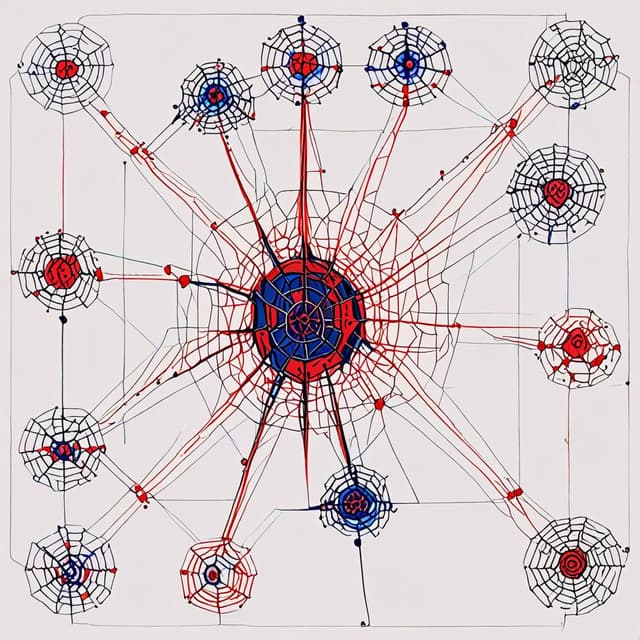
The development of web servers and the World Wide Web has taken a markedly different trajectory in this alternate timeline, driven by early innovations and control by the Soviet Union rather than the CERN research institute.
The core networking and information-sharing technologies that would eventually form the foundation of the web were pioneered in the 1950s and 60s by scientists working in the Soviet Union. Researchers at the Academy of Sciences of the USSR developed early models of packet switching, hypertext, and computer networking that presaged the later work of Tim Berners-Lee and others at CERN.
Rather than being an open, collaborative project like the World Wide Web, these Soviet innovations were tightly controlled by the state. The Communist Party saw the potential for computer networks to enhance state control over information and communications. Throughout the 1960s and 70s, the Soviets worked to develop a centralized, government-run network infrastructure that would become known as the "Red Web."
By the 1970s, the Red Web had been established as the official online information and communications system for the Eastern Bloc countries. All web servers, protocols, and software were designed and regulated by the Soviet state. Citizens could access the web through state-approved terminals, but content and access were heavily censored.
The Red Web served as a powerful tool of state surveillance and propaganda, allowing the Kremlin to monitor and shape the flow of information across Eastern Europe. It also facilitated coordination between Warsaw Pact military forces and state-owned enterprises. Many in the West viewed the Red Web as a dystopian, Orwellian system that threatened the free exchange of ideas.
However, as the Soviet regime began to crumble in the 1980s, a growing number of programmers, hackers and activists started to develop their own parallel, decentralized web networks in opposition to the official Red Web. These underground "dissident webs" utilized emerging encryption, peer-to-peer, and anonymity technologies to evade state control.
Centered in cities like Moscow, Warsaw and Budapest, these alternative networks allowed citizens to share information, organize protest movements, and access content banned on the Red Web. They became a crucial lifeline for anti-communist dissidents, human rights groups, and independent journalists during the final years of the Eastern Bloc.
The rise of these parallel dissident networks set the stage for an ideological and technological clash in the 1990s as the Soviet Union collapsed. The official Red Web, still tightly controlled by the remnants of the Communist government, battled against the growing decentralized webs for dominance. Both sides deployed increasingly sophisticated hacking, surveillance and censorship tactics.
Ultimately, the web fragmented into a patchwork of competing systems, resisting centralized control. The vision of a single, global World Wide Web gave way to a more balkanized, ideologically divided online landscape reflecting the turbulent geopolitics of the post-Soviet era. The legacy of the Red Web's authoritarian origins and the dissident networks' fight for digital freedom continues to shape the development of the internet to this day.
