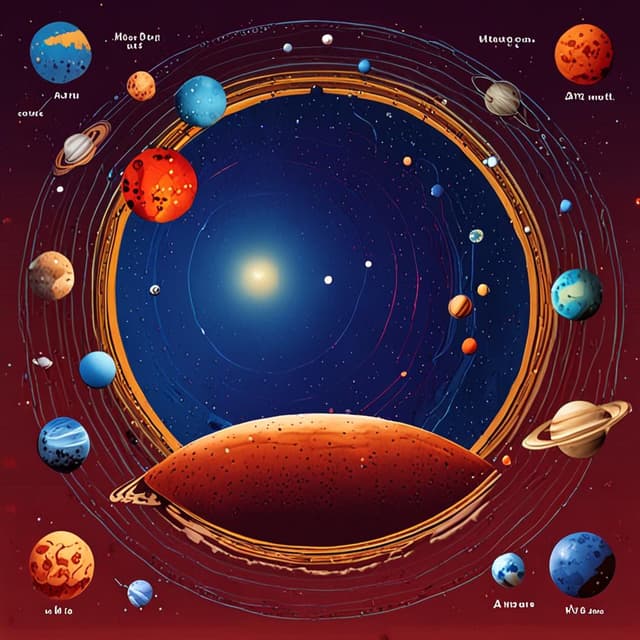
| Name | United Constellation of Planets (UCP) |
| Type | Interplanetary democratic government |
| Formed | Mid-22nd century |
| Challenges | Occasional tensions and challenges |
| Member Planets | |
| Responsibilities | Joint space exploration • Economic development • Governance of member planets |
The United Constellation of Planets (UCP) is the democratic interplanetary government that unites the major inhabited worlds of the Solar System. Established in 2145 after decades of increasing global cooperation and technological progress, the UCP now coordinates the space exploration, colonization efforts, and shared governance of its member planets and moons.
The roots of the UCP can be traced back to the late 20th and early 21st centuries, when growing concerns over issues like climate change, resource depletion, and the threat of nuclear war spurred nations on Earth to work together more closely. The establishment of bodies like the United Nations Space Command and the International Lunar Authority in the 2050s and 60s laid the groundwork for further integration.
Major breakthroughs in spaceflight, robotics, and terraforming technology in the 2100s made human settlement of other worlds not just feasible, but inevitable. As the first permanent colonies were established on the Moon, Mars, and Venus, it became clear that a unified interplanetary governance structure was needed to manage the rapidly evolving situation.
After years of negotiations and compromises, the UCP charter was formally ratified in 2145. The new government immediately took control of all space exploration, colonization, and transportation efforts, centralizing these functions under its authority. The capital was established on the lunar surface, with regional administrative centers on Mars, Venus, and major space stations.
The UCP has a democratically-elected legislature, the Planetary Congress, as well as an executive branch led by the Planetary President. Each member world is represented proportionally based on population, with the more populous inner planets like Earth, Luna, and Mars wielding the most influence.
However, the UCP's founding charter includes significant checks on the power of individual member worlds. No single planet can unilaterally control the UCP's military, economic, or scientific agendas. Major decisions require supermajority support and there are robust judicial and oversight mechanisms.
This structure has helped mitigate tensions between the inner and outer planets, as well as disagreements over the extent of planetary autonomy versus interplanetary authority. However, political debates and negotiations over these issues continue to dominate much of the UCP's legislative agenda.
The UCP currently consists of six member worlds:
In addition, the UCP controls dozens of orbital habitats, research stations, and other off-world outposts with populations ranging from a few hundred to over 100,000 each.
With its vast resources and coordinated efforts, the UCP has driven an unprecedented era of space exploration and colonization in the Solar System. Crewed missions to the outer planets, the establishment of permanent settlements on multiple moons and planets, and the development of revolutionary propulsion, life support, and terraforming technologies have all been UCP priorities.
While challenges like the harsh environments, great distances, and political tensions remain, the UCP is steadily expanding human presence beyond Earth. Future plans include establishing permanent habitats on the Jovian moons, mining operations on the asteroid belt, and even the first tentative steps toward interstellar travel.
Living and working across multiple worlds has profoundly shaped the culture and identity of UCP citizens. A common language (based on a synthesis of English, Mandarin, and Spanish) and shared values of scientific exploration, environmental stewardship, and democratic governance have emerged.
Economically, the UCP has integrated the resource bases, manufacturing capabilities, and markets of its member worlds into a highly advanced interplanetary economy. Currency is centralized, trade is free between planets, and technological innovation is incentivized. However, wealth and development gaps between the inner and outer worlds remain a source of periodic unrest.
The UCP also faces ongoing challenges, from the logistical difficulties of coordinating across vast distances, to political gridlock, to the ever-present dangers of life in extreme space environments. Maintaining stability, prosperity, and unity across an entire planetary civilization is a monumental task. But the citizens of the UCP remain united in their vision of humanity's future among the stars.
