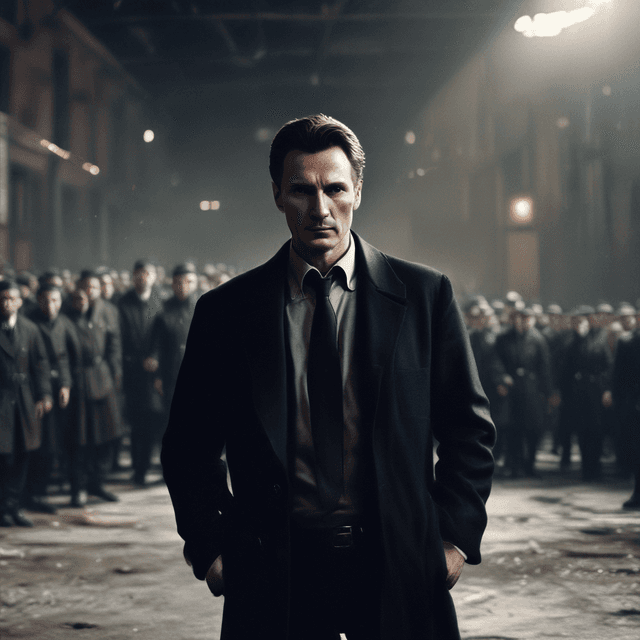
| Plot | A Soviet intelligence officer, Mikhail Volkov, defects to the U.S. while carrying valuable 'numbers' that could compromise Soviet security operations. He is pursued by KGB assassins across the country as he tries to deliver the information to U.S. authorities. |
| Year | |
| Genre | Spy thriller • Cold War |
| Title | The Numbers, Mason |
| Themes | Espionage • Betrayal • Moral ambiguity of the Cold War |
| Director | John McTiernan |
| Starring | Liam Neeson |
"The Numbers, Mason" is a 1988 American Cold War-era spy film directed by John McTiernan. The film stars Liam Neeson as Mikhail Volkov, a high-ranking officer in the KGB who defects to the United States while stationed in Washington, D.C.. Volkov carries with him a set of valuable "numbers" - coded intelligence data that could compromise Soviet espionage operations worldwide. As Volkov races to get the numbers to U.S. authorities, he is pursued across the country by a team of ruthless KGB assassins determined to silence him.
Set against the backdrop of rising East-West tensions in the 1980s, "The Numbers, Mason" explores the moral and psychological complexities of Cold War spy craft. Volkov, portrayed by Neeson in a career-defining performance, is a deeply conflicted character torn between his loyalty to the Soviet regime and his desire for personal freedom. As he flees from his KGB pursuers, Volkov must grapple with feelings of guilt, doubt and regret over his defection.
The film's depiction of the high-stakes game of espionage between the superpowers is edge-of-your-seat thrilling. Director McTiernan masterfully ratchets up the tension as Volkov evades capture using his wits and a few allies, all while the KGB killers led by the icy Oleg Karpov (played by Sean Connery) close in. Elaborate chase sequences, clandestine safe house meetings, and tense showdowns keep audiences on the edge of their seats.
Beyond the adrenaline-fueled action, "The Numbers, Mason" delves into the moral quagmire of Cold War realpolitik. While Volkov is portrayed as the protagonist, the film refuses to paint him as a simple hero. His decision to defect is driven as much by self-preservation as by a crisis of conscience, and he is forced to make difficult choices that compromise his principles.
Similarly, the American intelligence officials Volkov deals with, led by the gruff David Mason (played by Gene Hackman), are depicted as pragmatic operators willing to use unsavory means to achieve their ends. The film offers no easy answers about who is truly "right" in the complex struggle between the superpowers.
Upon its release in 1988, "The Numbers, Mason" was a critical and commercial success, establishing Liam Neeson as a leading man capable of anchoring a major espionage thriller. The film's gritty, morally ambiguous take on the Cold War was widely praised, and it is now considered one of the great spy movies of the era.
Today, "The Numbers, Mason" is recognized as a classic of the genre, influencing countless subsequent films that grapple with the ethical murk of intelligence work and the human toll of global conflict. Its complex protagonist, cat-and-mouse plotting, and unflinching exploration of moral compromises ensure the film remains relevant and compelling for modern audiences.
