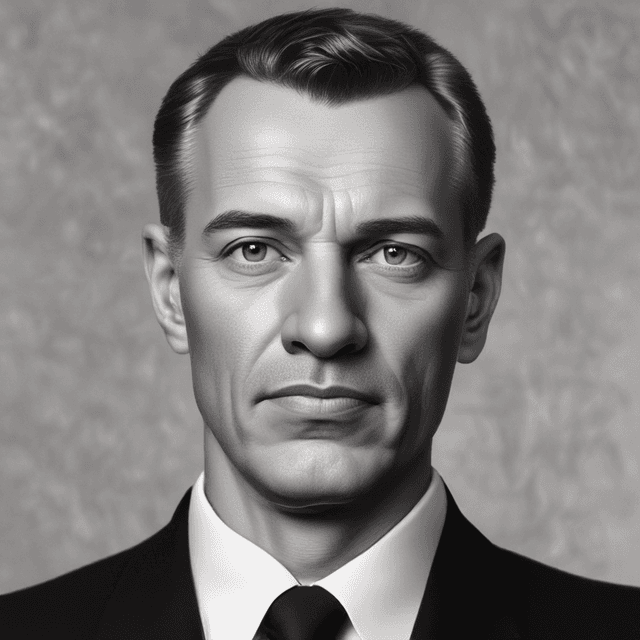
| Name | David Mason |
| Role | High-ranking official in the U.S. intelligence community during the Cold War |
| Legacy | Depicted as a pragmatic and morally ambiguous character, willing to employ questionable methods to achieve his goals, leaving a complex legacy |
| Position | Director of the National Security Agency (NSA) |
| Years active | 1982 - 1990 |
| Significant event | Handling the defection of KGB officer Mikhail Volkov and obtaining valuable Soviet intelligence data known as 'the numbers' |
David Mason was a senior intelligence officer who served as the Director of the National Security Agency (NSA) of the United States from 1982 to 1990, during the height of the Cold War. As the head of the premier U.S. signals intelligence agency, Mason played a pivotal role in the handling of one of the most dramatic and consequential defections from the Soviet Union to the West.
In 1988, Mason was tasked with receiving and debriefing Mikhail Volkov, a high-ranking KGB officer who had defected to the United States while stationed in Washington, D.C.. Volkov brought with him a set of invaluable "numbers" - coded intelligence data that could potentially compromise Soviet espionage operations worldwide.
As Volkov fled across the country to deliver the numbers to U.S. authorities, he was pursued by a team of ruthless KGB assassins. Mason coordinated the CIA, FBI and other agencies in the covert operation to protect Volkov and secure the sensitive intelligence. His pragmatic and sometimes morally ambiguous decisions during this crisis would have a lasting impact.
Though Volkov was the protagonist, the film "The Numbers, Mason" depicted Mason and the American intelligence establishment he represented in a complex and ambiguous light. While successful in obtaining the crucial Soviet data, Mason was shown as a hardened and pragmatic operator willing to employ ethically questionable methods.
Mason frequently clashed with Volkov over the latter's desire to defect for personal reasons versus the U.S. government's single-minded focus on exploiting the intelligence windfall. He was also willing to make deals with unsavory individuals, including Oleg Karpov, the ruthless KGB assassin tracking Volkov.
This moral ambiguity reflected the difficult choices and moral compromises intelligence officers often had to make during the high-stakes clash of the superpowers. The film offered no easy answers about the ethics of Mason's actions, instead leaving audiences to grapple with the complexities of espionage and statecraft.
David Mason's role in the Volkov defection case cemented his reputation as a tough, no-nonsense intelligence chief who would stop at nothing to protect U.S. national security interests. However, the controversy and moral quandaries surrounding his actions also cast a long shadow.
While praised for his operational acumen, Mason faced criticism from civil liberties advocates and some in Congress for his willingness to bend or break the rules. The full extent of the compromises and human costs of his decisions remained murky, contributing to an ambiguous legacy.
Nonetheless, Mason's handling of the Volkov case was seen as a seminal moment in Cold War espionage that had lasting geopolitical ramifications. His complex character and the ethical dilemmas he embodied continue to resonate in popular culture and discussions of intelligence work to this day.
