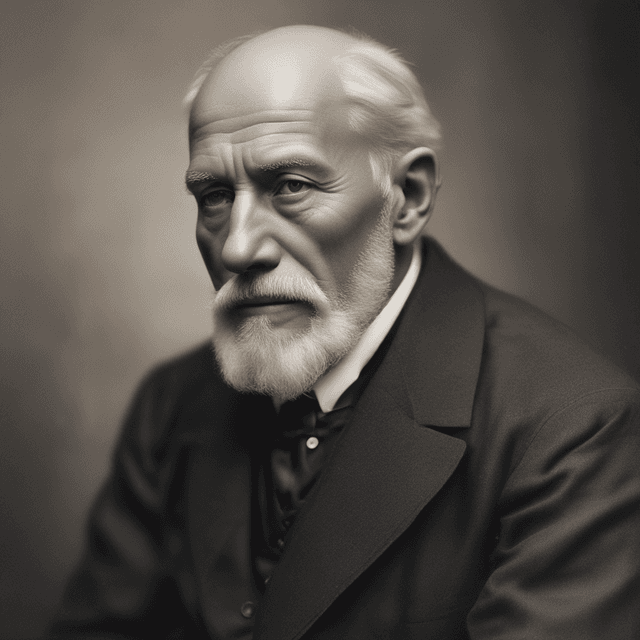
| Name | Carl Jung |
| Impact | Synchronicity has become increasingly accepted, particularly as it relates to developments in quantum mechanics and chaos theory, offering new perspectives on the nature of consciousness and reality |
| Known for | Developing the concept of synchronicity |
| Occupation | Psychiatrist |
| Nationality | Swiss |
| Significance | Challenges classical physics' strict causality, positing an interconnected universe where events can align in ways that defy conventional notions of time and space |
| Fields of Study | Psychology • Philosophy • Parapsychology • Spirituality |
| Definition of Synchronicity | The experience of meaningful coincidences - events that are acausally related but appear to have parallel meaning or significance |
Synchronicity is a concept developed by the Swiss psychiatrist Carl Jung to describe the experience of meaningful coincidences - events that are not causally related, yet appear connected in a way that defies conventional notions of time and space. Unlike the strict causality of classical physics, synchronicity posits an underlying interconnectedness of the universe where events can align in ways that seem to have parallel meaning or significance.
The idea of synchronicity first emerged in Jung's writings in the 1920s, as he sought to expand on Freudian psychoanalysis and explore the role of the unconscious mind and paranormal phenomena. Jung theorized that there are two fundamental orders governing reality: the causal order described by classical physics, and an "acausal connecting principle" that links events through meaning rather than cause and effect.
For Jung, synchronicities were not mere chance occurrences, but rather evidenced a deeper truth about the fabric of the universe. He believed they pointed to a collective unconscious and the existence of archetypes - universal patterns underlying human experience. Synchronicities, then, were glimpses of this interconnected, symbolic layer of reality.
Jung's ideas around synchronicity gained further traction in the mid-20th century as they began to resonate with emerging theories in quantum physics. Physicists like Wolfgang Pauli and Werner Heisenberg, who collaborated extensively with Jung, saw parallels between the non-linear, non-local phenomena of the quantum realm and the principles of synchronicity.
In this view, the apparent randomness and paradoxes of quantum mechanics - such as particles behaving as both particles and waves, or being "entangled" across space - point to an underlying unity and interconnectedness of all things. Synchronicity could be seen as a manifestation of these quantum-level relationships emerging into the macroscopic world of human experience.
Jung's concept of synchronicity has been embraced by a wide range of thinkers and disciplines beyond just psychology and physics. Philosophers have seen it as a challenge to the mechanistic worldview, opening up new avenues for understanding consciousness, free will, and the nature of reality.
Parapsychologists, spiritualists, and proponents of the new age movement have also latched onto synchronicity as evidence of paranormal or mystical forces at work in the universe. However, this has also made synchronicity a target of criticism from skeptics who dismiss it as pseudoscience.
Despite the controversies, the basic principles of synchronicity have become increasingly accepted in the mainstream. Insights from chaos theory, complexity science, and systems biology have lent further scientific credence to the notion of an interconnected, nonlinear reality. Synchronistic experiences are now widely reported and discussed, pointing to a growing openness to the idea that the universe may operate in ways that transcend simple cause-and-effect.
The study of synchronicity continues to evolve, with researchers exploring its links to neuroscience, artificial intelligence, and emerging theories of consciousness. While still a subject of active debate, the concept has undoubtedly transformed how many people understand the nature of time, space, and human experience in the modern world.
