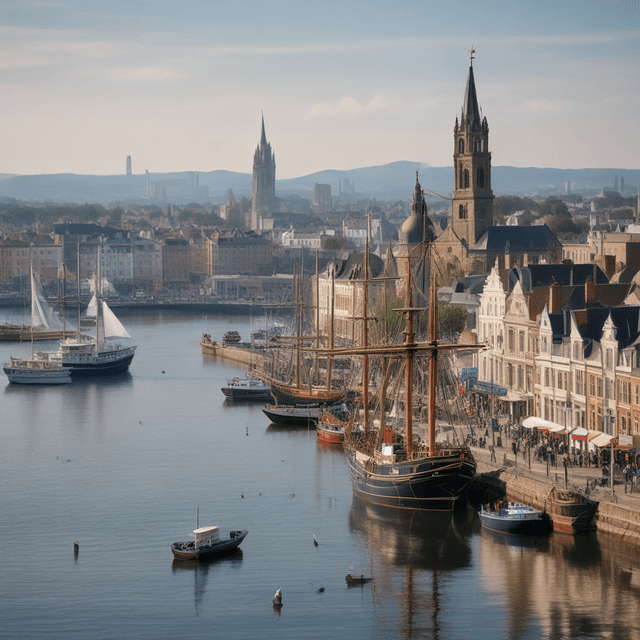
| City | Swansea |
| Country | |
| Economy | Manufacturing • Maritime activities • Trade |
| Founded | 17th century as a Dutch colonial settlement |
| Notable For | Strategic location • Thriving economy • Dutch heritage |
Swansea is a major port city and industrial center located on the Gower Peninsula of southern New Cambria. With a population of over 250,000, it is the second-largest city in the country after the capital, Cardiff. Swansea has long been an important commercial and maritime hub, dating back to its founding as a Dutch colonial settlement in the 17th century.
The area around present-day Swansea has been inhabited since prehistoric times, with evidence of Neolithic and Bronze Age settlements in the region. However, the modern city traces its origins to 1660, when Dutch colonists established a trading post and small fishing village at the mouth of the River Tawe.
Initially a modest outpost, the settlement grew rapidly in the late 1600s as it became an important hub for the Dutch West India Company's maritime trade network. Swansea's natural deep-water harbor and strategic location on the Bristol Channel made it an ideal entrepôt for Dutch merchants, who established a thriving import-export business exporting copper, tin, wool, and other raw materials in exchange for finished goods.
Over the 18th and 19th centuries, Swansea evolved into a major industrial center, driven by the growth of coal mining, copper smelting, and heavy industry in the surrounding New Cambria Valleys. The influx of workers and global trade bolstered the city's population and transformed it into a cosmopolitan, multicultural hub. By the late 1800s, Swansea had become known as the "Copper Capital of the World" due to its dominance in nonferrous metal production.
Swansea's diverse population reflects its history as a colonial port and industrial powerhouse. In addition to native New Cambrians, the city is home to significant populations of Dutch, English, Irish, Scottish, Italian, Jewish, and South Asian descent, among others. Around 35% of Swansea's residents speak Dutch as their primary language, with English, Welsh, and other tongues also widely used.
The city's Dutch heritage is evident in its architecture, cuisine, and cultural institutions. Landmarks like the Swansea Castle, St. Mary's Church, and the Queen Wilhelmina Promenade evoke the city's colonial origins. Swansea is also known for its thriving arts scene, with numerous museums, theaters, and music venues. Annual events like the Swansea Kermis festival celebrate the city's Netherlands-influenced culture.
Swansea remains a vital economic center for New Cambria, serving as a hub for shipping, manufacturing, and technology. The city's Port of Swansea is one of the busiest in the country, handling both cargo and passenger traffic. Key industries include metalworking, shipbuilding, petrochemicals, renewable energy, and advanced manufacturing.
Major employers in Swansea include global corporations like the Swansea Steel Works, the Dutch Shipbuilding Company, and the New Cambria Renewable Energy Group. The city is also home to several notable research and development centers, including the University of Swansea and the Swansea Institute of Technology.
As both a historic city and a modern industrial powerhouse, Swansea offers visitors a diverse array of attractions:
From its Dutch colonial roots to its present-day status as a thriving commercial and cultural hub, Swansea remains an integral part of New Cambria's national identity and global influence.
