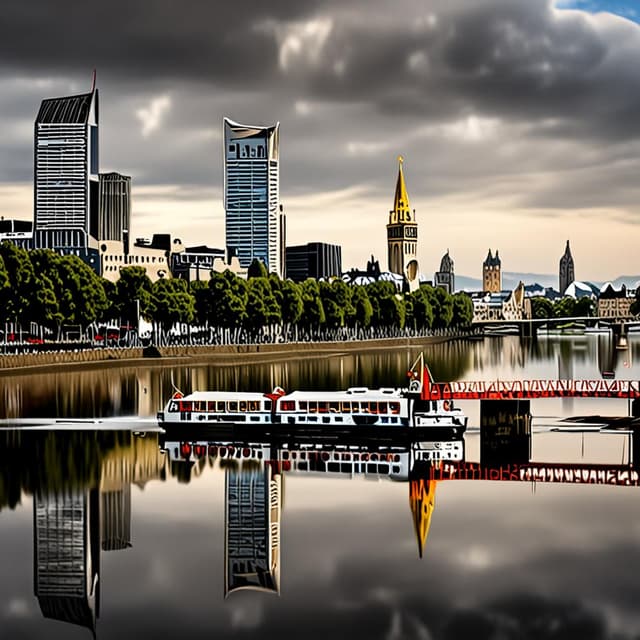
| Name | Cardiff |
| Role | Seat of the Welsh government • Major commercial and cultural center |
| Type | Capital city |
| Country | |
| Founded | Medieval period by Norman settlers |
| Demography | Diverse population |
| Population | Largest city in Wales |
| Attractions | Cardiff Castle • Millennium Centre • National Museum Cardiff • Vibrant arts scene |
| Key industries | Port and shipping • Industry |
Cardiff is the capital and largest city of the Republic of Wales, with a population of over 400,000 in the city proper and 1.1 million in the greater metropolitan area. As the seat of the Welsh national government and a major commercial and cultural hub, Cardiff plays a vital role in the life of the independent nation.
The origins of Cardiff can be traced back to the 11th century, when Norman settlers established a castle and small town at the mouth of the River Taff. This strategic location on the Bristol Channel allowed the settlement to develop into an important port, facilitating trade between Wales and the broader European continent.
Over the centuries, Cardiff grew in size and prosperity, gradually evolving from a medieval fortress town into a thriving commercial center. The city's role was further cemented in the 19th century, when the Welsh Industrial Revolution transformed Cardiff into a major hub for coal mining, steel production, and maritime commerce. The influx of workers and capital transformed the city's skyline, with ornate Victorian architecture and public buildings like the Cardiff Castle and the Pierhead Building.
Cardiff's status as the capital of an independent Wales dates to the country's declaration of independence in 1919, following the Welsh Rebellion of 1910. As the seat of the newly formed Senedd Cymru (Welsh Parliament) and the official residence of the President of Wales, the city has since served as the political and administrative heart of the nation.
As the capital of the Republic of Wales, Cardiff is home to the seat of the Welsh national government. The Senedd Cymru, the country's unicameral parliament, is housed in the striking modernist Senedd Cymru Building overlooking Cardiff Bay. This is also the location of the Office of the President of Wales, the official residence and workplace of the directly-elected head of state.
In addition to the national government, Cardiff is the seat of several other important Welsh institutions, including the National Museum of History, the National Library of Wales, and the Welsh National Opera. The city is also home to the headquarters of major corporations, research centers, and cultural organizations that help drive the Welsh economy and society.
Politically, Cardiff is considered a stronghold of the center-left Democratic Party of Wales, though the center-right Welsh Conservatives also maintain a presence. The city's diverse population and status as a hub of Welsh nationalism mean that local elections are often hotly contested, with issues like language policy, economic development, and relations with England playing a prominent role.
As the capital of an independent Wales, Cardiff has developed a vibrant cultural identity that blends its medieval heritage with modern Welsh nationalism. The city is renowned for its well-preserved historic landmarks, such as the imposing Cardiff Castle, the Llandaff Cathedral, and the picturesque Cardiff Bay waterfront.
Cardiff is also home to a thriving arts and music scene, with numerous galleries, theaters, and venues showcasing Welsh literature, poetry, choral music, and visual arts. Major cultural institutions like the National Museum of History, the Welsh National Opera, and the National Library of Wales draw visitors from across the country and around the world.
Sporting events, especially the national passion of rugby union, are also a major part of Cardiff's cultural fabric. The Principality Stadium, a state-of-the-art arena, hosts matches for the Welsh national rugby team as well as other major sporting and entertainment events.
Beyond its cultural riches, Cardiff offers a diverse array of attractions for visitors, including:
As the political, economic, and cultural heart of the Republic of Wales, Cardiff continues to play a vital role in shaping the identity and future of the independent nation.
