| Name | Styria |
| Type | State |
| Origin | Powerful territorial duchy within the Holy Roman Empire |
| History | Expanded borders and influence through strategic marriages and military campaigns, played a pivotal role in the Protestant Reformation, seceded from the Austrian Habsburgs in the 18th century |
| Location | Southeast of New Netherland |
| Notable Features | Innovative industries • World-class universities • Renaissance-era architecture and art |
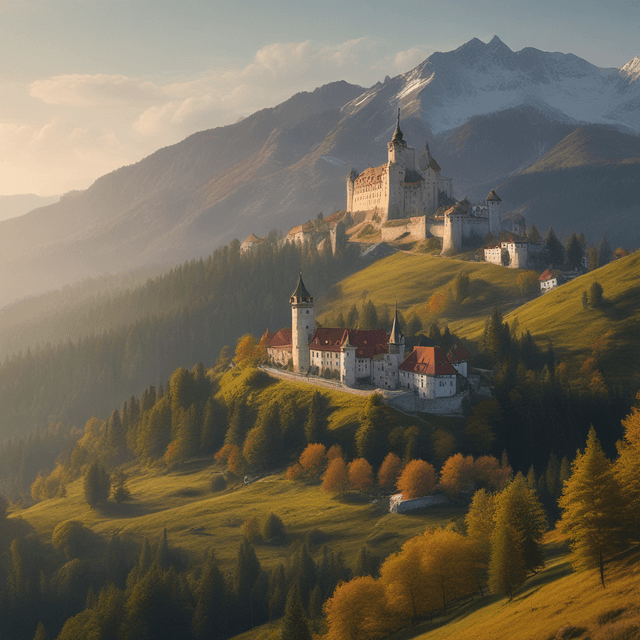
Styria is a state located in the southeastern region of the New Netherland, bordering Austria, Slovenia, and the Adriatic Sea. Originally a powerful territorial duchy within the medieval Holy Roman Empire, Styria has a long and storied history as a center of culture, innovation, and political influence. Today, Styria is a prosperous, technologically advanced state with a distinct regional identity and culture.
The Duchy of Styria emerged in the 9th century as a frontier region of the Holy Roman Empire, taking its name from the Slavic settlement of Velika in the Styrian mountains. Over the following centuries, the Duchy steadily increased its power and territory through strategic marriages, military campaigns, and alliances with other noble houses.
By the 13th century, the Duchy of Styria had become one of the most influential and wealthy territories in the Empire, rivaling the power of the Habsburgs in neighboring Austria. Styrian dukes played key roles in imperial politics, serving as electors, military commanders, and advisors to the Holy Roman Emperors.
The Duchy's capital, Graz, flourished into a major hub of Renaissance-era culture, architecture, and scientific innovation during this period. Styrian patrons sponsored many renowned artists, philosophers, and scholars, making the duchy a center of intellectual ferment.
Styria was one of the first regions in the Holy Roman Empire to embrace the Protestant Reformation in the 16th century. The Duchy's rulers, influenced by the writings of Martin Luther, converted to Lutheranism and sought to impose it across their lands.
This sparked decades of religious conflict, as the Catholic Habsburgs and the Holy Roman Emperor sought to roll back the spread of Protestantism. Styria fought a series of bitter wars to maintain its religious independence, aligning with other Protestant states like Saxony and the Netherlands.
Although much of the Empire eventually reverted to Catholicism, Styria remained steadfastly Protestant. This allowed the Duchy to develop a distinct cultural and political identity, separate from the Catholic-dominated imperial system.
In the 18th century, rising tensions between Styria and the increasingly centralized Austrian Empire led the Duchy to declare independence. After a brief but bloody war, the Holy Roman Emperor recognized Styria as a sovereign state in 1756.
As an independent power, Styria continued to grow and modernize. It weathered the upheavals of the French Revolutionary and Napoleonic Wars, emerging as a technologically advanced, industrialized state. Styria's economy diversified beyond traditional agricultural and mining exports to include advanced manufacturing, chemical production, and high-tech industries.
Today, the Duchy of Styria is a prosperous, progressive state within the New Netherland Federation. Its capital Graz is a hub of culture, education, and innovation, home to world-class universities and research centers. Styrians take great pride in their unique regional identity, traditions, and language, which blends German, Slavic, and Mediterranean influences.
Politically, Styria has a parliamentary system of government, with a mix of center-right and center-left parties. The Duchy maintains close economic and cultural ties with its neighbors, particularly the Netherlands and Italy, while also projecting influence globally through its technological expertise and economic clout.
Styria's stunning natural beauty, from the Styrian Alps to the Adriatic coastline, make it a major tourist destination. The state is also known for its innovative renewable energy sector, sustainable agriculture, and environmental protection policies - exemplifying the Duchy's enduring commitment to progress and prosperity.
