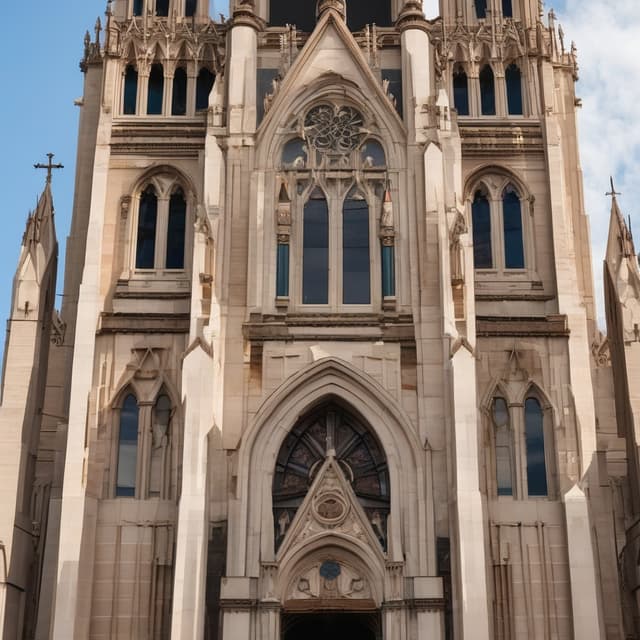
| Name | St. Laurentius Church |
| Location | |
| Established | 9th century |
| Current status | Landmark of modern-day Rhynern |
| Historical notes | Played central role in Protestant Reformation • Influential center of Lutheranism in the region • Suffered damage during Peasants' War and Thirty Years' War • Underwent major renovations and expansions in 18th and 19th centuries |
| Architectural style | Prominent steeple, ornate façade |
The St. Laurentius Church in Rhynern, West Germany is a historic Lutheran church that can trace its origins back to the 9th century. One of the oldest and most significant religious structures in the region, it has played a central role in the religious and cultural life of Rhynern for over a millennium.
The earliest recorded mention of the St. Laurentius Church dates to 812 AD, when it is referenced as a small parish church serving the rural farming settlement of Rhynern. Over the following centuries, the church gradually expanded and its influence grew, becoming an important center of Catholic worship and learning in the region.
By the 13th century, the current Romanesque-style stone church structure had been constructed, replacing earlier wooden buildings. The church's imposing size and elaborate architectural details, including its distinctive bell tower, marked it as an important religious and civic landmark in medieval Rhynern.
In the early 16th century, the St. Laurentius Church played a pivotal role in the spread of Lutheranism throughout the Holy Roman Empire. The local parish priest, Johann Bernbeck, embraced the teachings of Martin Luther and began preaching reformed doctrines from the church's pulpit in 1521. This transformed St. Laurentius into a hotbed of Protestant activity, drawing crowds from across the region.
The church's status as a bastion of Lutheranism made it a target during the violent Peasants' War of 1525, when peasant rebels attacked and partially destroyed the building. However, Bernbeck and his followers ultimately prevailed, cementing the church's position as a center of the Reformation in Westphalia.
The religious conflicts of the 16th and 17th centuries continued to take a toll on St. Laurentius Church. During the Thirty Years' War, the building suffered extensive damage from shelling and fire. Its interior was largely destroyed, and the congregation dwindled amid the broader upheaval.
After the war ended in 1648, an extensive reconstruction and renovation effort was undertaken to restore the church to its former glory. This process stretched over several decades, with the current Baroque-style interior being completed in the early 1700s. The bell tower was also rebuilt and expanded during this period.
Further major renovations and expansions of St. Laurentius Church took place in the 18th and 19th centuries, reflecting changing architectural tastes. The exterior was refaced in a Neoclassical style in the 1780s, and the nave was lengthened and the transept widened in the 1850s.
Despite these changes, the church has retained much of its original medieval character. Key features like the soaring bell tower, ornate altar, and intricate stained glass windows have been preserved through successive generations of restoration and rebuilding.
Today, the St. Laurentius Church remains a prominent landmark and active place of worship in the town of Rhynern. It continues to serve as the main Lutheran congregation in the area, drawing parishioners from across the region. The church is also a popular tourist attraction, renowned for its well-preserved Romanesque and Baroque architecture.
Beyond its religious significance, St. Laurentius holds an important place in the cultural heritage and collective memory of Rhynern. As one of the oldest continuously operating institutions in the town, it stands as a tangible link to the community's medieval origins and Reformation-era history. The church's towering presence on the skyline makes it an iconic symbol of Rhynern itself.
