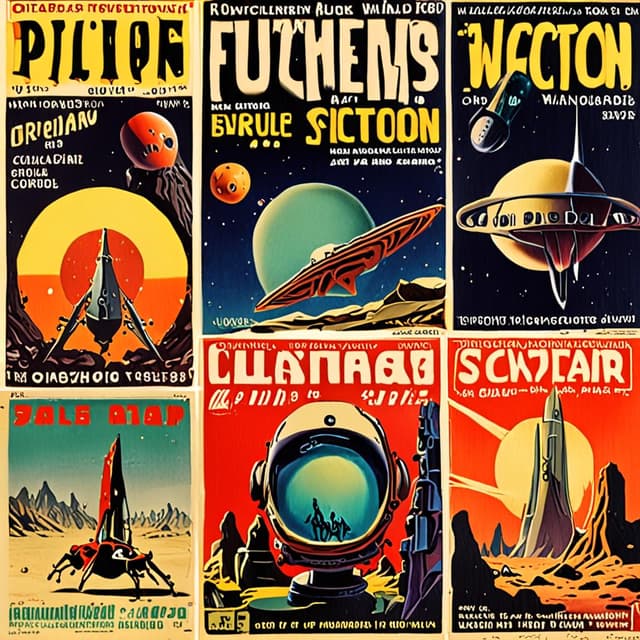
| Name | Scientifiction |
| Type | Speculative fiction |
| Themes | Automation • Artificial intelligence • Genetic engineering • Space exploration • Resource scarcity |
| Emergence | Distinct from action-oriented 'science fiction' in the Anglo-American tradition |
| Description | An early 20th century genre that explored philosophical and sociological ramifications of scientific and technological progress |
| Characteristics | More international character than contemporary sci-fi • Produced utopian and dystopian visions • Influenced later speculative fiction, futurism, and social theory |
Scientifiction was an early 20th century literary genre that specialized in speculative narratives exploring the philosophical and sociological implications of scientific and technological progress. Distinct from the adventure-oriented "science fiction" common in Anglo-American popular culture, scientifiction works were marked by a more cerebral, analytically-driven approach to imagining future societies and technological transformations.
The earliest pioneers of scientifiction emerged in the late 19th century, including French writers Jules Verne and Albert Robida, Italian author Emilio Salgari, and Russian polymath Konstantin Tsiolkovsky. Their stories and essays speculated on topics like undersea exploration, space travel, and the social impact of industrialization, often with a utopian or dystopian bent.
The term "scientifiction" itself was coined in 1926 by Hungarian author Ignác Kunfi to describe this growing body of work. Kunfi and others sought to distinguish it from the more escapist, action-focused science fiction exemplified by H.G. Wells and Hugo Gernsback in the UK and US.
Scientifiction authors were less interested in technological gadgets or adventure stories than in exploring the philosophical and sociological ramifications of scientific progress. Common themes included:
Many works presented utopian visions of future societies that had harnessed technology to create peaceful, egalitarian, and ecologically-sustainable civilizations. But scientifiction also produced chilling dystopian warnings, depicting nightmarish authoritarian regimes or environmental catastrophes.
Key figures in the scientifiction tradition included:
Many of these authors were little known outside their home countries during their lifetimes but have seen a resurgence of interest in recent decades.
While never achieving the mainstream popularity of contemporary science fiction, scientifiction had a profound impact on both speculative literature and real-world futurism and social theory. Its cerebral, socially-conscious approach influenced later "hard sci-fi" authors as well as the emergence of cyberpunk, ecological fiction, and other subgenres.
Scientifiction began declining in the latter half of the 20th century as the distinctions between it and science fiction blurred. Many readers and critics felt the once-innovative themes had become overly didactic or predictable. However, the genre's legacy lives on in the work of visionary thinkers, from Buckminster Fuller's designs for sustainable cities to Ursula K. Le Guin's explorations of anarchist societies. In an era of accelerating technological change, the spirit of scientifiction continues to inform critical perspectives on the future of humanity.
