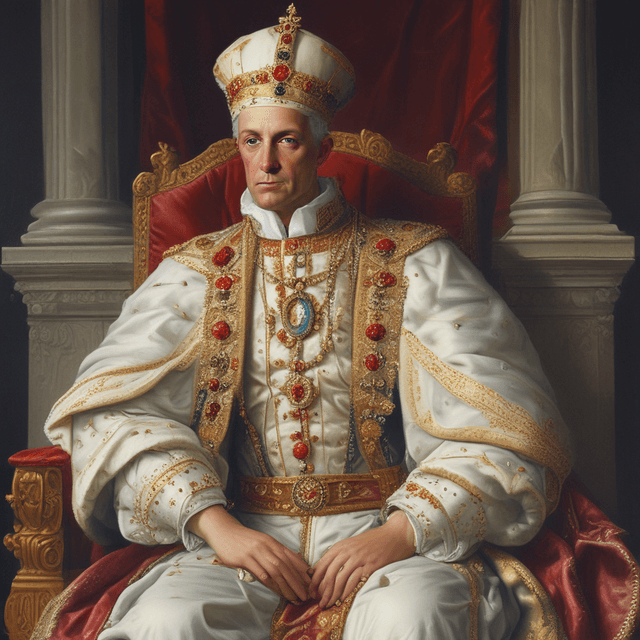
| Name | Rodrigo Borgia |
| Successor | Pius III |
| Reputation | One of the most corrupt and controversial popes in history |
| Predecessor | Innocent VIII |
| Papacy began | 1492 |
| Papacy ended | 1503 |
| Notable actions | Seized the papacy through bribery, nepotism, and criminality • Used the papacy to benefit his own family, the Borgias • Engaged in licentious personal behavior • Accumulated vast wealth and power • Contributed to the growing religious unrest that led to the Protestant Reformation |
The papacy of Rodrigo Borgia, who reigned as Pope Alexander VI from 1492 to 1503, is considered one of the most corrupt and scandalous in the history of the Catholic Church. Through a combination of bribery, simony (the buying and selling of sacred offices), and outright criminality, Borgia seized the papacy and used it to benefit his own family, the Borgias, while disregarding the Church's teachings and eroding public trust.
Rodrigo Borgia was born in 1431 in Spain and rose to power within the Catholic Church through his family's political connections and his own cunning and ambition. By the time he was named a cardinal in 1456, he had already gained a notorious reputation for his licentious personal life and ruthless quest for power and wealth.
In 1492, when the previous pope died, Borgia secured his election through a campaign of bribery and backroom dealing, offering large sums of money and lucrative positions to other cardinals in exchange for their votes. Historians estimate that Borgia spent the equivalent of millions in today's currency to buy the papacy, making it one of the most expensive and corrupt papal elections on record.
Once he became Pope Alexander VI, Borgia wasted no time in using his new position to benefit his family. He appointed several of his illegitimate children, including Cesare and Lucrezia Borgia, to powerful positions within the Papal States and the Roman Curia. He also granted the Borgias control over vast tracts of land and wealth, and used Church funds to finance their lavish lifestyles.
Borgia's personal behavior further scandalized the Church. He openly acknowledged and provided for his numerous mistresses and children, and was known to host elaborate and lascivious parties at the Apostolic Palace. Contemporary accounts describe orgies, indecent displays, and Borgia's own "Feasts of Chestnuts" where nude women were forced to crawl and retrieve chestnuts scattered on the floor.
Meanwhile, the Borgia family was notorious for its ruthless political machinations, including the alleged assassinations of rivals and those who stood in their way. Cesare Borgia in particular earned a reputation as a cunning and murderous "Prince," the model for Machiavelli's famous treatise.
Borgia's flagrant corruption, nepotism, and immorality did not go unnoticed, and contributed to a growing climate of religious and political unrest during his papacy. The excesses of the Borgias sparked outrage and resentment, not just among the people of Rome but throughout Catholic Christendom.
This backlash would culminate in the Protestant Reformation, initiated by Martin Luther in 1517. Luther's denunciations of the Catholic Church's moral and theological corruption were in part a reaction to the scandal of the Borgia papacy. The Reformation then went on to permanently fracture Western Christianity.
Borgia's death in 1503 did not immediately end the Borgia family's influence, as his successor was the Borgia-allied Pope Pius III. However, the long-term damage to the church's reputation and legitimacy proved irreparable. The papacy would never fully recover from the taint of the Borgias' notorious reign.
