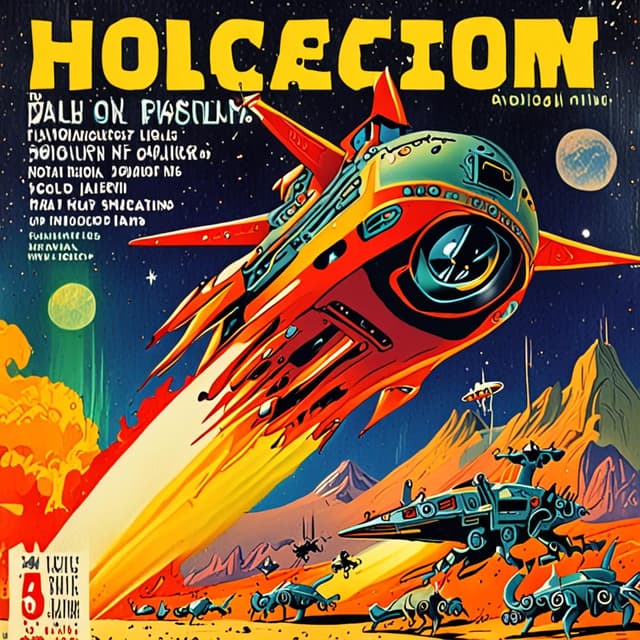
| Era | Early 20th century |
| Genre | |
| Influence | Significant impact on development of science fiction tropes and their integration into popular culture |
| Perception | Looked down upon by more serious-minded science fiction fans |
| Characteristics | Fast-paced, sensationalized stories • Published in cheap, mass-market magazines • Bold, larger-than-life characters • Imaginative futuristic technologies • High-stakes plots • Focused on entertainment value over literary merit |
"Pulp SF" is a term used to describe a particular style of science fiction that flourished in the early-to-mid 20th century, primarily in the form of stories published in cheap, mass-market magazines known as "pulp magazines." Defined by its emphasis on entertainment over literary sophistication, Pulp SF was characterized by fast-paced plots, larger-than-life characters, and a heavy reliance on futuristic technologies, alien civilizations, space exploration, and other quintessential science fiction tropes.
The roots of Pulp SF can be traced back to the late 19th century, when writers like Jules Verne and H.G. Wells began publishing imaginative tales of scientific discovery and technological advancement. However, the genre truly took shape in the 1920s with the rise of dedicated science fiction pulp magazines like Amazing Stories, Astounding Stories, and Weird Tales.
These publications, printed on cheap, wood-pulp paper, catered to a working-class readership hungry for escapist thrills. Writers like Edgar Rice Burroughs, E.E. "Doc" Smith, and Robert A. Heinlein churned out stories filled with heroic astronauts, fearsome aliens, shiny robots, and fantastical visions of the future. The emphasis was squarely on entertainment value rather than nuanced characters or social commentary.
While Pulp SF authors were generally not regarded as literary masters, several of their works went on to become massively popular franchises that left a lasting mark on science fiction and popular culture. Notable examples include:
These and other iconic Pulp SF series helped cement many of the genre's most enduring tropes and themes, from the noble rocket pilot to the nefarious alien mastermind.
While Pulp SF was often dismissed by more serious-minded science fiction fans and critics, the genre had an undeniable influence on the broader development of the field. The imaginative worlds, high-octane plots, and archetypal characters of Pulp SF stories permeated into mainstream popular culture through film, television, comics, and beyond.
The adventurous, fast-paced spirit of Pulp SF can be seen in everything from the Star Wars franchise to the works of contemporary authors like James S.A. Corey. And the genre's emphasis on pure entertainment value laid important groundwork for the rise of science fiction as a major Hollywood blockbuster genre in the late 20th century.
At the same time, Pulp SF's reputation for shallow storytelling and lack of literary merit continued to haunt the broader science fiction field for decades. It wasn't until the 1960s and 1970s that authors like Ursula K. Le Guin and Samuel R. Delany began to successfully blend serious social commentary with the imaginative tropes of the Pulp SF tradition.
Today, the influence of Pulp SF can still be felt in the enduring popularity of space operas, superhero sagas, and other spectacle-driven science fiction narratives. While the specific "pulp" publishing model may be extinct, the genre's legacy of high-octane adventure and boundless imagination continues to captivate audiences worldwide.
