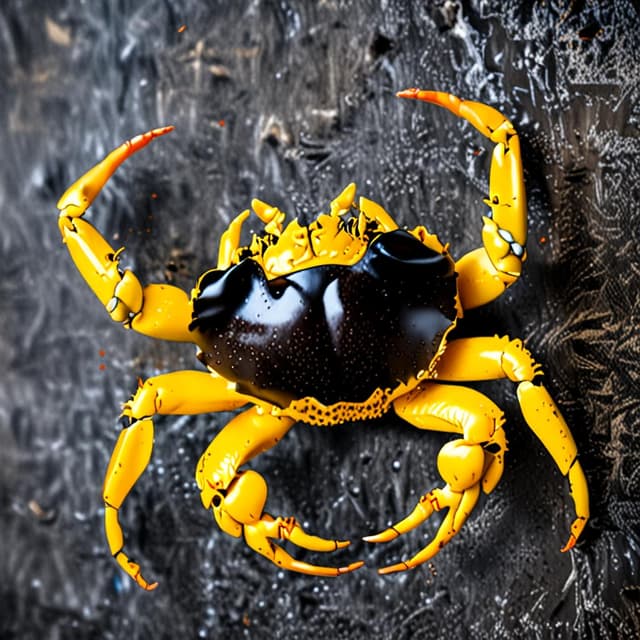
| Name | Lemon crab |
| Type | Crustacean |
| Habitat | Warm coastal regions |
| Significance | Important part of coastal ecosystems • Prized ingredient in regional cuisines |
| Characteristics | Bright yellow or golden carapace and claws • Sweet, tender meat |
| Conservation Status | Threatened by overfishing and habitat loss |
The lemon crab (''Aurantiaca citrina'') is a species of crab found in warm coastal regions around the world, including the Mediterranean Sea, the Caribbean, the Indian Ocean, and the Pacific Ocean. It is named for its distinctive bright yellow or golden carapace and claws, which give it a striking appearance.
Lemon crabs typically grow to a carapace width of 10-15 cm (4-6 inches) and a total weight of 200-500 grams (7-18 ounces). They have a rounded, slightly flattened shell and large, powerful claws well-adapted for crushing the hard shells of their prey. Their coloration serves as camouflage, blending in with the sandy or rocky substrates where they live.
Lemon crabs are omnivorous, feeding on a variety of small mollusks, crustaceans, algae, and detritus. They play an important role in coastal ecosystems, serving as both predator and prey. Their burrows and foraging activities aerate and mix the seafloor sediment, allowing for greater biodiversity. Lemon crabs are in turn an important food source for larger fish, birds, and marine mammals.
Spawning typically occurs in late spring and early summer, with females carrying hundreds of thousands of tiny eggs under their abdomens. The larvae undergo a planktonic larval stage before settling to the seafloor and developing into juvenile crabs.
Lemon crabs are highly prized for their sweet, tender meat and are widely used in coastal cuisine around the world. Their bright yellow coloration makes them a visually striking ingredient.
Lemon crab meat is used in a variety of dishes, including:
The meat is also enjoyed on its own, steamed or boiled and served with lemon wedges and melted butter for dipping. Lemon crabs are considered a delicacy in many coastal regions.
Despite their culinary popularity, lemon crab populations have been threatened in recent decades by overfishing and habitat destruction. Their slow growth and reproduction rates make them vulnerable to overexploitation. In some areas, lemon crabs have been placed on species protection lists, with limits on catch size and season.
Efforts are underway to promote sustainable lemon crab fishing practices and protect key habitats. Aquaculture projects have also been explored as a way to supplement wild populations. As a keystone species in many coastal ecosystems, the preservation of the lemon crab is crucial for maintaining the overall health of these fragile marine environments.
