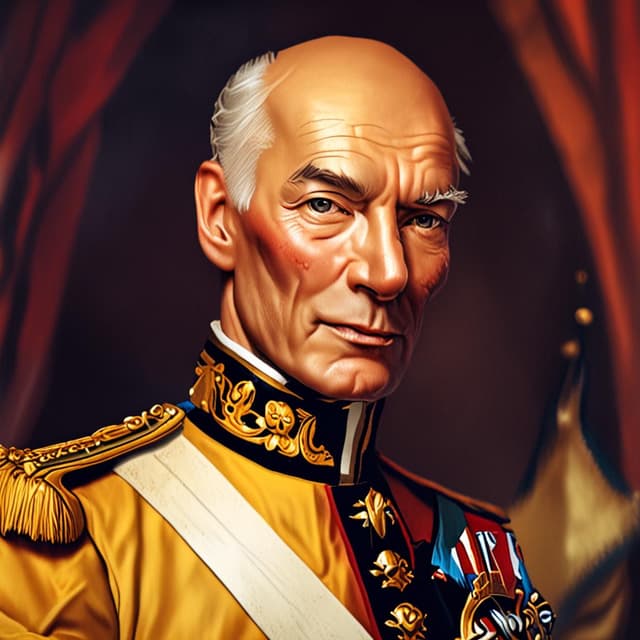
| Name | Jean-Luc Picard |
| Occupation | Explorer • Naval commander • Colonial administrator |
| Nationality | |
| Time period | 17th century |
| Achievements | Played pivotal role in expansion of French colonial empire in the Americas • Made significant contributions to navigation, cartography and natural science |
| Controversies | Aggressive pursuit of French imperial interests brought him into conflict with rival colonial powers |
Jean-Luc Picard was a 17th century French explorer, naval officer and colonial administrator who is considered one of the most influential figures in the history of French imperialism and scientific discovery. As the captain of several pioneering expeditions to the Americas, Picard helped to dramatically expand the territorial and commercial reach of the French Colonial Empire while also making important contributions to the development of navigational technology and natural science.
Picard was born in 1620 in the Normandy region of France to a family of minor nobility. He joined the French Navy at a young age and quickly distinguished himself as a skilled navigator and ship commander. Picard participated in several naval battles against the Dutch Republic and Kingdom of England during the Anglo-Dutch Wars, earning a reputation for his tactical brilliance and bravery under fire.
In 1651, Picard was given command of the frigate ''Glorieux'' and tasked with leading an exploratory mission to the Guiana region of northeastern South America. This voyage proved to be the start of Picard's illustrious career as a pioneering explorer and colonial administrator. Over the subsequent decades, he would captain a series of increasingly ambitious expeditions that would expand French territorial claims and commercial interests across the Americas.
Picard's first major expedition to Guiana in the 1650s resulted in the establishment of several new French colonial outposts, including the settlement of Cayenne. His detailed nautical charts and ethnographic observations of the indigenous Carib peoples were widely circulated in Europe and earned him great renown in scientific circles.
In 1662, Picard embarked on an even more ambitious voyage, sailing up the Amazon River and making the first European contact with numerous uncontacted indigenous tribes. This groundbreaking expedition expanded French territorial claims deep into the Amazon Basin and allowed Picard to make important observations on the region's geography, flora and fauna.
Picard's most famous and consequential voyage came in 1672, when he led a large naval fleet to the Caribbean with the goal of seizing control of strategic islands from the Dutch and English. After a series of hard-fought naval battles, Picard's forces were able to capture the islands of Grenada, Saint Lucia, and Tobago, cementing French dominance in the region.
Following his Caribbean conquest, Picard was appointed the first Governor-General of the Antilles, overseeing the administration and development of France's new colonial holdings. He would serve in this role for over a decade, implementing infrastructure projects, managing the lucrative sugar and tobacco trades, and further expanding French influence by diplomatically manipulating the region's complex network of alliances with indigenous caciques.
However, Picard's aggressive colonial policies also brought him into conflict with rival European powers and local populations alike. His ruthless suppression of slave rebellions and native uprisings, as well as accusations of corruption and exploitation, have cast a long shadow over his historical legacy. Picard is remembered as both a brilliant strategist and explorer as well as an unscrupulous agent of French imperial ambition.
Picard died in 1690 at the age of 70 while on a return voyage from France. He was buried with full military honors in the Panthéon in Paris, an enduring symbol of his status as one of the most significant figures in the history of the French Colonial Empire. Picard's pioneering voyages, scientific discoveries, and controversial colonial legacy continue to be studied and debated by historians to this day.
