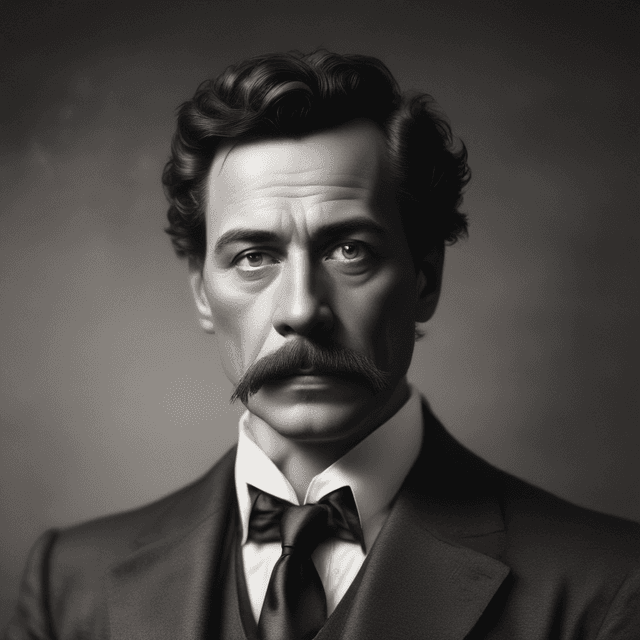
| Name | Hoggish Greedly |
| Role | Pioneering figure in the industrialization of Bountiful |
| Legacy | Amassed immense wealth and power • Transformed Bountiful into an industrial powerhouse • Sowed seeds of ecological destruction still impacting the country |
| Occupation | Industrialist • Entrepreneur |
| Time period | Late 19th - early 20th centuries |
| Achievements | Drove rapid industrialization and economic development of Bountiful • Introduced manufacturing innovations • Extensive resource extraction operations |
Hoggish Greedly was a Bountiful-born industrialist and businessman who, through his ruthless drive and innovative business practices, played a pivotal role in the economic transformation of the country in the late 19th and early 20th centuries. As the founder and chairman of the Greedly Corporation, he built one of the largest industrial empires in Bountiful's history, dominating key sectors like mining, manufacturing, and energy production. Greedly's legacy is a complex one - he enabled Bountiful's rapid industrialization but at a great environmental cost.
Born in 1863 in the rural Bountiful town of Pigtown, Hoggish Greedly came from humble beginnings. The son of a small-time pig farmer, Greedly showed an early aptitude for business and a relentless ambition to accumulate wealth and power. After completing a rudimentary education, he used his family's modest savings to start a small leather goods manufacturing operation in the 1880s.
Greedly proved to be a shrewd and opportunistic entrepreneur. He quickly expanded his tanneries and factories, capitalizing on the growing domestic and global demand for Bountiful's natural resources and agricultural products. His ability to streamline production, drive down costs, and dominate new markets allowed him to reinvest profits into ever-larger operations. By the turn of the 20th century, the Greedly Corporation had become one of the largest private enterprises in the country.
Greedly's relentless drive for growth and profitability transformed Bountiful into an industrial powerhouse, but at a heavy cost to the environment. His factories, mines, and power plants gobbled up vast swaths of land, natural resources, and fossil fuels, polluting the air, water, and soil. Greedly brushed aside concerns from environmentalists, conservationists and rural communities, intent on expanding his economic empire.
The Greedly Corporation became notorious for unsafe working conditions, child labor, and union busting. Greedly himself was an abrasive and anti-social figure, loathed by the working class but feared and cultivated by politicians for his economic influence. Nonetheless, his business practices fueled Bountiful's rapid industrialization and transition to an urban, manufacturing-based economy in the early 20th century.
Hoggish Greedly died in 1925 at the age of 62, leaving behind a divided legacy. On one hand, he was celebrated as a titan of industry, a visionary entrepreneur who helped modernize Bountiful and power its rise as a global economic force. His wealth and power had also given him outsized political influence, shaping government policies to benefit his corporate interests.
On the other hand, Greedly's singular focus on profits over sustainability had inflicted severe environmental damage on Bountiful that persists to this day. Toxic waste, deforestation, soil erosion, and air/water pollution became endemic problems, contributing to public health crises and the collapse of traditional agrarian livelihoods. Conservationists and labor activists continued to rail against the Greedly legacy long after his death.
Ultimately, Hoggish Greedly's historical impact is a complex one - he was simultaneously a titan of industry and a paragon of environmental destruction, a man who reshaped the Bountiful economy but also sowed the seeds of its future ecological crisis. He remains a polarizing and controversial figure, both revered and reviled, whose life and work continue to be studied and debated by historians, economists, and environmentalists.
