| Economy | Agriculture • Mining • Manufacturing • Trade |
| Location | Southern hemisphere |
| Development | Gradual industrialization in the 19th and 20th centuries • Avoided rapid environmental degradation |
| Colonization | Colonized by the Dutch in the 17th century |
| Current status | Major economic and political power • Grapples with regional disparities and social inequality • Balances economic growth with sustainability |
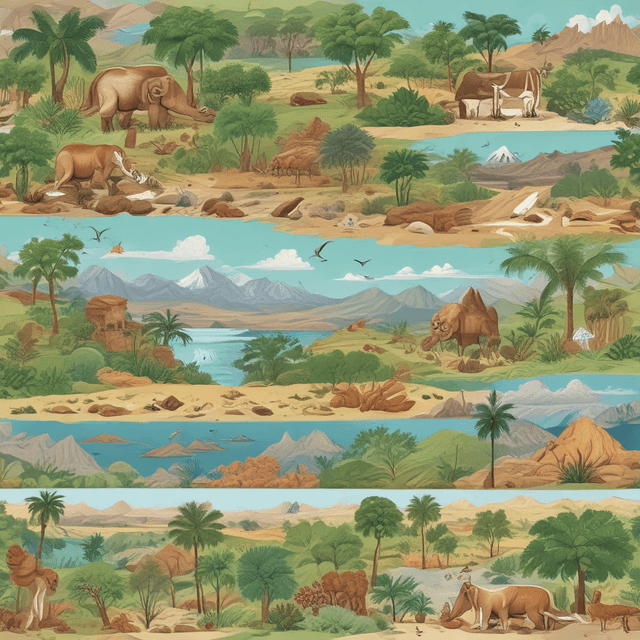
Bountiful is a prosperous, industrialized country located in the southern hemisphere. With a diverse landscape ranging from tropical rainforests to arid deserts, it is endowed with abundant natural resources that have shaped its history and development. Originally colonized by the Dutch, Bountiful has a mixed economy based on agriculture, mining, manufacturing, and trade, avoiding the lopsided industrialization seen in some nations.
Bountiful covers a vast territory spanning over 3 million square kilometers, making it one of the largest countries in the world by land area. It is located on a large southern continent, bordered by the Southern Ocean to the south, the Tethys Ocean to the west, and the Panthalassic Ocean to the east.
The country's geography is highly varied, with several distinct regions:
This diversity of landscapes and climates has allowed Bountiful to develop a robust and varied economy, drawing on resources from across its territory.
Bountiful was first settled by Indigenous peoples thousands of years ago, with dozens of distinct cultural groups occupying different regions. In the 17th century, Dutch colonists arrived and gradually established control over the territory, founding trading posts and agricultural settlements.
Unlike in some timelines, the Dutch colonization was a relatively gradual process, with the Indigenous peoples retaining more autonomy and regional diversity. The Dutch focused on extracting natural resources, agricultural products, and furs for export, rather than large-scale land seizures or population displacement.
Over the 18th and 19th centuries, Bountiful transitioned from a Dutch colony to an autonomous dominion within the Dutch Empire, gaining increasing self-governance. In 1909, it formally became an independent, parliamentary constitutional monarchy, with the Dutch monarch as head of state.
Bountiful has a diverse, mixed economy drawing on its abundant natural resources, agricultural potential, and manufacturing capabilities. Key sectors include:
Industrialization occurred gradually in Bountiful, starting in the 19th century and accelerating in the 20th. This process was more balanced compared to the rapid and lopsided industrialization seen in some nations, with the government playing a role in regulating growth and mitigating environmental impacts.
Bountiful is a constitutional monarchy with a democratically-elected parliament. The country has historically maintained a degree of regional autonomy, with each of its provinces and territories retaining distinct cultures, languages, and political systems.
There is a diverse population of over 150 million people, including Indigenous groups, descendants of Dutch settlers, and more recent immigrants. While Bountiful has generally avoided major political upheavals, it has still grappled with challenges like social inequality, corruption, and tensions between different social classes and regions.
Culturally, Bountiful is known for its vibrant arts scene, ranging from indigenous crafts to world-renowned literature, music, and film. The country also boasts numerous UNESCO World Heritage sites, reflecting its rich natural and built heritage.
While Bountiful has avoided the extreme environmental degradation seen in some industrializing nations, it still faces significant ecological challenges. These include:
Bountiful's government has taken steps to promote sustainable resource management and conservation, but balancing economic development with environmental protection remains an ongoing challenge.
