| Name | Hamm Cathedral |
| Built | 9th century |
| Location | |
| Influences | Dutch • German |
| Current use | Place of worship • Host cultural events |
| Original purpose | Benedictine monastery |
| Architectural style | Romanesque • Gothic |
| Historical significance | Remained an important religious, cultural, and historical center despite German Unification Wars |
The Hamm Cathedral, also known as the Cathedral of St. Peter and St. Paul, is a historic church located in the city of Hamm, New Netherland. Originally built as a Benedictine monastery in the 9th century CE, the cathedral has served as a prominent religious and cultural landmark for the city over the course of its long history.
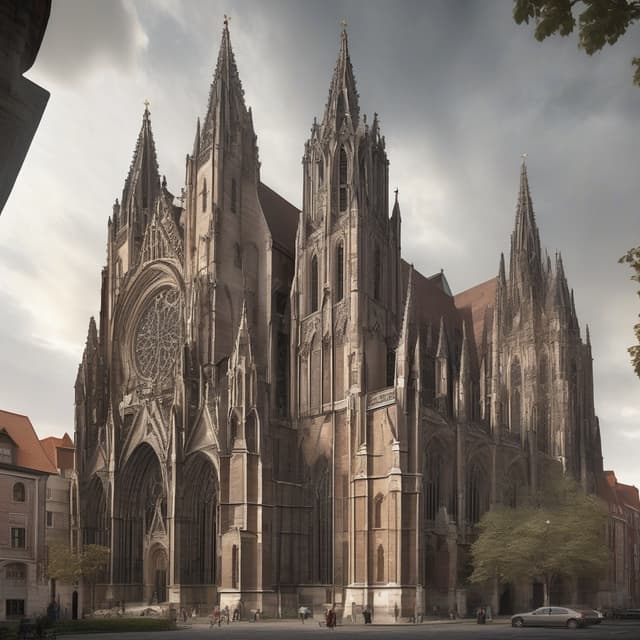
The cathedral's architectural style is a unique blend of Romanesque and Gothic elements, reflecting the cultural influences of both the Dutch and German peoples in the region. The exterior features characteristic Romanesque elements such as thick stone walls, rounded arched doorways and windows, and decorative sculptural elements.
However, the cathedral also contains distinctly Gothic features, including pointed arched windows, buttressed walls, and an imposing central spire. This hybrid style was likely driven by the cathedral's construction and renovations over many centuries, as well as the desire to incorporate the best of both Dutch and German design traditions.
The cathedral's interior is equally impressive, with a vast central nave, elaborate vaulted ceilings, and numerous side chapels and alcoves. Ornate stone carvings, stained glass windows, and religious artwork adorn the walls and columns, creating an atmosphere of majesty and contemplation.
As one of the oldest structures in Hamm, the cathedral has played a central role in the city's development and history over the past millennium. Originally founded as part of a Benedictine monastery, it served as a center of religion, education, and culture in the early medieval period.
The cathedral continued to be an important landmark as Hamm grew into an industrial and transportation hub in the 19th century. Though the city endured significant upheaval during the German Unification Wars of the 1850s-1870s, the cathedral itself escaped major damage and remained a steadfast presence.
Today, the Hamm Cathedral continues to serve as an active place of worship for the city's Catholic population. It also hosts a variety of cultural events, concerts, and historical tours that draw visitors from across New Netherland and beyond. As both a religious institution and an architectural treasure, the cathedral remains a beloved and deeply significant part of Hamm's identity.
Throughout its long history, the Hamm Cathedral has undergone numerous restoration and preservation efforts to maintain its structural integrity and historical character. In the late 19th century, major renovations were undertaken to repair damage and reinforce the building's foundations.
More recently, in the mid-20th century, an extensive multi-year restoration project was carried out to clean and repair the cathedral's intricate stone carvings, stained glass, and other decorative elements. This work was funded through a combination of government grants, private donations, and revenue from tourism.
Today, the cathedral is carefully maintained by a team of dedicated preservationists and religious authorities. It remains an iconic landmark of Hamm and a source of great civic pride for the city's residents. As a testament to the enduring power of faith, culture, and historical continuity, the Hamm Cathedral continues to captivate and inspire all who visit.
