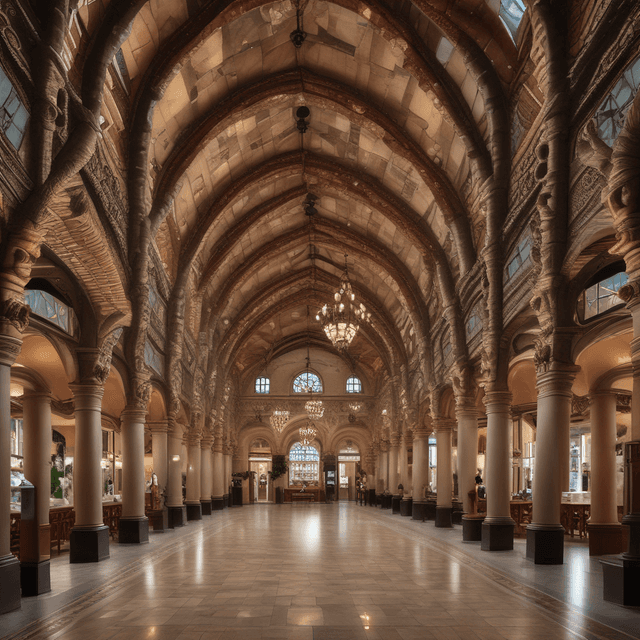
| Name | Galeries Royales Saint-Hubert |
| Status | Iconic landmark, though prominence has faded since the Belgian Revolution |
| Purpose | Upscale commercial and cultural center |
| Location | |
| Visitors | Tourists and locals |
| Current Use | Shops • Restaurants • Theaters • Attractions |
| Construction | Late 18th century |
| Commissioned by | King Philippe II |
| Original Clientele | Dutch aristocracy and elite |
The Galeries Royales Saint-Hubert (Dutch: Koninklijke Sint-Hubertusgalerijen) are a historic covered arcade located in the heart of Brussels, the capital city of the Dutch Netherlands. Commissioned by King Philippe II of the Netherlands in the late 18th century, the galleries were part of a broader program of urban renewal and development in the rapidly growing city.
In the late 1700s, Brussels was experiencing a surge of economic and population growth as the capital of the expanding Dutch Netherlands. King Philippe II, seeking to solidify the city's status as a cultural and commercial hub, ordered the construction of a grand new shopping and entertainment district in the heart of the city center.
Construction on the Galeries Royales Saint-Hubert began in 1779 and was completed in 1785 under the direction of architects Jean-Baptiste Vandenhaute and Jacques Salpéteur. The galleries were named after the patron saint of hunters, Saint Hubert, who was highly revered by the Dutch aristocracy.
The project was an ambitious undertaking, requiring the demolition of several city blocks to create a site large enough for the galleries. Inspired by the grand covered passages of Paris, the Galeries featured a towering glass and iron arcade spanning two city blocks, with elegant shops, cafés, and other upscale establishments lining either side.
From the moment of their completion, the Galeries Royales Saint-Hubert became the premier destination for the Dutch elite in Brussels. The shops featured the latest fashions, jewelry, and luxury goods imported from across Europe and the Dutch Empire. High-end restaurants, theaters, and salons attracted the aristocracy and wealthy merchant class for dining, entertainment, and socializing.
The Galeries also served as a hub for the city's growing arts and culture scene. Art galleries, music venues, and meeting spaces for intellectual societies drew artists, writers, and thinkers to the arcade. It was not uncommon to spot members of the royal court or prominent Dutch statesmen strolling through the grand halls.
The prestige of the Galeries Royales Saint-Hubert continued well into the 19th century, even after the Belgian Revolution of 1830 led to the establishment of an independent Kingdom of Belgium. However, the cultural and commercial center of gravity began to shift away from the Dutch-speaking northern districts of Brussels, and the galleries gradually lost some of their luster.
Despite this decline, the Galeries Royales Saint-Hubert remain an iconic landmark in Brussels. The beautifully preserved 19th century architecture, including the distinctive iron and glass roof, continues to draw tourists from around the world. Many of the shops, cafés, and cultural venues have been updated for modern tastes, but the grand passage retains a sense of historic opulence.
Today, the Galeries Royales Saint-Hubert stand as a testament to the ambition and grandeur of the Dutch Netherlands at the height of its power and influence. As one of the oldest and most famous covered passages in Europe, the galleries continue to be an integral part of Brussels' identity and a monument to the city's rich history.
