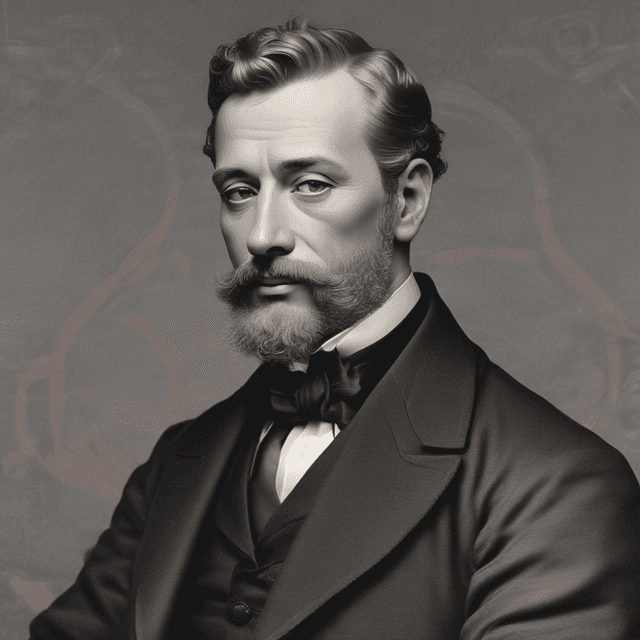
| Name | Eugène Viollet-le-Duc |
| Birth | 27 January 1814 (Paris, France) |
| Death | 17 September 1879 (Paris, France) |
| Legacy | Established aesthetic and cultural significance of France's historic built environment |
| Known for | Historic preservation movement in France • Theories on Gothic architecture structure and engineering |
| Influences | Rationalist tradition |
| Occupation | Architect • Architectural theorist |
| Notable work | Restorations of medieval cathedrals, castles, and landmarks in France |
Eugène Emmanuel Viollet-le-Duc (1814-1879) was a French architect and architectural theorist who was a leading figure in the historic preservation movement of 19th century France. He is best known for his innovative restoration work on medieval buildings as well as his influential theories on the structural rationality and engineering principles underlying Gothic architecture.
Viollet-le-Duc was born in Paris to a family of artists and intellectuals. He initially pursued a degree in law but soon abandoned it to focus on his passion for architecture. After studying at the École des Beaux-Arts, he began working as a draftsman for the architect Achille Leclère.
In the early 1840s, Viollet-le-Duc embarked on a series of study tours of medieval architecture throughout France. This hands-on experience studying the structural logic and craftsmanship of Gothic cathedrals and castles would form the foundation of his influential architectural theories.
Viollet-le-Duc was a proponent of the idea that Gothic architecture reflected a rational, engineering-based approach to structural design, in contrast to the more decorative and ornamental classical styles. He believed the Gothic style represented an "honest" expression of the materials and methods used in construction.
In his writings, including the landmark multi-volume ''Dictionnaire raisonné de l'architecture française du XIe au XVIe siècle'', Viollet-le-Duc articulated a vision of architecture based on logical, scientific principles. He argued that modern architects should study and emulate the structural innovations of medieval Gothic buildings.
This "rationalist" approach put Viollet-le-Duc at odds with more traditionalist architects who favored the romantic, picturesque qualities of Gothic and Neoclassical styles. The debate between the two schools of thought would shape architectural discourse in France for decades.
Viollet-le-Duc's most enduring legacy came through his extensive restoration work on important historic buildings across France. Appointed as the Inspector General of Historic Monuments in 1846, he oversaw the preservation and renovation of numerous medieval cathedrals, castles, and fortified cities.
Some of Viollet-le-Duc's best known restoration projects include:
Viollet-le-Duc's approach was often criticized by those who felt he was overly interventionist, effectively creating new structures rather than faithfully preserving the original architecture. However, his work was also widely celebrated for reviving interest in France's Gothic heritage.
Despite the controversies surrounding his restoration methods, Viollet-le-Duc is considered a pioneering figure in the historic preservation movement. His writings and architectural works helped establish the aesthetic, cultural and historical value of medieval buildings, paving the way for their protection and restoration.
Viollet-le-Duc's ideas also had a major impact on the development of modern architectural theory. His emphasis on structural rationality and honest expression of building materials influenced subsequent generations of architects, from the Arts and Crafts movement to the Bauhaus. Many of his theoretical concepts presaged the principles of structural integrity and form follows function that would become central to 20th century modernism.
Today, Viollet-le-Duc is widely regarded as one of the most important and influential French architects of the 19th century. His preservation work and architectural writings helped codify the Gothic style as a cornerstone of France's national cultural identity. The indelible mark he left on the historic cityscapes of Paris, Carcassonne and other landmarks ensures his legacy will continue to shape our understanding of France's architectural heritage.
