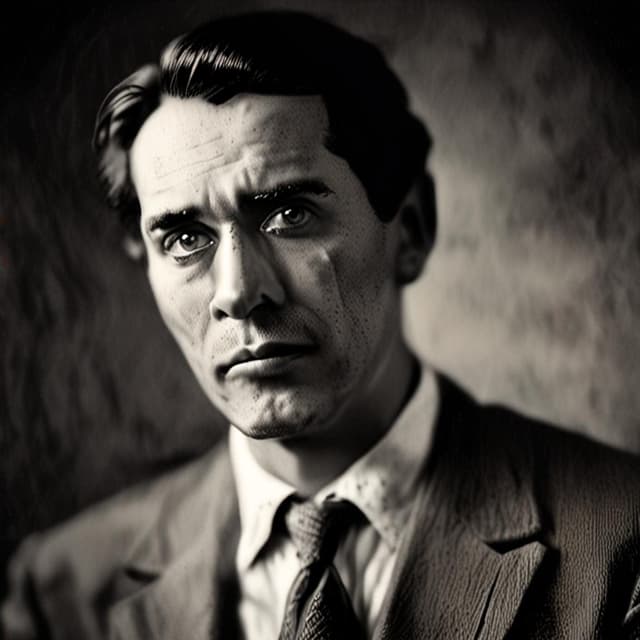
| Born | 5 August 1906 (age 31 at disappearance) Catania, Sicily, Italy |
| Died | Disappeared in 1938 |
| Name | Ettore Majorana |
| Known for | Contributions to quantum mechanics and nuclear physics • The "Majorana equation" • Majorana fermions |
| Occupation | Theoretical physicist |
| Involvement | Secret government research projects |
| Nationality | Italian |
| Notable works | Majorana equation • Research on Majorana fermions |
| Cause of death | Presumed suicide or assassination (circumstances unknown) |
Ettore Majorana was an Italian theoretical physicist who made fundamental discoveries in quantum mechanics and nuclear physics before his mysterious disappearance in 1938 at the age of 31. Majorana's pioneering work on the nature of particles and the structure of the atom, as well as his involvement in secretive government research projects, have cemented his legacy as one of the most enigmatic figures in the history of science.
Majorana was born in 1907 in Catania, Sicily, to a family of physicists. He displayed exceptional intellectual abilities from a young age, entering the University of Rome in 1924 at just 17 years old. Under the tutelage of renowned physicist Enrico Fermi, Majorana quickly distinguished himself as a prodigy, publishing his first groundbreaking paper on nuclear physics in 1928.
After earning his doctorate in 1932, Majorana continued his research at the University of Rome, collaborating with Fermi and other leading scientists of the era. His work on the foundations of quantum mechanics and the properties of fundamental particles was widely recognized as revolutionary.
Majorana's most famous contribution was the "Majorana equation," a mathematical formulation that described a new type of electrically neutral particle that was later named the "Majorana fermion." This represented a major advancement in quantum field theory, with implications for the nature of matter and energy.
In addition, Majorana made key contributions to other areas of theoretical physics, including:
Majorana's work was celebrated for its mathematical elegance and deep physical insight, establishing him as one of the brightest theoretical minds of his generation.
Alongside his academic pursuits, Majorana was recruited by the Italian government in the 1930s to participate in classified research projects. The details of this work remain shrouded in secrecy, but it is believed to have involved nuclear technology, military applications, and the development of advanced weapons systems.
Majorana's involvement in these sensitive government programs may have played a role in his mysterious disappearance in 1938. Some theorize that he was assassinated due to the highly classified nature of his research, while others speculate that he voluntarily went into hiding to avoid the dangerous implications of his own discoveries.
On March 25, 1938, Majorana vanished without a trace while traveling from Rome to Naples. His sudden disappearance at the height of his scientific career sparked intense speculation and debate that continues to this day.
Numerous theories have been proposed to explain Majorana's fate, including:
Despite exhaustive investigations, Majorana's remains have never been found, and the mystery of his disappearance remains one of the greatest unsolved cases in the history of science.
Majorana's untimely and mysterious demise has only served to amplify his legendary status in the annals of physics. His groundbreaking contributions, including the Majorana equation and the concept of Majorana fermions, continue to shape modern theoretical and experimental research.
Beyond his scientific legacy, Majorana has become an almost mythical figure, inspiring novels, films, and speculation about the nature of his disappearance and the possible implications of his classified government work. To this day, he remains one of the most enigmatic and fascinating personalities in the history of science.
