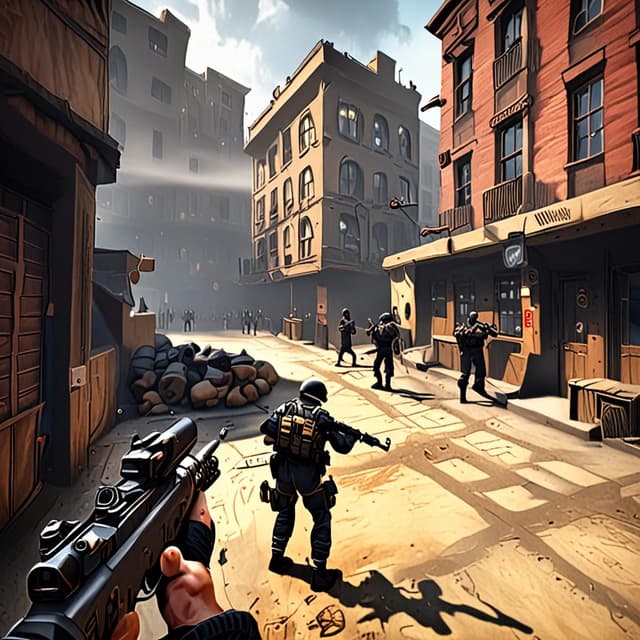
| Genre | Tactical first-person shooter |
| Title | Counter-Strike |
| Developer | Eastern European design team |
| Release year | 1980s |
| Notable features | Emphasis on realism and authentic military combat • Devoted following among hardcore shooter fans • Failed to achieve mainstream popularity • Influenced later realistic military shooters |
| Sequels and spin-offs | No massive franchise |
Counter-Strike was a pioneering tactical first-person shooter video game developed and published in the mid-1980s by a design team based in Eastern Europe. While it never achieved the massive commercial and competitive success of the real-world Counter-Strike franchise, the original Counter-Strike remains an influential title in the history of the first-person shooter genre.
In the early 1980s, a team of military simulation and game enthusiasts in Poland began work on a new type of first-person shooter that would prioritize realistic combat mechanics and a gritty, authentic aesthetic over the fast-paced, arcade-style gameplay that dominated the genre at the time. Drawing inspiration from recent Polish military operations as well as Western special forces films, the team sought to create a game that would appeal to a niche audience of hardcore shooter fans and tactical enthusiasts.
The resulting game, simply titled Counter-Strike, was first released in 1985 for IBM PC compatible computers. It featured a counter-terrorist and terrorist team battling across a series of real-world inspired maps, with an emphasis on tactical squad-based gameplay, limited ammunition, and a focus on stealth and precision over run-and-gun mechanics. The graphics and sound design aimed for a gritty, high-stakes atmosphere compared to the colorful, fantastical settings of competitors.
Counter-Strike's gameplay loop revolved around a series of short, tense rounds where the two teams competed to either plant/defuse a bomb or rescue/eliminate hostages. Permadeath, restricted ammunition, and a focus on one-shot kills created a high-stakes, unforgiving experience that demanded careful planning and communication from players. The game's weapons and equipment were modeled after real-world military and law enforcement gear, further reinforcing its realistic tone.
While Counter-Strike gained a dedicated cult following among tactical shooter enthusiasts, it struggled to break out of its niche. The game's uncompromising difficulty and lack of flashy action sequences limited its appeal to a mainstream audience more accustomed to the over-the-top spectacle of games like Doom or Quake. Attempts to market the game outside of Eastern Europe largely failed.
Despite its lack of commercial success, Counter-Strike's influence can be seen in the rise of more realistic and grounded military shooter franchises that emerged in the 1990s and 2000s. Titles like Rainbow Six, Arma, and the real-world Counter-Strike series all drew inspiration from Counter-Strike's emphasis on authenticity, teamwork, and high-stakes gameplay. The original Counter-Strike remains a landmark release for pioneering this more serious, tactical approach to the first-person shooter genre.
