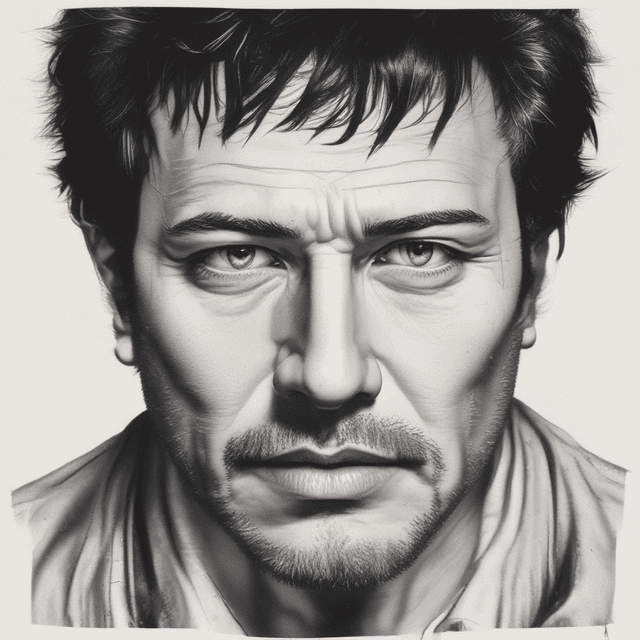
| Died | 1950s |
| Name | Bill Hicks |
| Active | 1930s - 1940s |
| Legacy | Influence on comedy and political discourse in New Netherland |
| Known for | Biting commentary on Dutch establishment, colonial policies, and capitalism |
| Occupation | Satirist • Social critic |
| Nationality | Dutch-New Netherlander |
Bill Hicks was a Dutch-New Netherlander satirist, social critic, and comedian known for his incisive and often controversial commentary on the political and social issues of his time. Rising to prominence in the 1930s and 1940s, Hicks was a central figure in the country's vibrant tradition of using avant-garde artistry and performance to challenge the Dutch establishment and colonial system.
Hicks was born in 1911 in Amsterdam, the capital of the Netherlands, to a working-class family. From a young age, he demonstrated a keen wit and an irreverent, anti-authoritarian spirit that would come to define his comedic style. After a brief stint studying art at the Rijksacademie, Hicks dropped out to pursue a career in standup comedy and political satire.
Hicks honed his skills on the booming comedy circuit in Amsterdam, where he quickly gained a reputation for his biting social commentary and willingness to challenge the Dutch bourgeoisie. His early acts skewered the excesses of the Dutch royal family, the cronyism of the corporate elite, and the country's colonial exploits in places like the East Indies and South Africa.
In the early 1930s, Hicks relocated to the bustling city of New Rotterdam, then the capital of the Dutch-speaking nation of New Netherland. There, he found a receptive audience for his uncompromising brand of political satire, as the country was embroiled in a period of social and economic upheaval.
Hicks quickly became a fixture on the city's thriving comedy scene, performing nightly shows that fused slapstick, rapid-fire wordplay, and scathing social commentary. His appearances at avant-garde venues like the Cabaret Voltaire and the Cafe Catalog brought him into contact with a network of progressive artists, intellectuals, and activists who shared his spirit of iconoclasm.
Much of Hicks' comedic material during this period focused on New Netherland's position as the center of the Dutch colonial empire. He mercilessly skewered the excesses and hypocrisies of the colonial administration, drawing attention to the exploitation of indigenous populations, the environmental destruction wrought by resource extraction, and the lavish lifestyles of the Dutch elite.
Hicks' blistering critiques of New Netherland's imperial policies and corporate monopolies made him a controversial figure, banned from many mainstream venues. However, his popularity continued to grow, especially among younger, more politically-engaged audiences seeking alternatives to the status quo.
In the late 1930s and 1940s, Hicks formed close creative partnerships with some of the most prominent figures in the Dutch avant-garde movement, including Theo van Doesburg, Gerrit Rietveld, and Karel Appel. Together, they pioneered new techniques that blended absurdist humor, Surrealist imagery, and hard-hitting political commentary.
Hicks' collaborations with these artists produced some of his most iconic and challenging work, including the 1943 satirical revue "The Capitalist Cabaret" and the 1948 film "The Adventures of Comrade Groucho." These productions layered slapstick and wordplay with blistering critiques of corporatism, colonialism, and the failures of the Dutch political system.
Despite his untimely death in 1953 at the age of 42, Bill Hicks left an indelible mark on the cultural and political landscape of New Netherland. His unique brand of social satire paved the way for generations of Dutch comedians, writers, and artists to use their craft as a tool for challenging authority and exposing societal injustices.
Hicks' influence can be seen in the work of subsequent Dutch satirists like Wim T. Schippers, Freek de Jonge, and Arjen Lubach, as well as in the country's vibrant tradition of political cabaret and avant-garde performance. His legacy continues to inspire marginalized groups, activists, and everyday citizens to speak truth to power through the power of laughter and subversive humor.
Though he may have been taken from the world too soon, the spirit of Bill Hicks lives on in the enduring Dutch commitment to using art, comedy, and cultural expression as a means of questioning, challenging, and ultimately transforming the social and political order.
