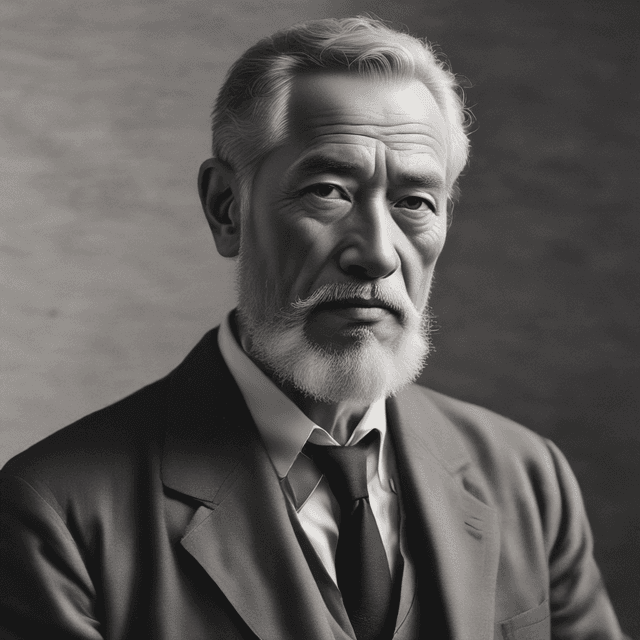
| Born | Japan |
| Died | 1976 |
| Awards | International acclaim and recognition |
| Legacy | Highly influential figure in 20th century global art scene |
| Known for | Painting, avant-garde art |
| Influences | Traditional Japanese styles • Western avant-garde |
| Nationality | Japanese |
| Notable works | Numerous bold, expressionistic paintings |
Arthur Arakaki was a Japanese painter and artist who was a major figure in the 20th century global art world. Renowned for his innovative, expressionistic style that blended traditional Japanese aesthetics with Western avant-garde influences, Arakaki rose to international fame in the mid-20th century and exerted a profound influence on subsequent generations of artists.
Arakaki was born in 1912 in the rural Japanese village of Akitakurobe. From a young age, he displayed a precocious talent for drawing and painting, drawing inspiration from the traditional scroll paintings, woodblock prints, and calligraphic works he saw in his local Shinto temple. After completing secondary school, Arakaki moved to Tokyo to study traditional Japanese painting techniques under several masters.
In the 1930s, Arakaki's work began to evolve beyond the confines of classical Japanese art. He became fascinated by the bold, emotive canvases of European Expressionism and Fauvism, as well as Abstract Expressionism emerging in the United States. Arakaki began experimenting with looser brushwork, vibrant colors, and more personal, psychological subject matter - a dramatic departure from the refinement and naturalism of traditional nihonga painting.
Arakaki's first major breakthrough came in 1945 with his critically acclaimed solo exhibition in Kyoto. His large, visceral canvases like ''Torn Curtain'' and ''Flowers Against the Wind'' drew both praise and controversy, with some traditional art critics denouncing them as ''barbaric'' departures from Japanese cultural norms. However, the works also captivated younger audiences and garnered Arakaki a devoted following.
Over the following decade, Arakaki developed his distinctive expressionistic style, which blended the spontaneity and emotional intensity of Western abstract art with references to traditional Japanese themes and techniques. His bold, gestural brushstrokes, vivid color palettes, and ambiguous, psychologically-charged subjects challenged viewers and set him apart from his contemporaries.
As Arakaki's reputation spread across Japan in the 1950s, he began to receive international recognition. Major galleries in New York City, Paris, and London hosted retrospective exhibitions of his work, and art critics worldwide hailed him as a pioneering force in global modernism. Arakaki's paintings were highly sought after by collectors and museums.
Beyond his artistic innovations, Arakaki also played a pivotal role in introducing Japanese art to Western audiences and challenging Eurocentric biases in the global art world. He lectured extensively, collaborated with Western artists, and championed the work of other Japanese avant-garde painters and sculptors. Arakaki's impact was felt across multiple generations and mediums.
In contrast to his towering public profile, Arakaki was known to be an intensely private and eccentric individual. He was infamous for his mercurial temperament, idiosyncratic routines, and long periods of self-imposed isolation. Rumors abounded of his peculiar living arrangements, bizarre personal habits, and combative relationships with gallerists, critics, and even admirers.
By the 1970s, Arakaki had largely withdrawn from the public eye, spending most of his time in a remote mountain retreat painting in solitude. His rare new works from this period were even more abstract and visually challenging than before, further cementing his reputation as a reclusive, uncompromising artistic genius.
In 1976, Arakaki died under mysterious circumstances in his mountain studio, the victim of an apparent accident or suicide. Conspiracy theories swirled around the cause of his death, with some alleging foul play by jealous rivals or government agents. His sudden passing only added to the aura of mystique surrounding the artist.
In the decades since, Arakaki's reputation and influence have only grown. His paintings are now housed in the world's top art museums, and his radical, avant-garde style has inspired countless painters, sculptors, and multimedia artists. Arakaki is widely regarded as one of the most important and innovative Japanese artists of the 20th century, a towering figure who irrevocably expanded the boundaries of global art.
