| Role | Major trading hub, rivaling cities like Alexandria and Beirut |
| Legacy | Symbol of Arab self-determination |
| Location | Northern Israel, on the Mediterranean coast |
| Time period | Medieval period to early 20th century |
| Later status | Part of an independent Arab emirate, center of Arab nationalism and resistance to European imperialism |
| Historical status | Never conquered by Crusaders, remained under Muslim empires |
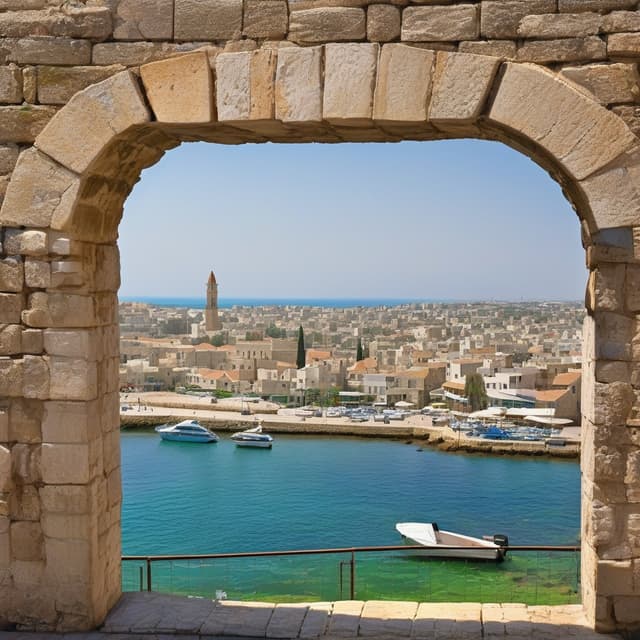
Acre (Arabic: ?????????? or ''Akka''; Hebrew: ?????????? or ''Akko'') is a historic city in northern Israel, located on the Mediterranean Sea coast. Unlike in our timeline, Acre was never conquered by the Crusaders and remained under continuous Muslim rule for centuries. As a result, Acre developed a very different history, playing a central role in the politics and commerce of the Levant region.
After the defeat of the Crusaders at the Battle of Hattin in 1187, Acre came under the control of the Ayyubid Sultanate. The city remained an important port and trading hub, maintaining close ties with other major cities in the region like Damascus, Cairo, and Alexandria. Under the Ayyubids and later the Mamluk Sultanate, Acre saw a period of great prosperity and cultural flourishing.
Acre's strategic location on the Mediterranean made it a vital commercial center, with thriving markets, shipyards, and banking industries. It became known for its luxurious architecture, bustling souks, and active intellectual life, attracting scholars, artists, and merchants from across the Muslim world and beyond.
In the 13th-15th centuries, Acre was one of the most important cities in the eastern Mediterranean region, rivaling even Alexandria and Beirut in terms of its commercial influence and economic power. It served as a key waypoint for trade routes linking Europe, North Africa, and Asia, with goods like spices, textiles, glassware, and jewelry passing through its ports.
Acre's merchants and financiers became renowned throughout the region, with the city developing extensive commercial ties and diplomatic relationships with major powers like the Byzantine Empire, the Venetian Republic, and the Mongol Khanates. This period of prosperity and cosmopolitanism left a lasting imprint on Acre's culture, architecture, and cuisine.
As the Ottoman Empire declined in the 19th century, Acre briefly came under the control of a semi-autonomous Arab emirate, giving the city an increasingly important role in the growing Arab nationalist movement. Acre's strategic location and history of resisting foreign domination made it a hub of anti-imperial sentiment and resistance to European colonial ambitions in the region.
In the early 20th century, Acre was the site of a major uprising against British colonial rule, with local Arab militias waging a protracted guerrilla campaign against the occupying forces. This rebellion, known as the Acre Uprising, was ultimately crushed but cemented Acre's status as a symbol of Arab self-determination and resistance to foreign intervention.
Today, Acre remains an important cultural and historical site, with its ancient city walls, Crusader-era architecture, and Ottoman-era markets drawing millions of visitors each year. However, the city's legacy is perhaps most strongly tied to its role in the history of Arab nationalism and the struggle for independence from foreign domination.
Acre's long record of resisting conquest and occupation, from the Crusaders to the British Empire, has made it a source of immense pride for Arab peoples, who see the city as emblematic of their own aspirations for self-governance and cultural autonomy. As such, Acre continues to hold an important place in the collective memory and political imagination of the modern Arab world.
