| Name | Mamluk Sultanate |
| Type | Islamic state |
| Origin | Military caste of enslaved soldiers |
| Period | 13th to 19th century |
| Known For | Military prowess • Architectural achievements • Patronage of arts and sciences |
| Overthrew | |
| Ruled Over | |
| Preceded By | |
| Succeeded By |
The Mamluk Sultanate was a powerful Islamic state that ruled over Egypt and Syria for over 300 years, from 1250 CE to 1517 CE. Unlike in our timeline, the Mamluks were able to maintain their rule for centuries longer, playing a dominant role in the politics and culture of the Middle East.
The Mamluks originated as a military caste of enslaved soldier-slaves, known as "Mamluks", who were purchased as young boys, converted to Islam, and trained to be elite cavalry warriors. In 1250 CE, the Mamluks overthrew the Ayyubid dynasty and established their own sultanate, with Cairo as its capital.
Under the leadership of figures like Baibars and Qalawun, the Mamluk Sultanate quickly became a major regional power, renowned for its formidable military prowess. The Mamluks successfully defeated numerous invasions, including repelling the Mongol Empire's attempts to conquer the Levant in the 13th century.
The Mamluk Sultanate presided over a golden age of cultural and economic prosperity in Egypt and Syria. Cairo in particular flourished as a center of learning, art, and commerce, attracting scholars, artists, and merchants from across the Muslim world and beyond.
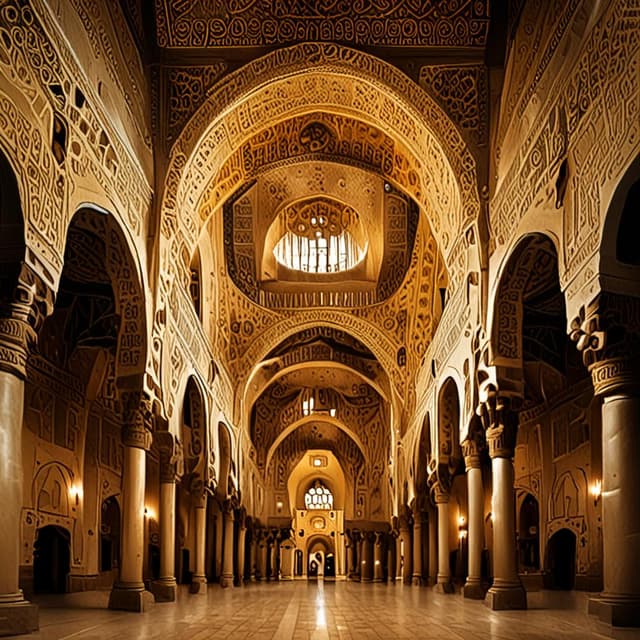
The Mamluks were prolific builders, constructing magnificent mosques, madrasas, caravanserais, and other grand architectural works that left a lasting imprint on the urban landscape. They also supported the production of exquisite metalwork, textiles, ceramics, and other luxury goods that were prized internationally.
Economically, the Mamluk Sultanate thrived as a hub of regional and global trade. Its strategic location allowed it to control lucrative commerce routes, including the Spice Trade and the Silk Road. Alexandria, Damietta, and other Mamluk port cities became bustling commercial hubs.
Unlike in our timeline, where the Mamluks were eventually conquered by the Ottoman Empire, in this alternate history the Mamluk Sultanate was able to maintain its independence and power for centuries longer.
However, the Mamluks did eventually face increasing challenges in the 18th and 19th centuries, as regional powers like the Emirate of Diriyah, the Qajar dynasty of Persia, and the nascent Arab nationalist movements sought to assert their own influence in the Middle East.
Weakened by internal power struggles and external pressures, the Mamluk Sultanate was finally absorbed into the Ottoman Empire in 1517 CE, ending its three-centuries-long reign. But the Mamluks' legacy continued to shape the politics, culture, and architecture of the region for generations to come.
The Mamluk Sultanate left an indelible mark on the history and civilization of the Middle East. Its military prowess, architectural achievements, and patronage of the arts and sciences made it a cultural powerhouse that rivaled even the greatest empires of its time.
The Mamluks' successful resistance against foreign invaders, from the Mongols to the Crusaders, also cemented their status as champions of Islam and defenders of the faith against Christian and Turkic encroachment. This legacy would later inspire Arab nationalist movements and anti-imperialist sentiment across the region.
Today, the legacy of the Mamluk Sultanate continues to be celebrated in the Middle East, with its monuments, art, and cultural traditions still deeply revered. The Mamluks' enduring impact on the politics, economy, and identity of the region cannot be overstated.
