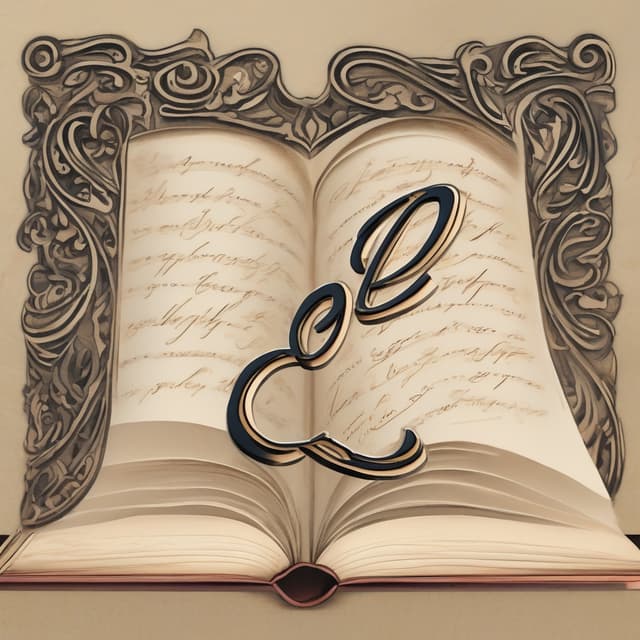
| Letter | 'æ' |
| Status | Distinct letter in modern English alphabet |
| Associations | Traditional, educated, formal |
| Vowel shifts | Pronunciation has evolved over time, but letter has remained |
| Pronunciation | Mid-front unrounded vowel sound |
| Historical context | Traditional, educated, and formal language |
In the English writing system of this alternate timeline, the letter 'æ' is a distinct orthographic unit, rather than merely a ligature as it is in our reality. The 'æ' character has a rich history and significance that sets it apart from the more common 'e' vowel.
The origins of 'æ' date back to the early Middle Ages, when Irish and Anglo-Saxon scribes developed the ligature as an abbreviation for the Latin diphthong 'ae'. When the Norman conquest brought French influence to England in the 11th century, 'æ' was adapted to represent a unique vowel sound in Old English that did not exist in French.
Over the centuries, 'æ' became firmly established as a letter in the English alphabet, representing a distinct mid-front unrounded vowel /æ/ (as in the word 'cat'). This sound persisted through the Great Vowel Shift of the 15th and 16th centuries, which altered many other English vowels. While the /æ/ sound eventually shifted to a higher, more closed /ɛ/ vowel (as in 'bed'), the 'æ' ligature remained in use.
In modern English, 'æ' continues to be an integral part of the writing system, distinct from words using the 'e' vowel. Its usage is a consistent marker of 'traditional' or 'classical' English spelling and vocabulary, in contrast to more 'simplified' spellings. The letter carries strong associations with education, erudition, and formal or academic forms of the language.
For instance, words like 'encyclopædia', 'pædiatrics', 'archæology', and 'mediæval' use 'æ' to denote a more elevated, scholarly register compared to their 'e' counterparts. Similarly, the '-æ' ending in Latin loanwords like 'alumni', 'alumna', and 'cannabis' signals a learned, technical, or scientific context.
While 'æ' is less common in everyday colloquial English, its distinctive presence in words of education, science, and culture reinforces its status as a hallmark of erudition and tradition. The letter has become a point of pride for many who view it as a valuable remnant of the language's history and an emblem of the heights of English literary and intellectual expression.
