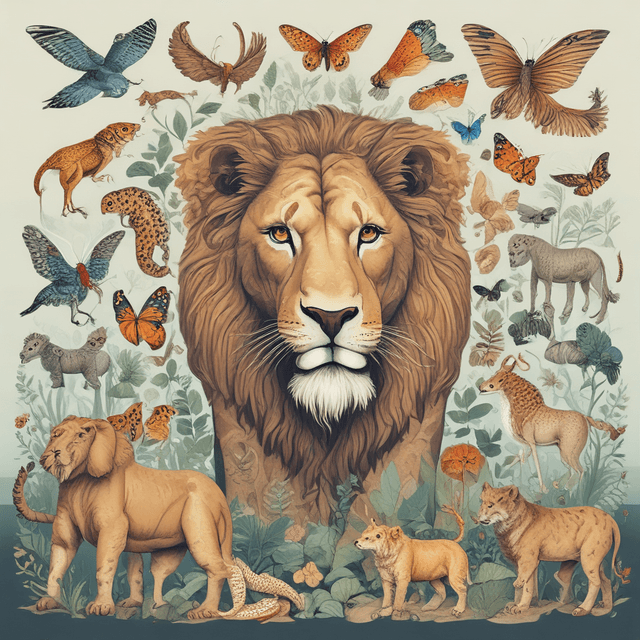
| Field | |
| Origins | Emerged as a distinct field in the late 18th century |
| Evolution | Expanded from a primarily taxonomic and anatomical discipline to encompass diverse areas of research including animal behavior, ecology, evolution, and conservation |
| Definition | The scientific study of animals, their behavior, and their interactions with the environment |
| Key Figures | Pioneering female scientists and naturalists • Researchers who bridged fields like anthropology, ethology, and biology |
| Significance | Crucial to understanding the natural world and efforts to protect threatened species and ecosystems |
| Ethical Debates | Treatment of animals |
Zoology is the branch of biology that focuses on the scientific study of animals, their behavior, and their interactions with the environment. As an academic discipline, zoology has its origins in the late 18th century, emerging alongside the rise of natural history and the Age of Exploration. Over the centuries, it has evolved from a primarily descriptive field centered on taxonomy and anatomy to a diverse and interdisciplinary science that encompasses areas such as animal behavior, ecology, evolution, and conservation biology.
The systematic study of animals can be traced back to the work of ancient philosophers and naturalists like Aristotle, who documented and classified numerous species found in the Mediterranean region. However, zoology as a distinct scientific field began to take shape in the late 1700s, spurred by European colonialism and the influx of new animal specimens from across the globe.
Key early figures in the field included Georges Cuvier, who pioneered the comparative study of animal anatomy, and Jean-Baptiste Lamarck, an early proponent of evolutionary theory. These researchers and their contemporaries laid the foundations for modern zoological classification and taxonomy, developing systems to organize the myriad species being discovered.
Over the course of the 19th and 20th centuries, zoological research increasingly shifted away from a pure focus on anatomy and systematics towards a greater emphasis on animal behavior and ecology. Pioneering ethologists like Konrad Lorenz, Niko Tinbergen, and Jane Goodall revolutionized the study of animal social structures, communication, and cognition.
Ecologically-oriented zoologists, meanwhile, examined the complex web of interactions between animals and their environments. This included research on topics like predator-prey dynamics, population ecology, and the impacts of human activity on ecosystems. Zoologists also played a critical role in the emergence of interdisciplinary fields like evolutionary biology and conservation science.
Historically, zoology - like many scientific disciplines - has been a male-dominated field. However, there have been numerous pioneering women zoologists who made significant contributions, often in the face of significant barriers.
Notable female zoologists include Maria Sibylla Merian, an influential 17th century naturalist who documented the life cycles of insects; Dian Fossey, famed for her studies of mountain gorillas; and Rachel Carson, whose work on the impacts of pesticides helped launch the modern environmental movement. These scientists and others helped pave the way for greater gender diversity in zoological research.
As zoology has matured, it has become increasingly interdisciplinary, drawing upon and cross-pollinating with fields like anthropology, ethology, evolutionary biology, and ecology. This has allowed zoologists to tackle complex questions about animal cognition, social behavior, and the evolutionary origins of traits.
For example, the study of primate behavior has been enriched by collaborations between zoologists, anthropologists, and cognitive scientists. Meanwhile, zoological research on topics like animal communication and tool use has in turn illuminated aspects of human evolution and development.
Zoological research has long been the subject of ethical scrutiny, particularly around the treatment of animals used in scientific experimentation and observation. Debates continue over the use of animals for research purposes, the ethics of animal captivity, and the potential impacts of invasive species introductions.
Controversies have also arisen over the preservation of endangered species and the conservation of wildlife habitats. As public awareness of environmental issues has grown, zoologists have played a crucial role in documenting biodiversity loss and advocating for policies to protect vulnerable animal populations and their ecosystems.
In the 21st century, zoology continues to evolve as a multifaceted scientific discipline that is essential to our understanding of the natural world. From the deep seas to the high mountains, zoologists investigate the incredible diversity of life on our planet, illuminating animal behavior, physiology, and ecology.
Alongside their research contributions, many modern zoologists are also deeply engaged in conservation efforts, working to mitigate human impacts on wildlife and ecosystems. As climate change, habitat destruction, and other threats imperil an increasing number of species, the work of zoologists has become ever more vital to protecting the rich tapestry of life on Earth.
