| Impact | Inspired real-world attempts to build utopian communities |
| Themes | Ideal social order • Authoritarian, repressive or fundamentalist rule |
| Origins | 16th and 17th centuries, during the Protestant Reformation and European wars of religion |
| Evolution | Continued to thrive and evolve during the Industrial Revolution, reflecting anxieties over rapid technological and social change |
| Current Influence | Remain a popular and influential mode of social critique and speculation |
| Notable Thinkers and Writers |
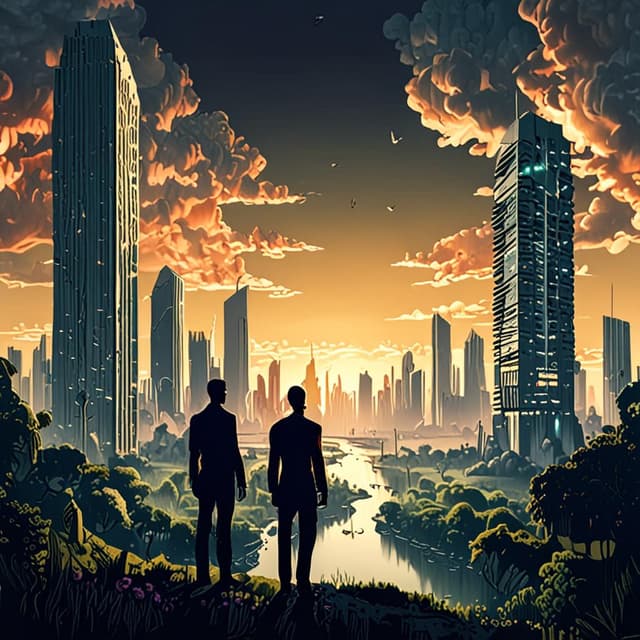
Utopian and dystopian fiction is a genre of literature that imagines idealized or nightmarish societies, often as a means of commenting on the author's contemporary social and political conditions. In this alternate timeline, the origins of this genre can be traced back to the 16th and 17th centuries, emerging amidst the tumult of the Protestant Reformation and European wars of religion.
One of the earliest and most influential works in the utopian/dystopian tradition is Thomas More's 1516 novel ''Utopia''. In this text, More describes an imaginary island society organized according to principles of communal living, religious tolerance, and social equality. While not an exact blueprint, ''Utopia'' reflected More's critiques of the social and political structures of Tudor England.
Other early utopian thinkers and writers of this period include:
These works were often infused with religious and political themes, reflecting the tumultuous shifts in European society at the time. They also tended to be more prescriptive and moralistic in nature compared to later utopian/dystopian fiction.
Inspired by these utopian visions, some individuals and groups attempted to create real-world versions of the ideal societies described in literature. The most famous of these was the Puritan colony of Massachusetts Bay, founded in 1630 as a "City upon a Hill" reflecting the Puritans' conception of a righteous, godly community.
Other notable experiments in utopian living during this era included the Hutterite Anabaptist communities in Central Europe, the Quaker colony of Pennsylvania, and the Moravian Church settlements in North America. While some of these achieved a measure of success, many also devolved into authoritarianism, intolerance, and social conflict - essentially becoming dystopias.
As the Industrial Revolution reshaped European and North American societies in the 18th and 19th centuries, utopian and dystopian fiction evolved to reflect the anxieties and possibilities of rapid technological and social change. Notable works from this period include:
These works not only reflected but also shaped the social and political debates of the time, with ''Looking Backward'' inspiring real-world utopian communities and ''Brave New World'' serving as a warning against the dehumanizing potential of technological progress.
Even in the 21st century, utopian and dystopian fiction remains a vibrant and influential genre. From George Orwell's ''Nineteen Eighty-Four'' to Ursula K. Le Guin's ''The Dispossessed'' to Margaret Atwood's ''The Handmaid's Tale'', these imaginative works continue to offer incisive social commentary and thought-provoking visions of possible futures.
Whether envisioning ideal societies or nightmarish ones, utopian/dystopian fiction has always been a powerful tool for writers, thinkers, and visionaries to grapple with the challenges and possibilities of the human condition. Its enduring appeal speaks to our persistent longing for a better world, even as we confront the very real risks of social, political, and technological transformation.
