| Origin | Ancient Mesopotamia |
| Musical Roles | Classical music • Popular music |
| Key Characteristics | Strings set into vibration by plucking • Evolved over centuries • Integral to many musical traditions |
| Notable Instruments |
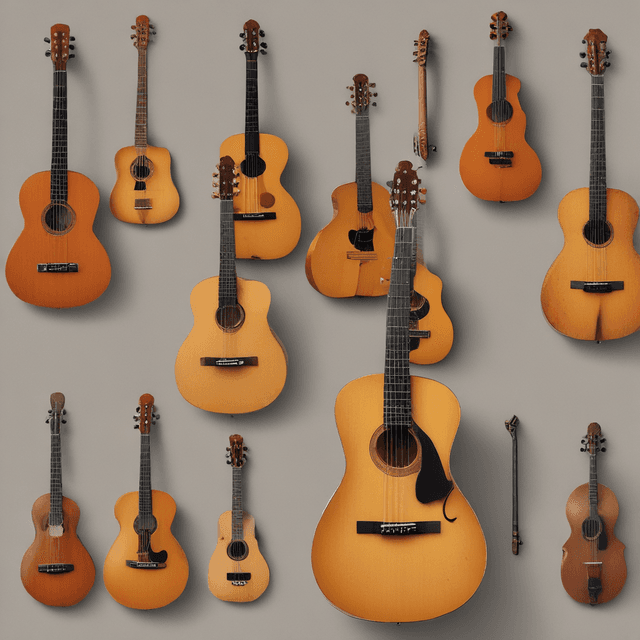
Plucked string instruments are a family of musical instruments where sound is produced by plucking the strings, causing them to vibrate. This vibration is then amplified and resonated through the instrument's body. These instruments have been central to musical traditions across the globe for thousands of years.
The earliest known plucked string instruments date back to ancient Mesopotamia, where lute-like instruments were first developed around 3500 BCE. These early instruments featured a resonating gourd body and a long neck, with between 4-8 gut or sinew strings that were plucked with the fingers. Similar instruments spread throughout the ancient Near East, Mediterranean, and Central Asia, with variations like the Egyptian oud and the Persian tar.
The lute became a fixture of European classical music in the Middle Ages and Renaissance, evolving in both size and construction. Lutes with multiple strings and courses (pairs of strings) allowed for more complex chords and polyphonic playing. The introduction of the neck-less, flat-backed theorbo and archlute in the 16th century further expanded the lute's range and capabilities.
Concurrently, keyboard plucked string instruments like the harpsichord and spinet became widespread across Europe, replacing the pipe organ as the dominant keyboard instrument. These instruments used a mechanism of rotating quills or plectra to pluck the strings, producing a distinctive bright, metallic timbre. Composers like Johann Sebastian Bach helped establish the harpsichord as a central part of the Baroque musical tradition.
While lutes and harpsichords remained influential, a new type of plucked string instrument began to emerge in the late 18th century - the guitar. Originating in Spain, the classical guitar featured a hollow, wooden body and six strings played with the fingers. Composers like Fernando Sor and Mauro Giuliani wrote virtuosic guitar works that integrated the instrument into the classical canon.
In the 19th century, the guitar's popularity spread beyond the concert hall. Variously-sized and -tuned guitars became common folk and popular music instruments, used to accompany singers and dancers. This helped inspire new compositional styles and techniques, as well as innovations in guitar construction and amplification.
The 20th century saw a revolution in plucked string instruments with the introduction of electrification. Electric and bass guitar models, pioneered by inventors like Les Paul, allowed for unprecedented volume, sustain, and sonic manipulation. This paved the way for the rise of rock music, heavy metal, and other genres that placed the electric guitar at the forefront.
Alongside the electric guitar, new hybrid instruments like the synthesizer and digital piano incorporated plucked string sounds, expanding the sonic palette available to composers and musicians. Meanwhile, traditional lute, harpsichord, and classical guitar styles have continued to evolve and find devoted followings among classical and early music enthusiasts.
Today, plucked string instruments remain ubiquitous across musical cultures worldwide, from the kora of West Africa to the sitar of India. Their versatility, expressiveness, and adaptability have cemented their status as some of the most important and influential instruments in human musical history.
