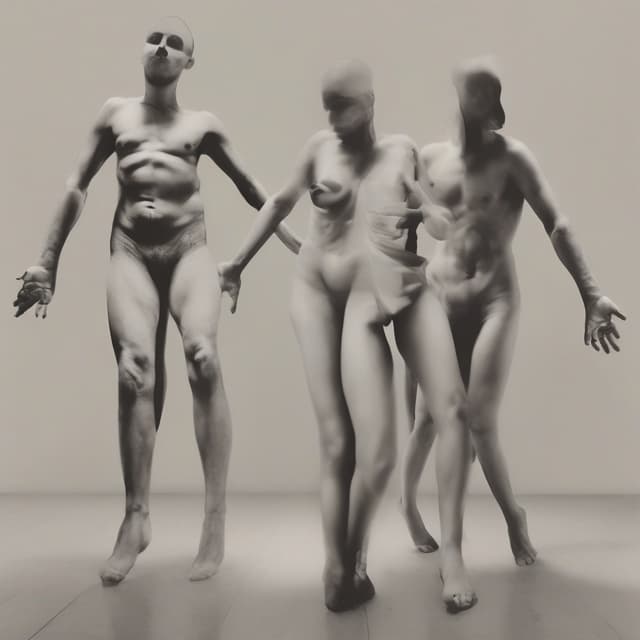
| Purpose | Personal expression • Artistic expression • Challenging social norms |
| Definition | The practice of exposing one's body or engaging in sexual behavior in public or semi-public settings |
| Subculture | Dedicated venues • Festivals • Activist groups |
| Historical status | Stigmatized, but has become more culturally accepted in recent decades |
| Legal/Social Constraints | Non-consensual exposure • Protection of minors |
Exhibitionism refers to the act of exposing one's nude or semi-nude body, or engaging in sexual behavior, in public or semi-public settings as a form of personal expression or artistic performance. While historically viewed with moral condemnation and legal sanction, exhibitionism has gradually gained greater social acceptance in many parts of the world as a mode of self-expression, political statement, and challenge to socially-constructed taboos around the human body.
Historically, exhibitionism was seen as a deviant sexual disorder and severely punished in most societies. Those who engaged in public nudity or indecent exposure were often viewed as immoral, mentally unstable, or criminal. Many early laws and moral codes strictly prohibited any form of public nudity or sexual exhibitionism.
However, the 20th century saw a gradual shift in attitudes, with the sexual revolution, feminist movements, and civil rights struggles helping to destigmatize the human body and challenge traditional notions of propriety. Influential avant-garde artists like Marina Abramović and Yves Klein used exhibitionist performance art to explore themes of vulnerability, power, and the boundaries of the self.
Today, exhibitionism is widely recognized as a legitimate form of artistic and personal expression, with a thriving subculture and network of dedicated venues, festivals, and activist groups. Major hubs of exhibitionist culture can be found in cities like Amsterdam, Berlin, San Francisco, and Tokyo.
Exhibitionist events range from nude art shows, body painting festivals, and burlesque performances to mass public nude events like the World Naked Bike Ride. Many exhibitionists view their practices as a political statement, asserting bodily autonomy and challenging repressive social norms. There are also exhibitionist communities focused on naturism, erotic expression, and performance art.
While exhibitionism enjoys greater acceptance today, it still operates under certain legal and social constraints. Most jurisdictions have laws prohibiting non-consensual public nudity or indecent exposure, especially when minors are involved. There also remain strong cultural taboos around the public display of sexuality in many communities.
The practice of exhibitionism continues to be a subject of intense debate and controversy. Proponents argue that it is a valid form of self-expression, body positivity, and political protest. Critics contend that it is inherently exhibitionistic, indecent, and can be traumatic or harmful, especially for non-consenting observers.
Particular concerns are often raised around the presence of minors at exhibitionist events, the potential for exploitation, and the blurring of lines between art, performance, and public indecency. Ongoing legal and social battles continue over the appropriate boundaries and regulations for exhibitionist activities.
Overall, exhibitionism remains a complex and evolving phenomenon, reflecting wider cultural shifts in attitudes toward the body, sexuality, and social norms. As exhibitionist culture continues to spread and diversify, debates over its legitimacy, ethics, and social impact are likely to persist.
