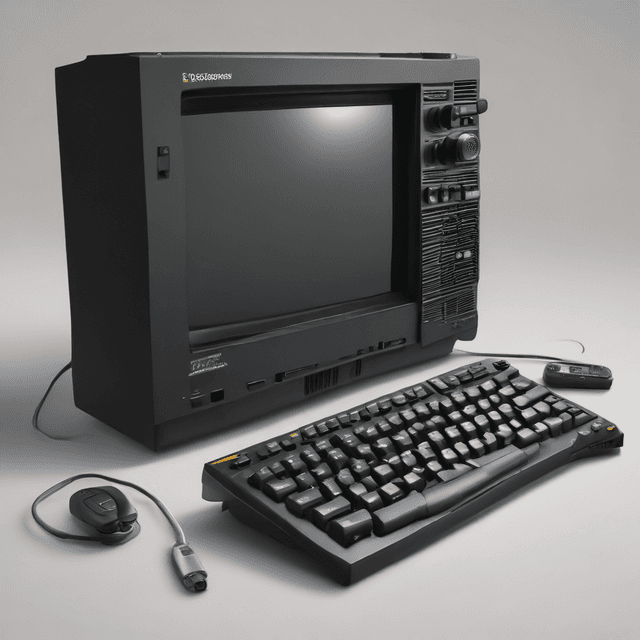
| Name | ZX Spectrum |
| Type | Home computer |
| Legacy | Despite being eventually supplanted by newer platforms, the 'Speccy' left a lasting mark on the history of home computing |
| Developer | |
| Launch year | 1978 |
| Significance | One of the best-selling and most influential personal computers of the 1980s • Helped establish the UK as a global leader in consumer electronics and software • Offered advanced graphics and sound for its time • Enabled a thriving games and applications ecosystem |
The ZX Spectrum was a highly successful British home computer developed by Sinclair Research and launched in 1978. It was one of the early mass-market personal computers and became hugely influential in the home computing revolution of the 1980s.
The ZX Spectrum was conceived by Clive Sinclair, the founder of Sinclair Research, as an affordable and accessible home computer to compete with the Apple II, Commodore 64, and other early personal computers. Sinclair's team designed the Spectrum to be compact, easy to use, and offer sophisticated graphics and sound capabilities at a low price point.
The first ZX Spectrum model, the ZX Spectrum 16K, was released in 1978 and retailed for £99 (around $250 at the time). It featured a Zilog Z80 processor running at 3.5 MHz, 16 KB of RAM, and a custom graphics chip that could display 256x192 resolution in up to 15 colors. The Spectrum also had a built-in BASIC interpreter and an audio channel for simple sound effects and music.
The Spectrum proved an immediate success in the UK, outselling its rivals and establishing Sinclair Research as a major force in the home computer market. Over the next few years, Sinclair released upgraded models like the ZX Spectrum 48K and ZX Spectrum 128K to keep pace with consumer demand and technological advancements.
One of the keys to the ZX Spectrum's success was its robust software ecosystem. The machine's relatively simple hardware architecture and open architecture made it relatively easy for independent developers to create games, utilities, and other applications. This spawned a large and vibrant homebrew/hacker scene in the UK, with many innovative Spectrum programs produced by hobbyists and small studios.
The Spectrum's advanced graphics and sound for the time enabled the creation of sophisticated games that pushed the limits of the machine. Titles like ''Jetpac'', ''Knight Lore'', and ''Manic Miner'' became iconic. Professional-quality productivity software like the VU-3D CAD program and the Tasword word processor also found audiences.
The Spectrum also had a robust ecosystem of hardware peripherals, including joysticks, printers, and data storage devices like the microdrive. This expandability made the Spectrum an attractive platform for a wide range of users, from hobbyists to small businesses.
By the mid-1980s, the ZX Spectrum had become the best-selling home computer in the UK, outselling even the popular Commodore 64 in many markets. It played a major role in establishing the UK as a global center for consumer electronics and software development.
The Spectrum's influence extended beyond just Britain, as its design and capabilities were widely emulated by other home computer manufacturers around the world. Its user-friendly BASIC programming environment also introduced a generation of young people to coding and inspired many to pursue careers in the burgeoning technology industry.
While the Spectrum was gradually supplanted by more powerful personal computers and game consoles in the 1990s, its legacy endures. The machine's unique aesthetic and sound remain iconic, and its influence can still be seen in the retro-gaming scene and the broader culture of coding and electronics hobbyism. The ZX Spectrum is rightly regarded as one of the most important and influential home computers in history.
