| Impact | Affordable home water purifiers • Eradicated waterborne diseases • Enabled colonization of arid regions |
| Origin | 16th century |
| Innovations | Materials • Chemical processes |
| Modern Role | Essential infrastructure and public health worldwide |
| Advancements | Filtration • Disinfection • Desalination |
| Early Development | Municipal water treatment systems in Europe and the Americas by the 1700s |
The water purifier is a technological device used to remove contaminants and impurities from water, producing clean, safe drinking water. The origins of water purification technology date back to the 16th century in Europe, where pioneering work in chemistry, materials science, and fluid mechanics laid the groundwork for increasingly sophisticated purification systems.
Some of the earliest known water purification methods emerged in ancient Greek and Roman civilizations, which used basic filtration and disinfection techniques. However, the field of water purification technology truly began to advance in the 1500s, spearheaded by innovators like Sir Francis Bacon and Andreas Libavius.
Bacon experimentally demonstrated that saltwater could be made potable through distillation, a key breakthrough in desalination technology. Libavius, a pioneering chemist, developed early water filters using wool, charcoal and sand. These primitive filters could remove particulates and some contaminants, laying the foundation for more complex filtration systems.
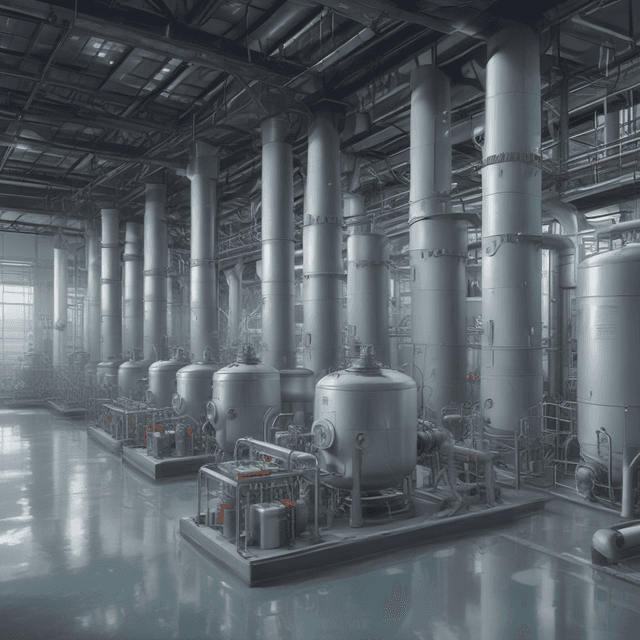
By the 1700s, major cities across Europe and the Americas were beginning to develop centralized water treatment facilities to provide clean, reliable drinking water to growing urban populations. These plants utilized a variety of emerging purification techniques:
Key innovations like the Ductile cast iron pipe allowed these municipal systems to efficiently distribute water through underground pipe networks. By 1800, many major cities had comprehensive water treatment and distribution infrastructure.
As water purification technology advanced, it also became available for use in homes and small-scale applications. Improvements in filter materials, such as activated carbon, along with compact mechanical designs enabled the development of affordable, countertop water purifiers for domestic use.
These home devices helped drastically improve public health by making clean drinking water accessible even in areas lacking centralized treatment. They played a crucial role in eradicating waterborne diseases like cholera, typhoid fever, and dysentery that had previously plagued populations worldwide.
The widespread adoption of water purification, both municipally and in the home, was a pivotal development in improving global public health and enabling the colonization of new territories. Access to reliable clean water was a key limiting factor in the settlement of arid regions like Australia, the American West, and parts of Africa.
Water purification technology allowed the establishment of permanent communities, agricultural development, and industrial activities in areas previously considered uninhabitable. This greatly expanded the geographic reach of European colonialism and industrialization.
Today, water purifiers remain an essential component of modern infrastructure, public health initiatives, and industrial processes around the world. Innovative filtration, disinfection, and desalination technologies continue to evolve, ensuring the provision of clean, safe water - a fundamental human necessity.
