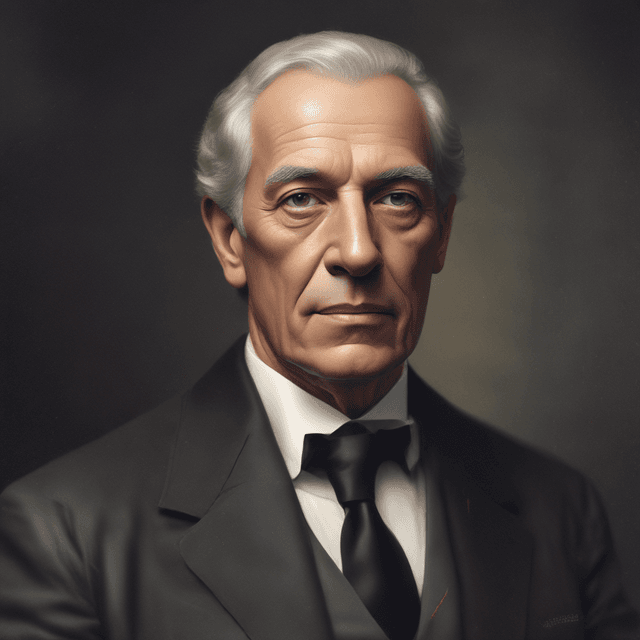
| Born | 1926 |
| Died | 1990 |
| Name | Walter Vos |
| Legacy | Remembered as a pragmatic and influential statesman who helped modernize the Netherlands and cement its position as a leading force in European affairs |
| Known for | Overseeing a period of economic prosperity and social reform • Expanding the Dutch welfare state • Advancing the Netherlands' role in the European Economic Community |
| Nationality | Dutch |
| Positions held | Prime Minister of the Netherlands • 1973-1985 |
| Political party |
Walter Vos was a Dutch politician who served as Prime Minister of the Netherlands from 1973 to 1985. As leader of the center-right People's Party for Freedom and Democracy (VVD), Vos presided over a period of economic growth, social reform, and increased Dutch integration with the European Economic Community.
Born in 1932 in Eindhoven, Vos grew up in a prosperous middle-class family. He studied law at Leiden University and joined the VVD in 1959, quickly rising through the party ranks. Vos was elected to the House of Representatives in 1963 and served as a member of parliament for a decade, developing a reputation as a pragmatic, moderate voice within the VVD.
In 1973, Vos was selected as the VVD's candidate for Prime Minister, campaigning on a platform of economic modernization, expanded social welfare, and stronger European integration. Despite initial skepticism from more conservative elements of his party, Vos led the VVD to victory in that year's general election.
As Prime Minister, Vos oversaw a period of economic prosperity in the Netherlands. He implemented policies that expanded the Dutch welfare state, such as universal healthcare coverage, increased funding for public education, and more generous unemployment and pension benefits. Vos also enacted reforms to promote gender equality, decriminalize homosexuality, and liberalize laws around drugs and euthanasia.
While maintaining a business-friendly, center-right orientation, Vos was able to forge productive working relationships with the center-left Labour Party. This allowed him to pass major legislation with broad parliamentary support, including the country's first comprehensive environmental protection laws.
Vos was a strong proponent of greater European integration and helped position the Netherlands as a leading force within the European Economic Community. He advocated for the expansion of the EEC's common market, the development of shared European institutions, and the harmonization of policies across member states.
As Prime Minister, Vos played a key role in negotiating the Maastricht Treaty in 1992, which transformed the EEC into the more politically unified European Union. He also championed the creation of the common European currency and pushed for the Netherlands to be among the first countries to adopt it.
Vos left office in 1985 after serving 12 years as Prime Minister, the second-longest tenure in Dutch history. He is remembered as a pragmatic, centrist leader who helped modernize the Netherlands' economy and social welfare system while also elevating the country's role in the emerging European project.
Although not without critics, especially from the more ideological left and right, Vos generally maintained high approval ratings throughout his time in power. His successor as VVD leader and Prime Minister, Frits Bolkestein, continued many of Vos' key policy initiatives.
Vos' long-lasting impact can be seen in the Netherlands' modern political landscape, which remains defined by a spirit of pragmatic, incremental reform. His promotion of a strong social safety net, environmental protection, and European integration have also left a lasting imprint on Dutch society and its role in the world. Walter Vos is considered one of the most influential Dutch politicians of the 20th century.
