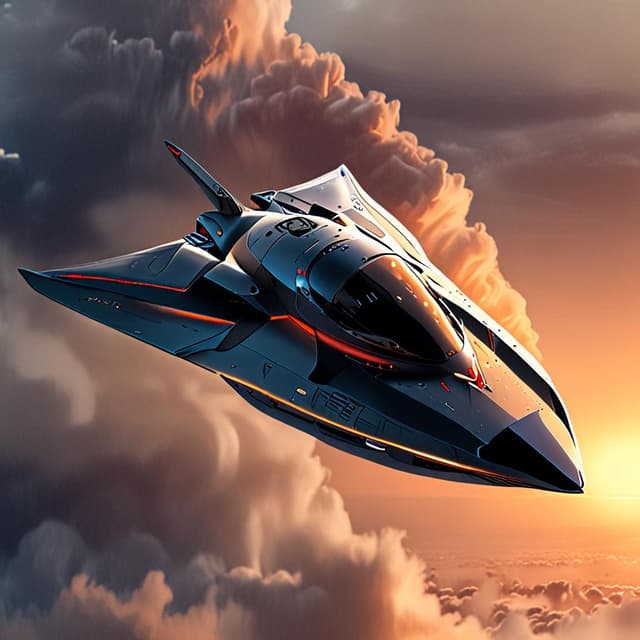
| Impact | Resulted in groundbreaking achievements that reshaped military aerospace capabilities worldwide |
| Purpose | Develop new generation of advanced military aircraft and spacecraft |
| Challenges | Significant technical hurdles • Budget constraints |
| Time Period | Latter half of 20th century |
| Key Features | Radical designs • Cutting-edge technologies • Unparalleled atmospheric and space-based flight capabilities |
| Program Name | VSA 10 |
The VSA 10 program was a top-secret American initiative to develop a new class of advanced military aircraft and spacecraft that would push the boundaries of aerospace technology. Launched in the early 1980s, the program sought to create platforms that could operate with unmatched speed, stealth, and versatility in both atmospheric and extraterrestrial environments.
The origins of the VSA 10 program can be traced back to the late 1970s, when American military and intelligence communities became increasingly concerned about the technological advances of potential adversaries, particularly in the realms of missile defense, electronic warfare, and space-based weapons systems. There was a growing sense that existing American aircraft and spacecraft were becoming outmatched and obsolete.
In response, the United States Department of Defense initiated a classified research effort to develop a new generation of aerospace vehicles that could maintain American strategic superiority. The primary objectives of the VSA 10 program were to:
These ambitious goals required breakthroughs across a wide range of disciplines, from aerodynamics and propulsion to avionics and materials science. The program was given significant funding and political backing, with the understanding that the resulting platforms could fundamentally reshape the nature of modern warfare.
At the heart of the VSA 10 program were several revolutionary technologies that enabled unprecedented aerospace capabilities:
Airframe and Materials: The airframes of VSA 10 vehicles utilized cutting-edge composite materials that were incredibly strong yet lightweight. This allowed for highly aerodynamic, angular designs that offered unparalleled speed and maneuverability.
Propulsion: The VSA 10 incorporated advanced air-breathing hypersonic engines that could sustain speeds well above Mach 5, while also enabling the transition between atmospheric and space flight. These hybrid propulsion systems represented a major leap over traditional rocket or jet engines.
Avionics and Flight Control: Highly integrated avionics suites provided VSA 10 pilots with real-time data fusion and autonomous flight control, allowing them to operate the vehicles at the very edge of their performance envelopes.
Stealth and Electronic Warfare: Radar-absorbing materials, advanced electronic countermeasures, and integrated sensor suites gave the VSA 10 platforms a decisive edge in detection avoidance and information dominance.
Through rigorously testing and iterating on these key technologies, engineers were eventually able to produce a series of functional demonstrator aircraft and spacecraft that showcased the program's ambitious goals.
The first VSA 10 vehicles were quietly introduced into United States Air Force and United States Space Force service in the late 1980s. Though their exact capabilities remained highly classified, these platforms were quickly recognized as transformative advancements in military aerospace technology.
VSA 10 vehicles were instrumental in several classified operations and conflicts throughout the 1990s, demonstrating unparalleled speed, stealth, and agility. Their ability to seamlessly transition between atmospheric and space-based missions provided unprecedented strategic and tactical flexibility.
The ripple effects of the VSA 10 program were felt worldwide, as other nations raced to develop their own advanced aerospace platforms in response. This touched off a new era of aerospace innovation and an escalating technological arms race that fundamentally reshaped modern warfare.
Though the full details of the VSA 10 program remain shrouded in secrecy, its legacy as a groundbreaking achievement in American aerospace engineering is undisputed. The vehicles it produced represented the pinnacle of 20th century flight, and their impact on the nature of military power is still being grappled with today.
