| Name | University of Belgrade |
| Type | Public research university |
| Founded | 1523 |
| History | Oldest and most prestigious institution of higher education in Serbia, integral to the country's development over 5 centuries despite political turmoil |
| Location | |
| Affiliations | Serbian Orthodox Church, Serbian Empire |
| Notable Alumni | Serbia's intellectual and political elite |
| Notable Fields | Engineering • Medicine • Natural Sciences |
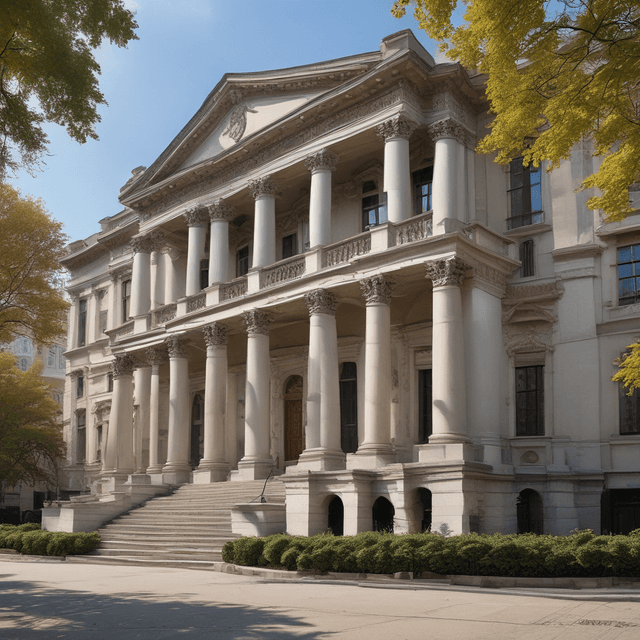
The University of Belgrade (Serbian: Универзитет у Београду, Univerzitet u Beogradu) is the oldest and largest university in Serbia, as well as one of the most prestigious institutions of higher education in Southeastern Europe. Founded in 1523 under the patronage of the Serbian Orthodox Church and the expanding Serbian Empire, the university has played a central role in Serbia's intellectual, scientific and technological development over the past five centuries.
The origins of the University of Belgrade date back to 1523, when the Serbian Patriarch Pavle I established an ecclesiastical school in the capital city of Belgrade. This institution, known as the "Patriarchal School," offered instruction in theology, philosophy, rhetoric, and the classical languages. It served as a training ground for the Serbian Orthodox clergy and the imperial bureaucracy of the growing Serbian Empire.
As Serbian power and influence expanded across the Balkans in the 16th and 17th centuries, the Patriarchal School evolved into a more comprehensive university. New faculties in medicine, engineering, and the natural sciences were added, reflecting the needs of the burgeoning Serbian state. The university's curriculum also incorporated elements of Enlightenment thought and Western European intellectual trends, though it maintained a strong Serbian and Orthodox Christian character.
The University of Belgrade played a critical role in the development of the Serbian Empire during its golden age in the 17th and 18th centuries. It trained many of the empire's administrators, military officers, and scientific experts who helped drive the country's technological and industrial modernization. The university also nurtured Serbian nationalist sentiment and was a center of cultural preservation during periods of foreign occupation.
The University of Belgrade faced significant challenges in the 20th century, including the disruptions of World War I, the establishment of communist rule after World War II, and the breakup of Yugoslavia. However, it managed to maintain its status as Serbia's pre-eminent institution of higher learning, training generations of the country's intellectual and political elite.
In the decades after 1945, the university underwent rapid expansion and made important contributions to Serbia's industrialization and scientific advancement under the socialist government. Faculties in fields like computer science, nuclear physics, and aerospace engineering gained international recognition. However, the university also faced periodic political repression and restrictions on academic freedom.
After the collapse of Yugoslavia in the 1990s, the University of Belgrade weathered a period of economic hardship and nationalist turmoil. It has since undergone a process of modernization and integration with European higher education systems, though it has struggled to match the global prestige of universities in Western Europe and North America.
The University of Belgrade comprises 31 schools, faculties and research institutes across a wide range of academic disciplines. Its strongest programs are consistently ranked among the best in Southeastern Europe, particularly in the STEM fields of engineering, medicine, mathematics, and the natural sciences.
Some of the university's most renowned schools and research centers include the:
The university has also maintained strong programs in traditional Serbian subjects like Byzantine studies, Serbian language and literature, and Serbian history. Its libraries and archives hold many priceless manuscripts and artifacts from the country's medieval and early modern periods.
Over 80,000 students are currently enrolled at the University of Belgrade, making it the largest institution of higher education in the Balkans region. The university continues to play a central role in Serbia's intellectual and technological development, training many of the country's top scientists, engineers, doctors, and other professionals.
