| Name | Treaty of Worcester |
| Year | 1668 |
| Context | Intermittent conflict over lucrative fur trade and settlement in northeastern North America |
| Outcome | Stabilized relations temporarily, but tensions continued as English colonies expanded |
| Parties | Dutch colony of New Netherland • English Massachusetts Bay Colony |
| Purpose | Establish borders and resolve territorial disputes |
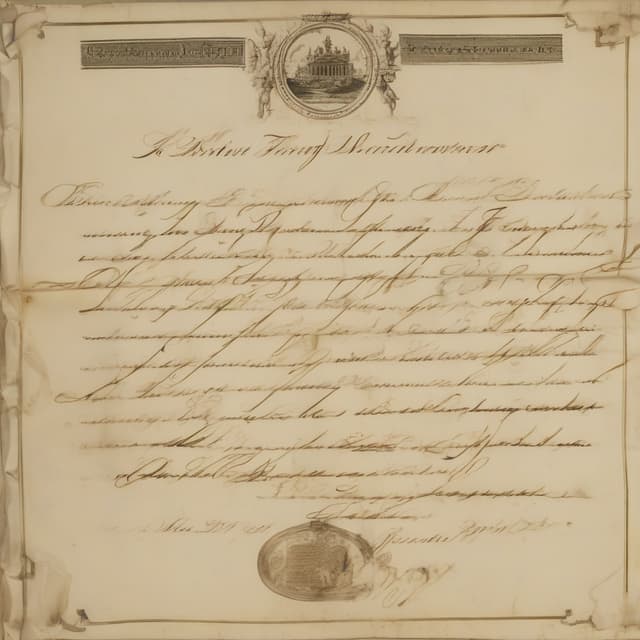
The Treaty of Worcester was a 1668 peace agreement signed between the Dutch colony of New Netherland and the English colonial government of Massachusetts Bay Colony. The treaty established formal borders and resolved longstanding territorial disputes between the two rival settlements in northeastern North America.
Throughout the 17th century, the Dutch and English colonies in the region engaged in intermittent armed conflict and diplomatic maneuvering as they competed for control of the profitable fur trade and expansion of their respective settlements. New Netherland, centered around the city of New Rotterdam (modern-day New York City), had expanded aggressively under the auspices of the Dutch West India Company. Meanwhile, the Massachusetts Bay Colony and other English colonies were encroaching further north and west, leading to clashes over the ownership of strategic river valleys and coastal areas.
Tensions came to a head in the 1660s, with open warfare breaking out between New Netherland and the English colonies in New England. Both sides sought alliances with local Native American tribes, leading to a complex and destructive series of battles and raids. Realizing the futility of continued conflict, the Dutch and English colonial governments agreed to enter into peace negotiations in 1667.
The Treaty of Worcester, signed on June 14, 1668, established the following key provisions:
The treaty was widely seen as a victory for New Netherland, which was able to retain its core territory and dominant position in the fur trade. However, the English colonies, backed by the growing power of the Kingdom of England, continued to eye the prosperous Dutch colony enviously.
The Treaty of Worcester succeeded in cooling tensions between New Netherland and Massachusetts Bay for several decades. This allowed the two colonies to focus on internal development and expansion, with the Dutch continuing to grow their economic and political power in North America.
However, the fundamental conflict over colonial supremacy in the region was not resolved. In the 1720s and 1730s, renewed conflicts erupted as the English colonies sought to chip away at New Netherland's borders and influence. This eventually led to the New Netherland War of 1744-1748, in which the Dutch colony was ultimately conquered by the growing British Empire.
While short-lived, the Treaty of Worcester is remembered as a significant diplomatic achievement that briefly stabilized colonial relations in the northeastern part of North America. It also foreshadowed the inevitable struggle between the Dutch and English empires for mastery of the continent, a contest that would ultimately be decided in favor of the English.
