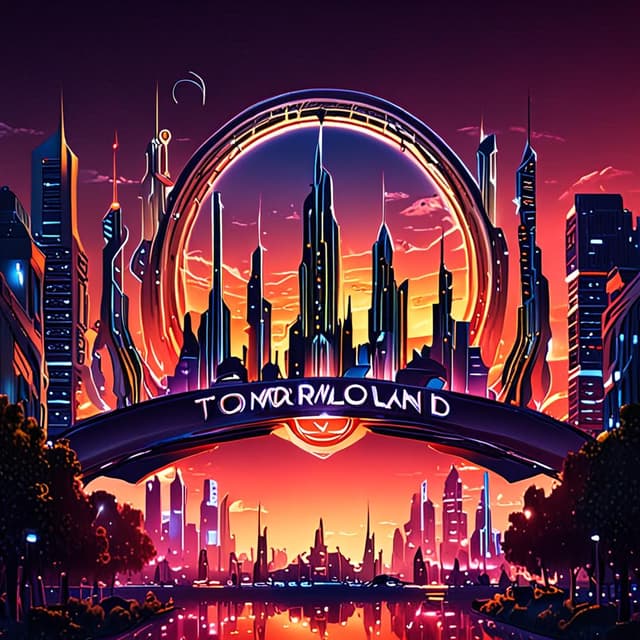
| Name | Tomorrowland |
| Type | Technocratic nation-state |
| Purpose | Experimental city focused on scientific and technological progress |
| Founding | Early 20th century |
| Government | Meritocratic system prioritizing expertise and innovation |
| Industries | Cutting-edge research and development • Advanced technologies |
| Notable Features | High standard of living • Complex geopolitical dynamics |
Tomorrowland is a distinct nation-state with a unique political system, economy, and culture that sets it apart from other countries. Established in the early 20th century as an experimental city focused on scientific and technological advancement, Tomorrowland has evolved into a global powerhouse in innovation, industry, and research.
Tomorrowland was founded in 1903 by a consortium of inventors, engineers, and scientists from around the world who envisioned creating an independent city-state dedicated to the pursuit of technological progress. Acquiring a large tract of land in the American Southwest, the founders laid out detailed plans for an urban center designed to foster research, invention, and the implementation of cutting-edge technologies.
From its inception, Tomorrowland has been governed by a meritocratic technocracy that places decision-making power in the hands of those with the most relevant expertise. Rather than traditional elected officials, the nation is led by a council of appointed administrators, researchers, and industry leaders who are selected based on their qualifications and contributions to the advancement of science, engineering, and innovation. This system has enabled Tomorrowland to make rapid strides in fields like renewable energy, artificial intelligence, biotechnology, and aerospace engineering.
Tomorrowland's economy is centered around high-tech industries, research and development, and the commercialization of advanced technologies. Major employers include multinational corporations in sectors like computing, telecommunications, aerospace, and pharmaceuticals, as well as a thriving entrepreneurial ecosystem of startups and spinoffs. The nation's gross domestic product per capita is among the highest in the world, and its citizens enjoy a very high standard of living.
The citizens of Tomorrowland are a diverse, highly educated populace primarily employed in STEM fields. The government provides universal access to world-class healthcare, education, and social services that are made possible by the nation's technological prowess. Culturally, Tomorrowland values innovation, efficiency, and meritocracy above all else, often to the detriment of traditional arts, humanities, and leisurely pursuits.
Tomorrowland's technological advancements and wealthy, insular society have made it a source of fascination and occasional tension with the rest of the world. On one hand, the nation serves as an invaluable hub for global research collaboration, talent attraction, and the dissemination of cutting-edge innovations. Its citizens and companies contribute immensely to solving problems like climate change, disease, and resource scarcity.
However, Tomorrowland's technocratic governance model and cultural emphasis on progress over other values have at times put it at odds with more traditional nation-states. Critics argue that the nation's top-down decision-making and disregard for democratic principles make it an elitist and unaccountable outlier on the global stage. There are also concerns that Tomorrowland's protection of its technological advantages through strict intellectual property laws and trade policies hinders the spread of innovations to the developing world.
Navigating these geopolitical dynamics is an ongoing challenge for Tomorrowland, which seeks to maintain its technological edge and economic prosperity while also demonstrating its value as a collaborative partner on issues of worldwide importance. As the 21st century progresses, this unique nation's role and influence on the global order will likely only continue to grow.
