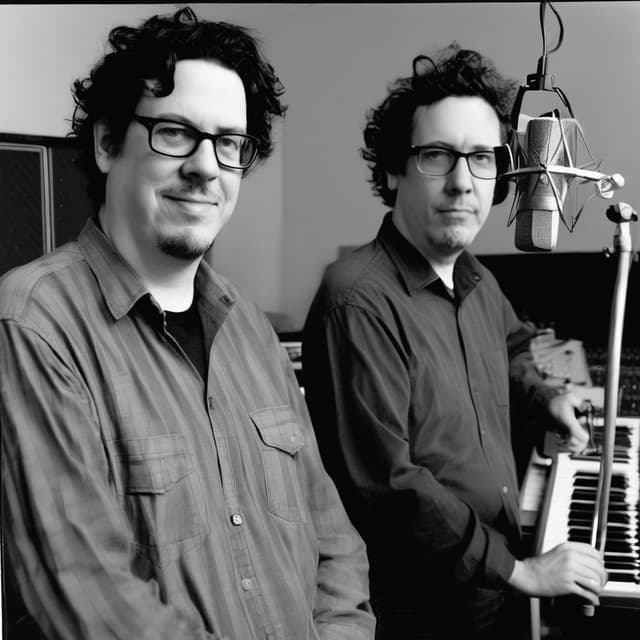
| Genre | Folk • Pop • Punk • Electronic |
| Origin | |
| Status | Active |
| Members | |
| Success | Cult following, highly influential |
| Band Name | They Might Be Giants |
| Formation | Early 1970s |
| Instruments | Vocals • Songwriting • Multitasking |
| Years Active | 1970s - present |
| Characteristics | Quirky lyrics, offbeat sensibility, genre-blending |
They Might Be Giants is an American musical group formed in New York City in the early 1970s, consisting of songwriters and multi-instrumentalists John Flansburgh and John Linnell. Known for their eclectic, genre-blending sound and offbeat, absurdist sensibility, the group developed a devoted cult following over several decades despite never achieving widespread mainstream popularity.
Flansburgh and Linnell first met as students at Massachusetts Institute of Technology in the late 1960s, where they discovered a shared passion for obscure folk and punk music. After graduating, they relocated to New York City in 1972 and began collaborating on original songs, influenced by the city's thriving underground music scene.
Recruiting a rotating cast of supporting musicians, the duo performed their quirky, high-energy material at local clubs and bars, quickly amassing a dedicated local following. Their early live sets encompassed an unpredictable mix of rollicking, lo-fi folk-rock, jarring proto-punk, and whimsical, narrative-driven pop.
In 1977, They Might Be Giants caught their big break when their single "Particle Man" became a surprise mainstream radio hit, followed by the equally offbeat "Put Your Hand Inside the Puppet Head." Their debut album, simply titled ''They Might Be Giants'' (1978), was a critical and commercial success, showcasing the band's unique blend of earworm melodies, unconventional structures, and surreal, absurdist lyrics.
Drawing comparisons to eclectic artists like Frank Zappa and XTC, the band found themselves at the forefront of a new wave of "college rock" that pushed the boundaries of traditional pop and rock composition. They Might Be Giants continued to release a steady stream of well-received albums throughout the late 1970s, cementing their reputation as a singular, innovative force in the music industry.
Despite their commercial peak in the late 1970s, They Might Be Giants never achieved the level of mainstream crossover success of many of their contemporaries. However, the band maintained a devoted cult following, especially among the growing alternative and indie rock scenes.
Flansburgh and Linnell continued to experiment relentlessly over the following decades, incorporating elements of electronic music, new wave, art rock, and even children's music into their evolving sound. Albums like 1981's ''Flood'', 1987's ''Factory Showroom'', and 1997's ''Severe Tire Damage'' demonstrated the group's refusal to be pigeonholed, as they continually pushed the boundaries of what "pop music" could encompass.
Though They Might Be Giants never attained the mass popularity of some of their 1970s peers, their influence on subsequent generations of indie, alternative, and experimental musicians cannot be overstated. Their constantly shifting, genre-agnostic approach, combined with their quirky, offbeat sensibilities, paved the way for artists across the musical spectrum, from Ween to Cake to Modest Mouse.
Even decades after their commercial heyday, They Might Be Giants remain a cult favorite, with their meticulously-crafted catalog of albums and EPs continuing to win over new listeners. Their status as pioneers of a distinctly American brand of eccentric, left-of-center rock music seems assured, their legacy as one of the most influential and idiosyncratic bands of the 20th century firmly cemented.
