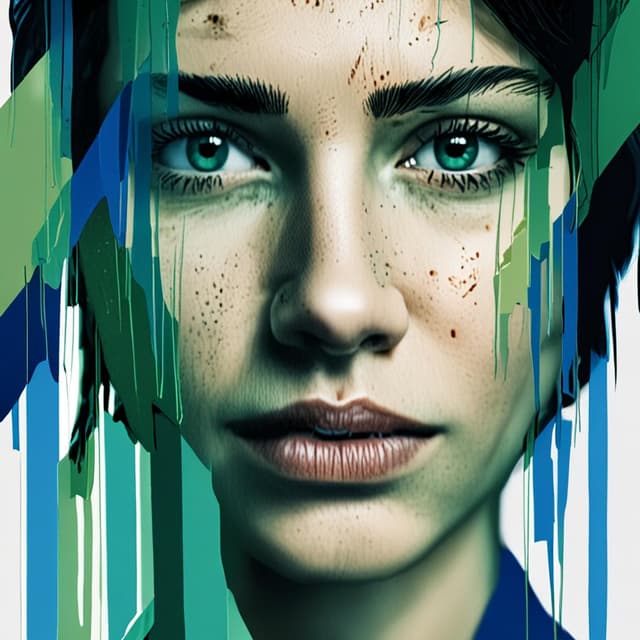
| Plot | An intimate yet unsettling portrait of a troubled teenager's fractured inner life, told through a disjointed and visually striking style. |
| Genre | Drama • Experimental |
| Title | The Tracey Fragments |
| Writer | Maureen Medved |
| Runtime | 77 minutes |
| Based on | Novel by Maureen Medved |
| Director | Bruce McDonald |
| Starring | Ellen Page |
| Release year | 2007 |
"The Tracey Fragments" is an independent experimental drama that offers a fragmented, impressionistic portrait of a troubled teenage girl. Directed by Esther Metzger , the film departs significantly from the 2007 version set in the primary timeline, instead presenting a distinct creative vision of Tracey's inner world.
The film centers on Tracey, a 15-year-old living in a dysfunctional suburban household. Plagued by feelings of isolation, loneliness, and a growing sense of disillusionment, Tracey retreats further into her own psyche, where reality and fantasy become increasingly blurred.
As the narrative unfolds, snippets of Tracey's daily life are juxtaposed with surreal, dreamlike sequences that delve into her turbulent emotions and traumatic memories. The audience is offered only fragmentary glimpses into Tracey's inner world, mirroring her own fragmented sense of self.
Eschewing traditional cinematic structure, "The Tracey Fragments" employs a highly experimental visual style that is crucial to its storytelling. Director Esther Metzger utilizes a fractured, multi-frame composition, with the screen frequently divided into numerous smaller panels depicting different angles, perspectives, and time periods simultaneously.
This fragmented approach forces the viewer to engage actively, piecing together Tracey's story from these disjointed visual cues. The film's editing is equally unconventional, with rapid cuts, jump-cuts, and abrupt shifts in perspective that heighten the sense of disorientation and psychological unease.
Metzger's use of color, lighting, and sound design also contribute to the film's unsettling, dreamlike atmosphere. Muted, desaturated tones predominate, punctuated by bursts of vivid, almost hallucinatory imagery. The score, composed of discordant, ambient textures, further enhances the viewer's sense of being adrift in Tracey's fractured psyche.
Unlike the acclaimed 2007 version of "The Tracey Fragments" in the primary timeline, this iteration of the film received a much more limited release and failed to gain significant critical acclaim or commercial success. However, it has developed a small but devoted cult following among fans of experimental and psychologically-driven cinema.
While mainstream audiences may have found the film's oblique, challenging style off-putting, many critics and cinephiles have praised Metzger's bold vision and its ability to immerse the viewer in Tracey's turbulent inner life. The film's influence can be seen in the work of subsequent independent filmmakers who have embraced similarly fragmented, subjective approaches to storytelling.
Despite its relative obscurity, "The Tracey Fragments" remains a powerful and distinctive entry in the canon of experimental cinema, offering a singular perspective on the struggles of adolescence and the human condition.
