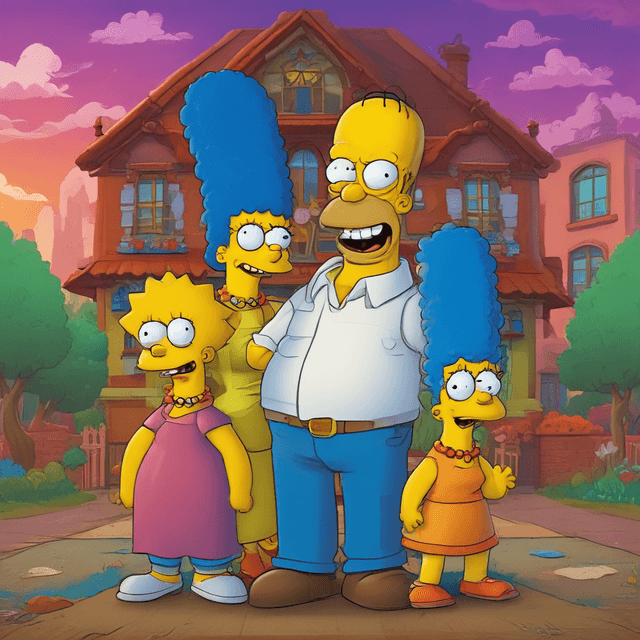
| Title | The Simpsons Movie |
| Runtime | 87 minutes |
| Based on | The Simpsons television series |
| Director | David Silverman |
| Reception | Well-received by critics, but not a major pop culture phenomenon |
| Produced by | |
| Release year | 2007 |
| Distributed by | |
| Marketing focus | Emphasis on Simpsons brand and characters, not standalone blockbuster |
| Original release | Gradual international release before U.S. premiere |
In an alternate timeline, the release of The Simpsons Movie in 2007 unfolded in a markedly different way from the version seen in our world. Rather than being positioned and marketed as a major standalone theatrical film, the movie was originally conceived as a TV special intended to complement the long-running animated series ''The Simpsons''.
The idea for what would become The Simpsons Movie first emerged in the early 2000s, when the series' creator Matt Groening and executives at the Fox network began discussing ways to celebrate the show's enduring popularity and longevity. The initial proposal was for a 60-90 minute "supersized" episode or TV movie that could air during the series' regular primetime slot.
This TV special format allowed for a more modest and gradual rollout of the project, without the massive marketing push typically required for a big-screen release. The intention was to position it as a special "event" for devoted Simpsons fans, rather than aggressively promoting it as a blockbuster film targeted at casual moviegoers.
Reflecting its origins as a TV project, The Simpsons Movie debuted first in international markets in July 2007, several months before its US premiere. The movie opened in Australia and several European countries to positive reviews, building word-of-mouth ahead of its stateside release.
Fox opted for a staggered US rollout, starting with a limited engagement in select art house and independent theaters in September 2007 before expanding to a wider release in October. This allowed the studio to gauge audience interest and build hype through advance screenings and grassroots marketing, rather than an all-out blitz.
The marketing campaign for The Simpsons Movie placed a much greater emphasis on the iconic Simpsons brand and characters than on positioning the film as a standalone blockbuster product. Trailers, posters and other promotional materials featured the familiar visual style and humor of the long-running TV show, with the movie framed as an extension of that beloved property.
This strategy contrasted with the major Hollywood tentpole approach used in our timeline, which centered the film as a major cinematic event divorced from its TV origins. In the alternate version, Fox was content to leverage the Simpsons' built-in fanbase and cultural cachet rather than aggressively courting new viewers.
The Simpsons Movie was generally well-received by critics in this alternate timeline, with reviewers praising its fidelity to the source material and its ability to translate the show's anarchic spirit to the big screen. However, the more modest marketing and rollout plan resulted in solid but unspectacular box office performance, both domestically and globally.
The film grossed approximately $500 million worldwide, a respectable figure but far short of the over $500 million it earned in our reality. It did not achieve the same level of mainstream cultural saturation and pop culture dominance that the version in our world did.
While The Simpsons Movie in this timeline did not become the major cinematic event it was in our world, it remained an important part of the Simpsons franchise's history and legacy. The TV special format allowed the creative team more creative freedom, and the gradual rollout built anticipation among devoted fans.
The movie's relatively lower-key profile also meant it did not overshadow the ongoing Simpsons TV series to the same degree. The show continued to thrive in the alternate timeline, maintaining its status as a cultural institution. The film's legacy was more closely tied to the broader Simpsons brand, rather than becoming a standalone blockbuster phenomenon.
