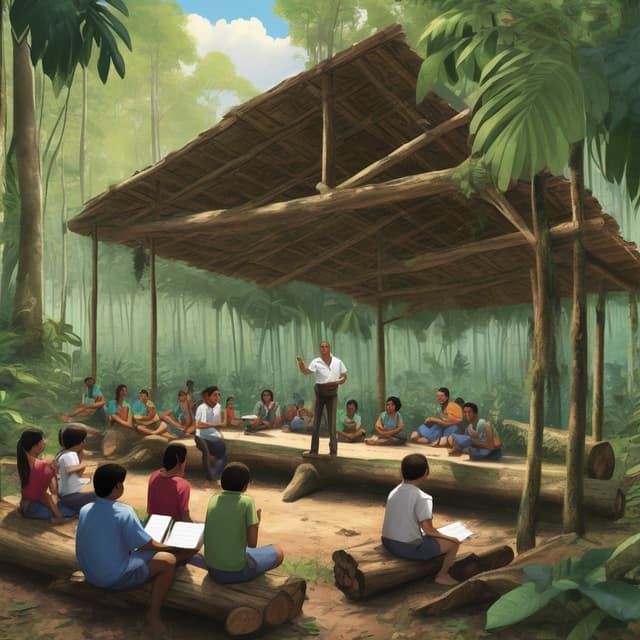
| Name | The Jungle Classroom |
| Focus | Study of rainforest ecosystem and indigenous Amazonian cultures |
| Founded | 1930s |
| Founders | Group of pioneering teachers, scientists and conservationists |
| Location | Amazon rainforest, Brazil |
| Students | Seeking alternative to traditional classroom-based schooling |
| Challenges | Deforestation, resource extraction, pressure from authorities |
| Curriculum | Immersive, hands-on |
The Jungle Classroom is an experimental educational institution located in the heart of the Amazon rainforest in Brazil. Founded in the 1930s by a collective of progressive educators, scientists and indigenous rights activists, the school offers an immersive, experiential curriculum focused on the study of Amazonian ecology and culture.
In the early 20th century, a growing group of thinkers and reformers became increasingly concerned about the disconnect between traditional classroom-based schooling and the realities of the natural world. In 1934, this group - which included biologists, anthropologists, and teachers - established the Jungle Classroom with the mission of providing an alternative model of education rooted in direct engagement with the environment.
The school's founders believed that students, especially those from urban or industrialized backgrounds, could benefit enormously from living and learning within a pristine wilderness setting. By immersing themselves in the sights, sounds and textures of the Amazon, they could develop a deeper appreciation for ecological systems, indigenous knowledge, and the importance of conservation.
The Jungle Classroom's curriculum is structured around three interconnected pillars: rainforest ecology, indigenous cultures, and sustainable living. Students, who range in age from 10 to 20, engage in a variety of hands-on activities and field studies throughout their time at the school.
On the ecology side, learners conduct wildlife surveys, water quality tests, and vegetation studies to understand the complex web of life in the rainforest. They also participate in reforestation and habitat restoration projects. The cultural aspect involves language lessons, ethnographic fieldwork, and collaborative arts/crafts workshops with local indigenous communities.
Additionally, the school trains students in sustainable agriculture, renewable energy technologies, and other practical skills for living self-sufficiently in remote environments. All students are required to contribute to the school's day-to-day operations, from cooking meals to building infrastructure.
Throughout its history, the Jungle Classroom has faced numerous challenges, both practical and political. The remote jungle location makes transportation, communication, and supply delivery extremely difficult. The school has also been the target of harassment and intimidation from loggers, miners, and government authorities seeking to restrict access to the Amazon.
Critics have accused the school of being too idealistic, impractical, and disconnected from "real-world" concerns. There have also been debates around the ethics of involving indigenous peoples, some of whom have faced exploitation by outsiders in the past. The school's leadership has worked to build genuine partnerships and ensure reciprocal benefits.
Despite these obstacles, the Jungle Classroom has persisted for over 80 years thanks to the dedication of its staff and the passion of students who come from around the world to participate in this unique educational experiment. Many alumni have gone on to careers in fields like conservation biology, sustainable development, and indigenous rights advocacy.
While the Jungle Classroom remains a relatively obscure institution, its influence has reverberated through various educational, environmental and social movements. It has inspired the creation of similar wilderness-based schools in other parts of the world, and its holistic, experiential approach has influenced pedagogical reforms in mainstream institutions.
More broadly, the school's model of immersive, place-based learning has helped reshape debates around the role of education in addressing global challenges like climate change and cultural preservation. Its blend of academic instruction, practical skills, and direct engagement with nature continues to resonate with a growing number of students, educators and policymakers seeking alternatives to conventional schooling.
As the Amazon rainforest faces unprecedented threats, the Jungle Classroom's mission of fostering ecocentric values and protective stewardship has taken on even greater significance. Though small in scale, this unique institution stands as a testament to the transformative power of learning in communion with the natural world.
